
China’s DR02 could be the world’s toughest humanoid robot.
Hangzhou-based DEEP Robotics, known for its industrial robodogs, is developing the walking tank for environments that humans can’t endure.

The startup is racing toward an IPO alongside the nearby robotics leader Unitree. Though its competitor is the much larger and more visible robot manufacturer, DEEP Robotics arguably has a stronger footing in the industrial sector.
Out of the shadows of its flashier rival, it’s preparing an AI-powered machine built for the impossible. The industrial battlefield is about to get a lot more interesting.
DEEP Robotics Origin
DEEP Robotics launched in November 2017 in Hangzhou as a spinout of Zhejiang University. Its co-founders, Zhu Quiguo and Li Chao, both hold doctorates from the elite institution that’s similar in stature to the University of Michigan.
Zhu previously served as an associate professor and doctoral supervisor, with deep expertise in bionic robots and machine intelligence. Li specializes in humanoid planning and control.

The company’s Chinese name is Hangzhou Yunshenchu Technology, which roughly translates to Deep in the Clouds. It belongs to a collective nicknamed Hangzhou’s Six Little Dragons alongside the AI disruptor DeepSeek, Game Science (the developer of the popular video game Black Myth Wukong), the brain-computer interface maker BrainCo, the Autodesk rival Manycore Tech, and Unitree Robotics.
Jueying Quadruped
A few months after its founding, DEEP Robotics launched its first-generation Jueying quadruped, named after Cao Cao’s legendary horse from the Three Kingdoms period nearly 1,800 years ago.
At the time, four-legged robots were advancing rapidly, but were still mostly expensive research prototypes without commercial applications. DEEP Robotics joined a small group of firms racing the technology to market.
In the US, Boston Dynamics had already demonstrated prototypes like the DARPA-funded Big Dog and early iterations of its iconic Spot robot. The Massachusetts robotics leader was shifting away from a primarily military identity, while the University of Pennsylvania spinout Ghost Robotics was pursuing lethal use cases. In Europe, ANYbotics had recently been spun out of ETH Zurich and was recording the first sales of its research-grade ANYmal robodog.
Back in China, the fellow Hangzhou-based Unitree was the closest to broader product sales. Hardware engineer Wang Xingxing had launched the startup the prior year and was preparing the first global shipments of its Laikago quadruped, named after the Soviet space dog.
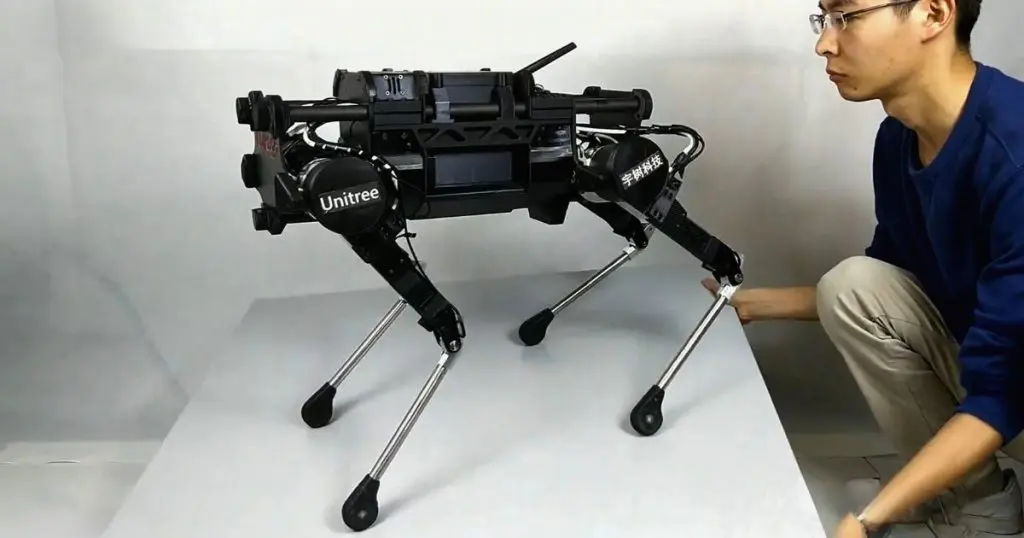
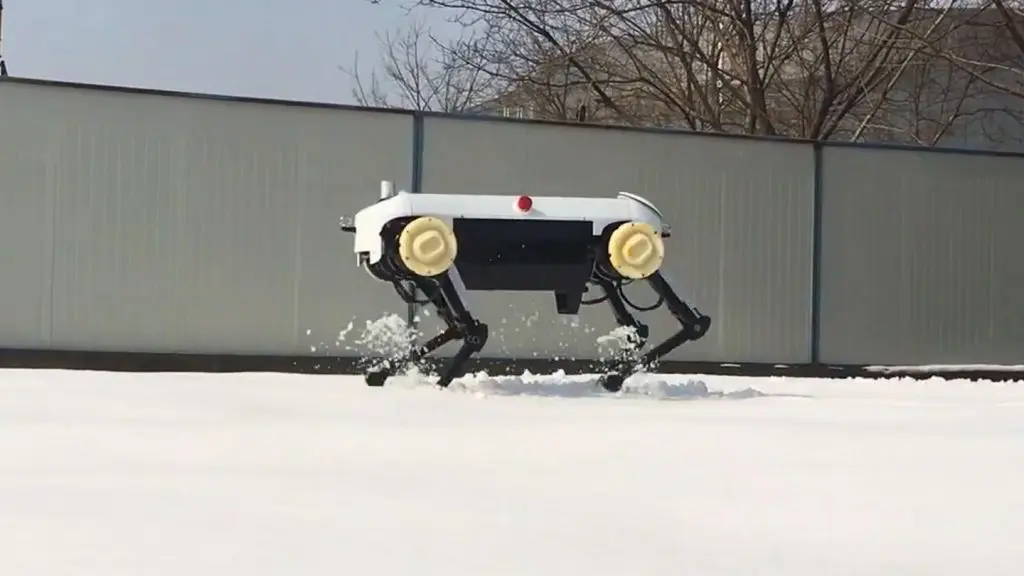
DEEP Robotics’ first quadruped weighed about 70 kg (154 lbs), could climb steep slopes, walk through deep snow, cross uneven terrain, and regain its balance after being struck. By 2020, one of the quadrupeds acted as a ring bearer during a wedding ceremony, while DEEP Robotics made the cover of Science Robotics for its locomotion research.
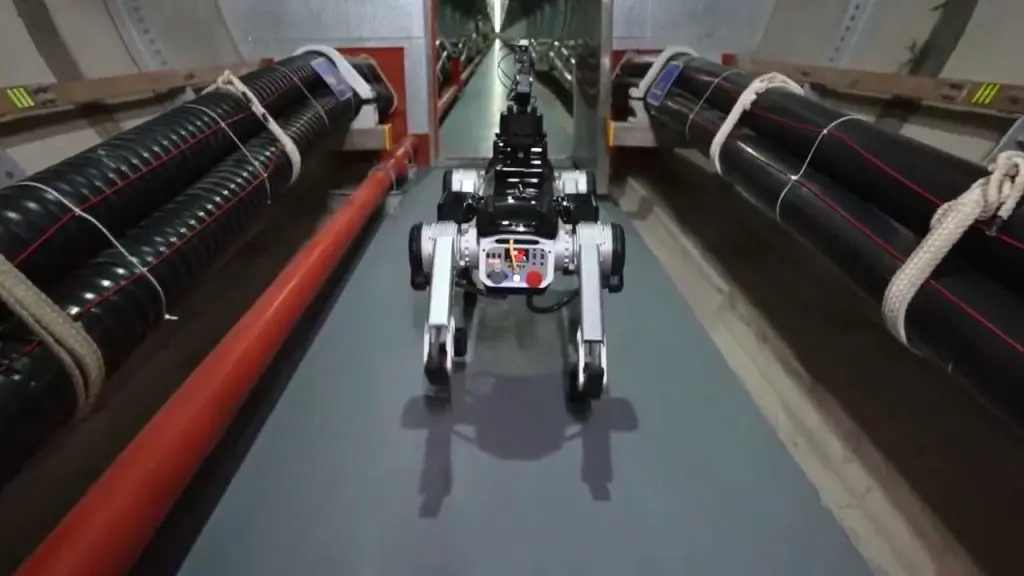
In 2021, the Jueying robot achieved what was described as China’s first fully autonomous inspection of a power substation by a legged machine. The demo showed that the form factor could move through spaces that wheeled robots struggled with because they include stairs and narrow passages. Following a preplanned route, it navigated around obstacles as it collected visual and thermal data, red instruments, and identified possible equipment problems.
Lighter Machines
The company gained more international attention with its refined quadrupeds in the years that followed.
Smaller machines in its Lite family gave researchers, and even hobbyists, a more accessible system for testing visual following, obstacle avoidance, autonomous navigation, and advanced motion control.
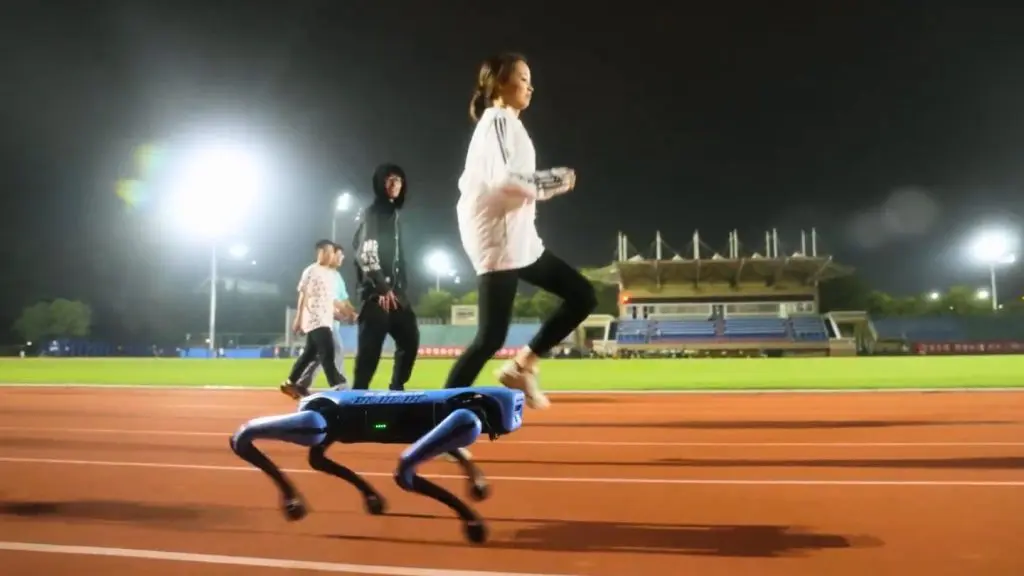
Its Lite3 quadruped, priced starting under $3,000, dropped in 2023 around the same time that Unitree released its iconic Go2 robot. While Unitree priced its robot starting under $2,000 for broader consumer and developer adoption, DEEP Robotics positioned the Lite3 as a more specialized platform for research, education, and advanced robotics development.
Both were far more affordable than Western competitors like Spot from Boston Dynamics, which started around $75,000.
X30 Robodog
DEEP Robotics’ flagship quadruped is the X30, which is typically priced over $100,000.
Weighing 59 kg (130 lbs) with its battery installed, it can carry at least 20 kg (44 lbs). It reaches speeds up to 4 m/s (8.9 mph), climbs slopes and stairs up to 45 degrees, and steps over 20 cm (7.9 inches) high.

It has an IP67 rating, meaning it can operate in dust, rain, and shallow water exposure. It works in temperatures from -4 to 131 degrees Fahrenheit (-20 to 55 degrees Celsius). Its battery endurance is listed as 2.5 to 4 hours, with a travel range of at least 10 km (6.2 miles).
Its deployments include SP Group’s underground power transmission tunnel in Singapore, where the X30 uses high-resolution and thermal cameras to look for cracks, water seepage, temperature abnormalities, and other defects while also serving as a first responder that can enter hazardous areas and send live info back to operators.
In Changsha, China, an X30 joined a local fire and rescue team in 2025, tasked with entering smoke-filled and unstable areas ahead of firefighters with cameras and sensors for reconnaissance and situational awareness.
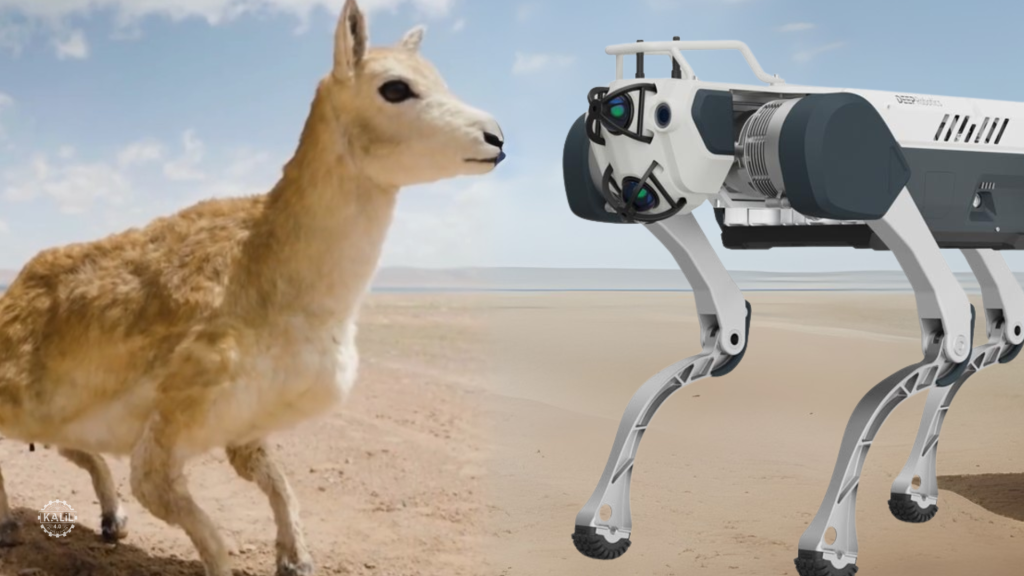
DEEP Robotics also worked with Xinhua and the Chinese Academy of Sciences to turn the X30 into a fake antelope to fool both predators and prey in the Tibetan wilderness. At 4,500 meters above sea level, the Tibetan Hoh Xil National Nature Reserve’s thin air, extreme cold, and harsh winds make it one of the most challenging for animals and robots alike. According to Chinese state media, the robot’s mission was to spy on the endangered species, which was hunted to near extinction in the 1990s.
They designed a shell covered with thick brown fur matching the Tibetan antelope’s seasonal coat. Large doe-like eyes and a correctly proportioned head mimicked its gentle appearance. The team programmed the robot’s artificial intelligence so its walking gait and small body motions like head turns matched the wild antelope.
LYNX M20
In early 2026, DEEP Robotics went viral with its limited-edition quadruped commemorating the Year of the Horse. It’s built on the company’s lower-end LYNX M20 robot that’s priced starting around $50,000.
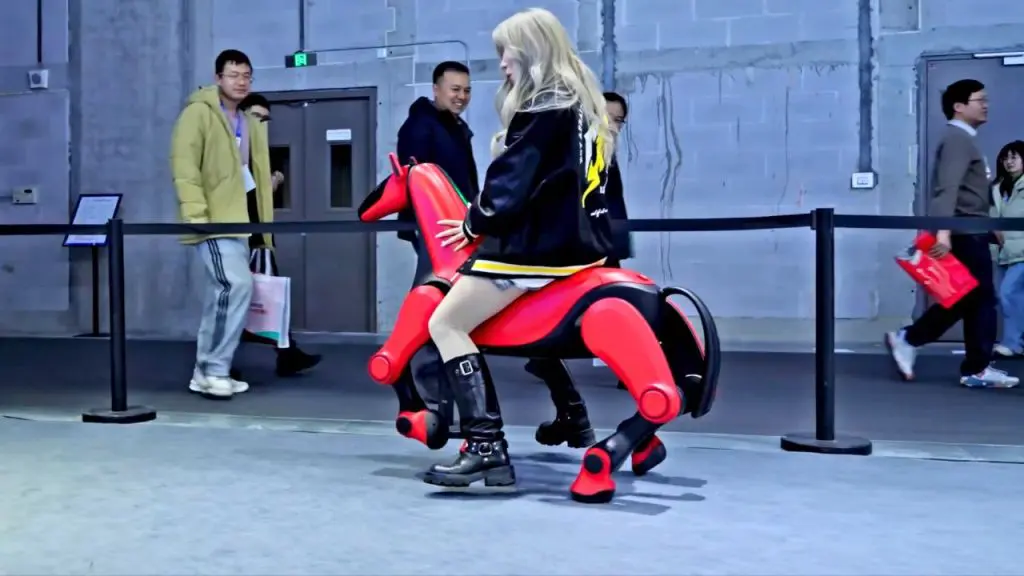
That robot, launched in 2026, features a hybrid wheel-legged design to combine the speed and efficiency of wheels and the obstacle-crossing capabilities of bionic legs. It weighs about 35 kg (77 lbs) and can carry a payload up to 15 kg (33 lbs). It has reached speeds up to 5 m/s (11.2 mph) in lab testing, but the commercial version has a safety limited ceiling of 3 m/s (6.7 mph).
Humanoid Robots
DEEP Robotics used many of its breakthroughs in quadrupeds as the foundation for its move into humanoid robotics.
It introduced its first humanoid, the DR01, at the 2024 World Robot Conference (WRC) in Beijing. Its development began in 2023 as the Chinese government set a national goal to mass manufacture humanoids by 2025 and to lead the market by 2027.
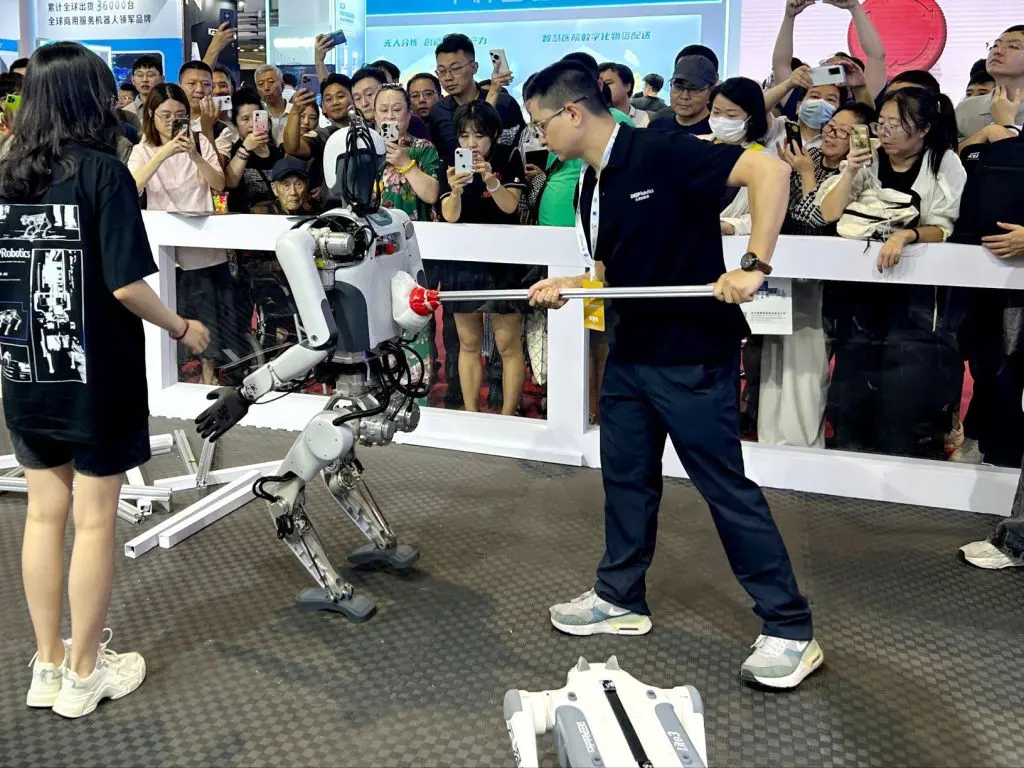
DEEP Robotics describes its second-generation version, the DR02, as the world’s first industry-grade, all-weather humanoid robot.
Standing 175 cm (5 feet 9 inches), and weighing 65 kg (143 lbs), the AI-powered robot shrugs off heavy rain, thick dust, and temperatures from -4 to 131 degrees Fahrenheit (-20 to 55 degrees Celsius). It can haul 10 kg (22 lbs) per arm and reaches speeds up to 4 m/s (9 mph).
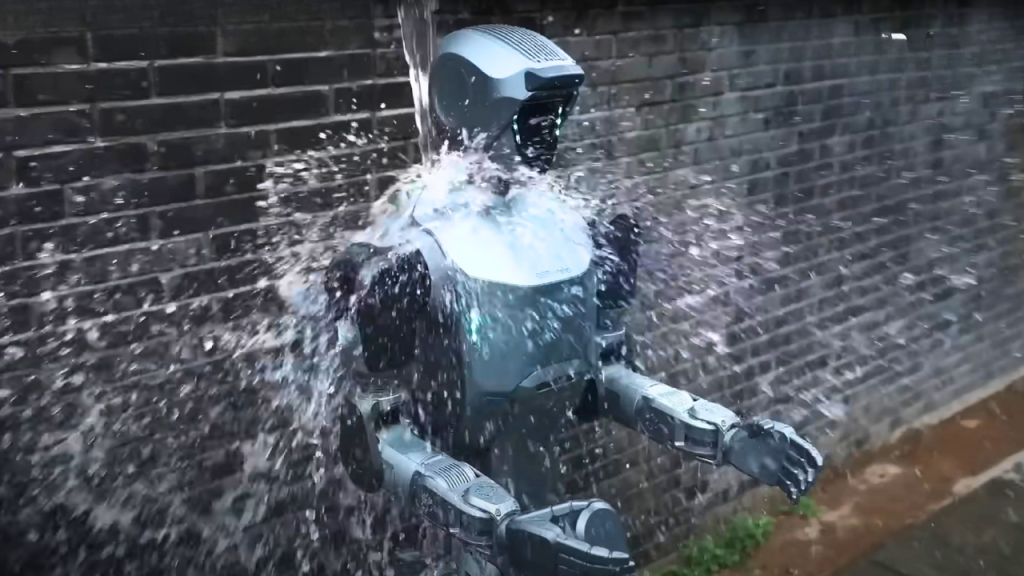
It’s engineered for complex terrain, so it can do things like run downhill with a fire extinguisher on its back without falling. According to its developers, the DR02 is the only humanoid robot with a full-body IP66 rating, meaning it’s completely dust tight and can withstand powerful water jets.
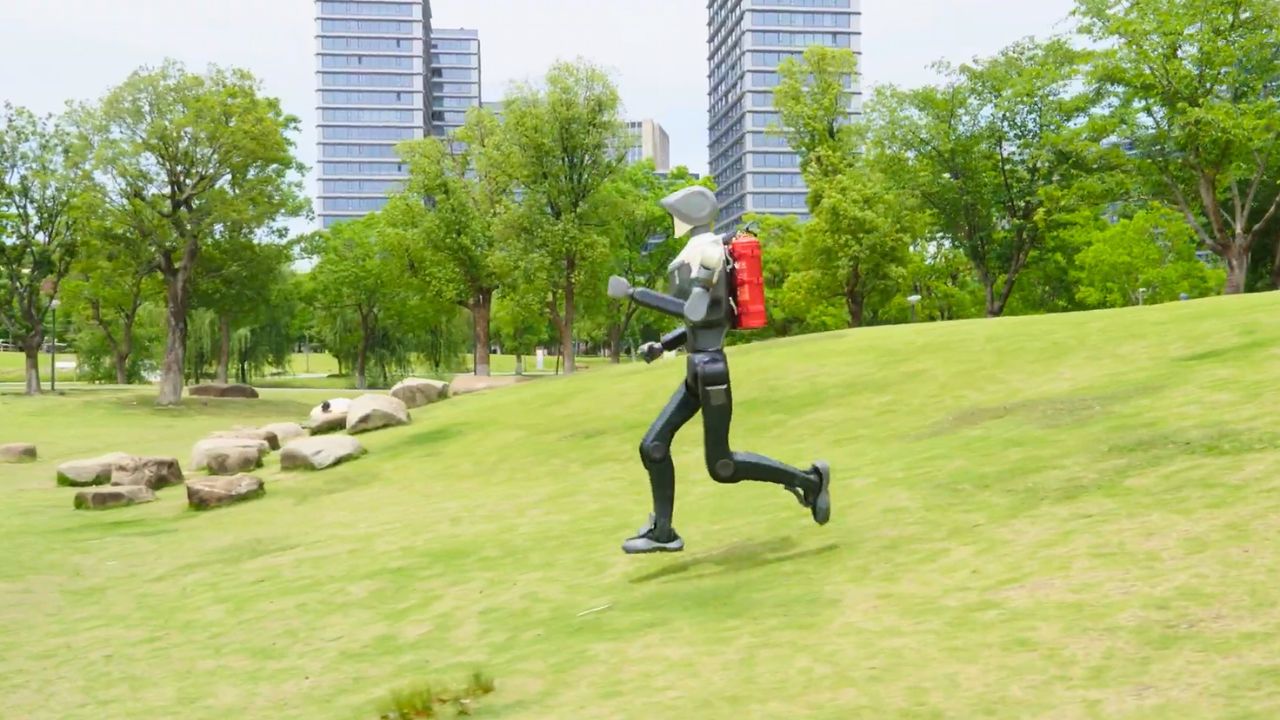
It’s built for use cases like power grid inspections, outdoor security patrols, industrial logistics, emergency response, and harsh environment material handling. It runs on the startup’s self-developed DEEP VLA vision language action model, which enables autonomous decision-making, obstacle avoidance, and versatile task performance in unstructured settings.
It’s priced around $200,000, which is actually on the low-end of industrial humanoids on the market today.
IPO Ambitions
DEEP Robotics earned Little Giant status from Beijing in 2024, which gave it access to state-backed financing and tax incentives. To date, the startup has raised at least $140 million from a mix of Chinese financial institutions and state-affiliated funds.
It’s one of a growing number of Chinese robotics firms heading toward an initial public offering alongside Unitree, Shanghai’s Agibot, Beijing’s Galbot, and the Shenzhen companies EngineAI, Pudu Robotics, and Leju Robot, among others.
It’s expected to join Unitree on the tech-heavy Shanghai STAR Market after its application was approved in May 2026. It plans to raise $347 million for a valuation around $2 billion. It’s reported strong growth, with revenue rising from around $7 million in 2023 to $47 million in 2025.
Boston Dynamics Tries to Slow Momentum
Meanwhile in the West, the oldest player in the humanoid race is raising alarms about the influx of Chinese humanoids on US soil. Read all about what Boston Dynamics is asking lawmakers to do about it right here.