
America’s physical AI gold rush is exploding.
Investors are shifting billions away from LLMs and into next-gen robotics, just as the US government gears up aggressive measures to close the gap on China’s breakneck push.
Silicon Valley’s $39 billion humanoid startup has sent its autonomous robots back to a major automaker for more complex real-world tasks. Meanwhile, a top competitor just opened a sprawling new cyberpunk-style training center in Texas to turn humanoids into autonomous workers.
In Washington, the oldest player in the humanoid race is urging lawmakers to confront the growing influx of Chinese robots on US soil. And across the Pacific, a leading firm that’s already shipped more industrial humanoids than all its American rivals combined is pursuing a very different path.
Apptronik’s Robot Park
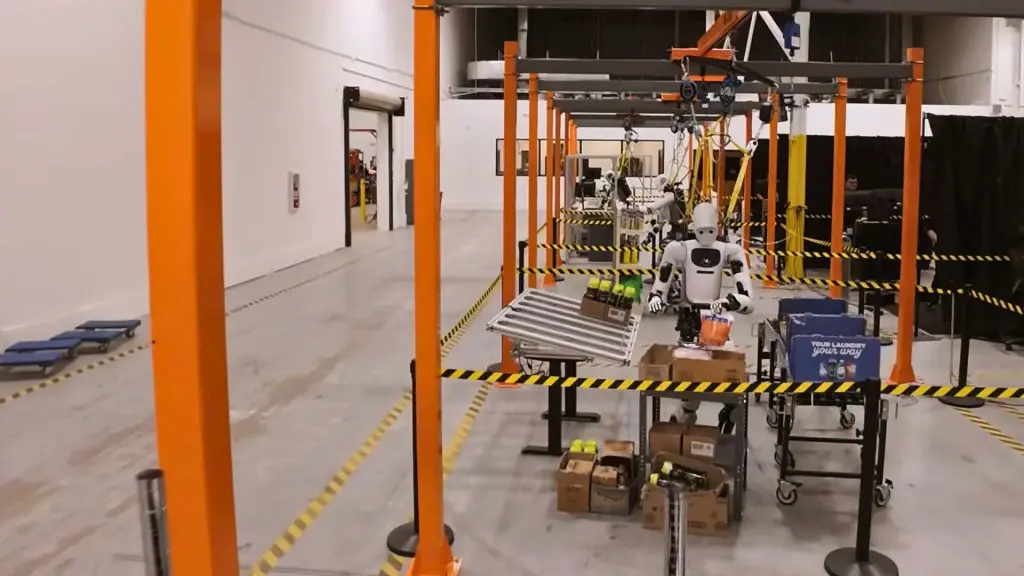
In Austin, the 10-year-old startup Apptronik says it just opened a new training ground for AI-powered humanoid robots called Robot Park.
The facility, which spans nearly 8,400 square meters (90,000 square feet) was developed in collaboration with Google DeepMind, whose Gemini Robotics AI model powers the firm’s Apollo humanoids.
“The industry has spent years showing what robots can do in demos. We’re focused on what they can do every day on the job,” Jeff Cardenas, Apptronik CEO and co-founder, said in a press release. “What we’re building is a continuous learning loop with the Google DeepMind Robotics team: robots working, collecting data, and improving with every cycle, in real environments, on real tasks.”
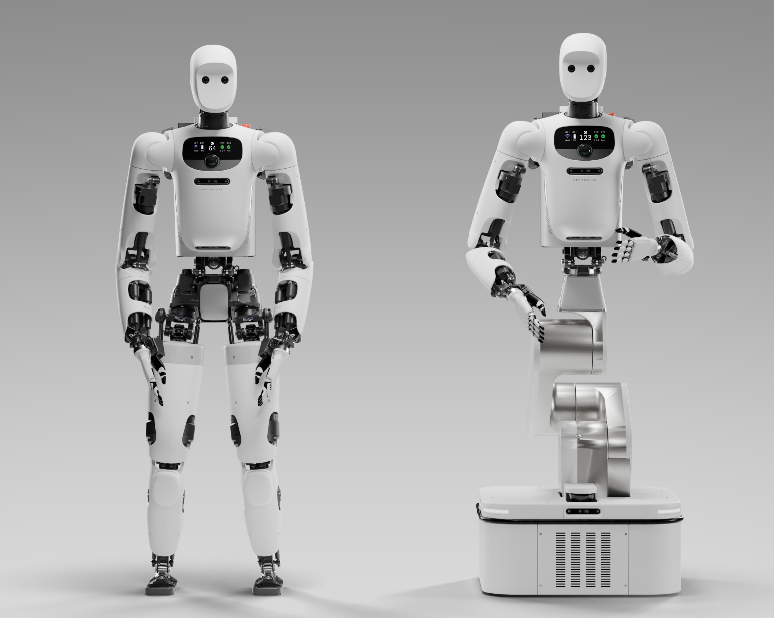
The Google-backed startup made the announcement shortly after quietly unveiling its second-generation flagship humanoid, Apollo 2. It builds on the robot’s twenty twenty three iteration with a modular design that supports both bipedal and wheeled locomotion.
On wheels, Apollo can reach vertically up to 2.1 meters or about 7 feet. The biped version retains the OG Apollo’s human-scale form factor, standing 1.7 meters (5 feet 8 inches) or 5 feet 8 inches and weighing around 72 kg (160 lbs). Apollo 2 boasts a reported 71 degrees of freedom across its body and has a payload capacity of 25 kilos or 55 pounds. Its hot-swappable battery system supports 22 hours of operation per day with quick swaps and opportunity charging.
At Robot Park, the humanoids perform tasks in simulated warehouse, manufacturing, retail, and logistics environments to generate training data to feed their AI robot brain. It’s similar to facilities that have popped up throughout China, where the government has set a goal to deploy at least 10,000 humanoids into the workforce by the end of 2026.
Apptronik, which was spun out of the University of Texas at Austin’s Human-Centered Robotics Lab in twenty 16 and contributed to early iterations of NASA’s Valkyrie space humanoid, says the new and improved Apollo is designed for high-rate manufacturing.
Its scaling production after raising nearly $1 billion to date. The second-generation humanoids are already being piloted by Mercedes-Benz at its factories in Germany and Hungary.
Figure AI Robots Return to BMW
One of Apptronik’s biggest competitors, the much younger Silicon Valley startup Figure AI, is also working with a German luxury automaker.
The San Jose-based robotics firm, launched in May 2022 by serial entrepreneur Brett Adcock, just shared this footage of its third-generation humanoid robots doing logistics work at BMW’s factory in Spartanburg, SC. It’s the manufacturer’s largest plant by volume.
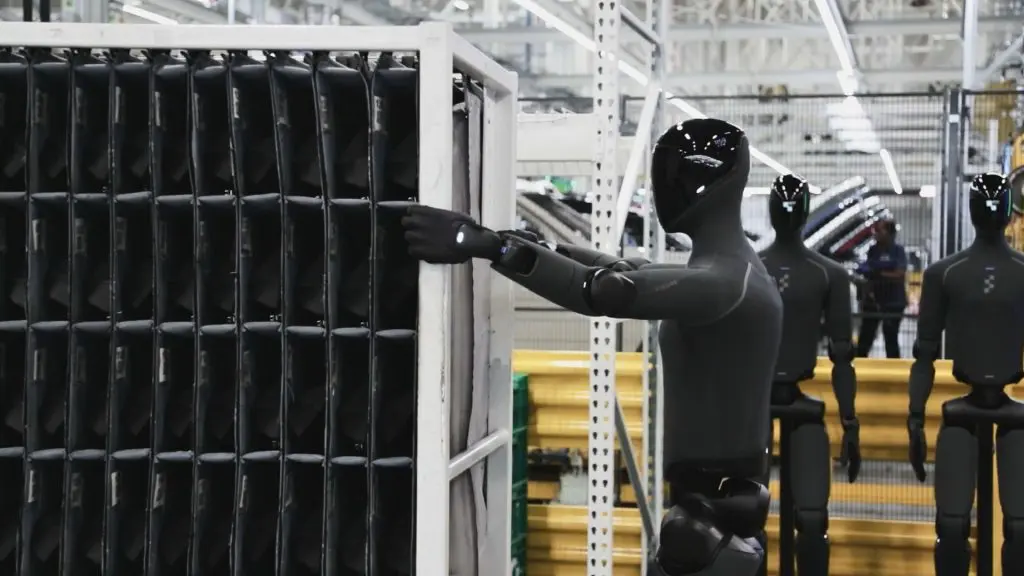
The deployment follows a 10-month run in 2025, during which Figure’s second-generation humanoid robot helped build more than 30,000 BMW X3 vehicles. The older robot, called the Figure 02, worked in the plant’s body shop, inserting sheet metal parts for welding.
The third-generation robots are doing more complex sequencing work, which involves picking unsorted parts from bins and placing them into trolleys for assembly line delivery. The Figure 03 humanoids are powered by the startup’s self-developed Helix 02 vision language action (VLA) model, which the company announced last year after severing ties with OpenAI.
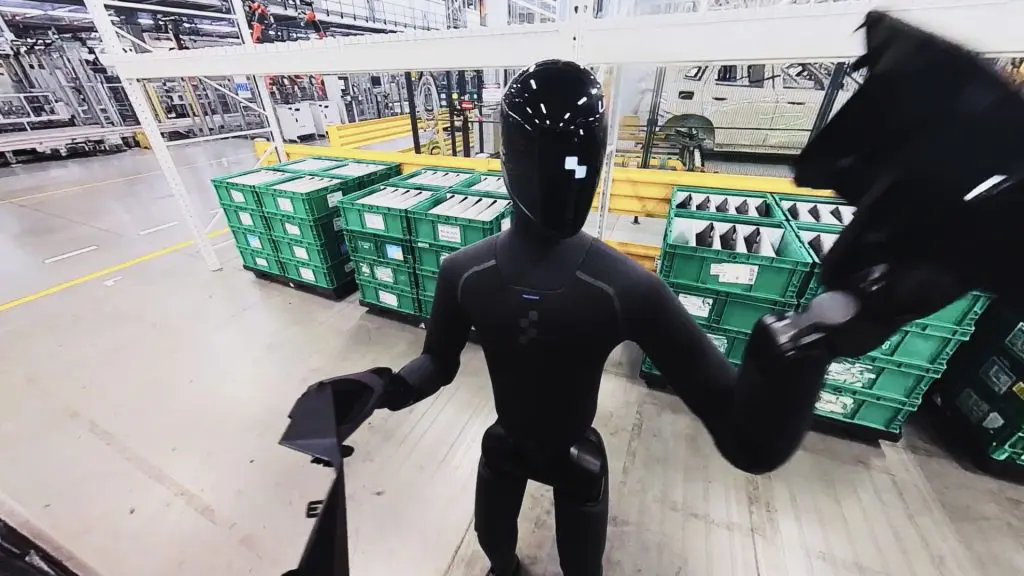
Figure robots are also being deployed for logistics work for Catalyst Brands, the parent company of JC Penney, Aeropostale, Brooks Brothers, and other retailers. The initial phase focuses on Catalyst’s distribution logistics center in Reno, NV, where the robot workers will automate repetitive, physically demanding tasks like sorting and packing. The agreement was brokered through Brookfield, a major investor in both Figure and Catalyst Brands.
Figure says it’s scaled manufacturing significantly at its so-called BotQ robot factory in San Jose. The startup reports going from one robot per day to a sustained rate of one unit per hour in under 120 days. BotQ, announced in 2025 with an initial target capacity of up to 12,000 humanoids per year, uses a custom end to end manufacturing execution system.
It’s scaling production alongside nearby competitors like 1X Technologies, which recently launched a factory to build more than 10,000 of its NEO humanoids for homes that have already been preordered.
Boston Dynamics Sounds Alarms About China
The work Figure’s robots are doing for BMW is similar to what Atlas from Boston Dynamics is preparing to do for its parent company Hondai.
The South Korean automotive giant is reportedly in the process of acquiring the remaining 10 percent stock in the Massachusetts robotics leader from its previous owner Softbank for $325 million. Seoul-based Hyundai acquired an 80 percent controlling stake in Boston Dynamics back in 2020 and has since upped its stake to 90 percent.
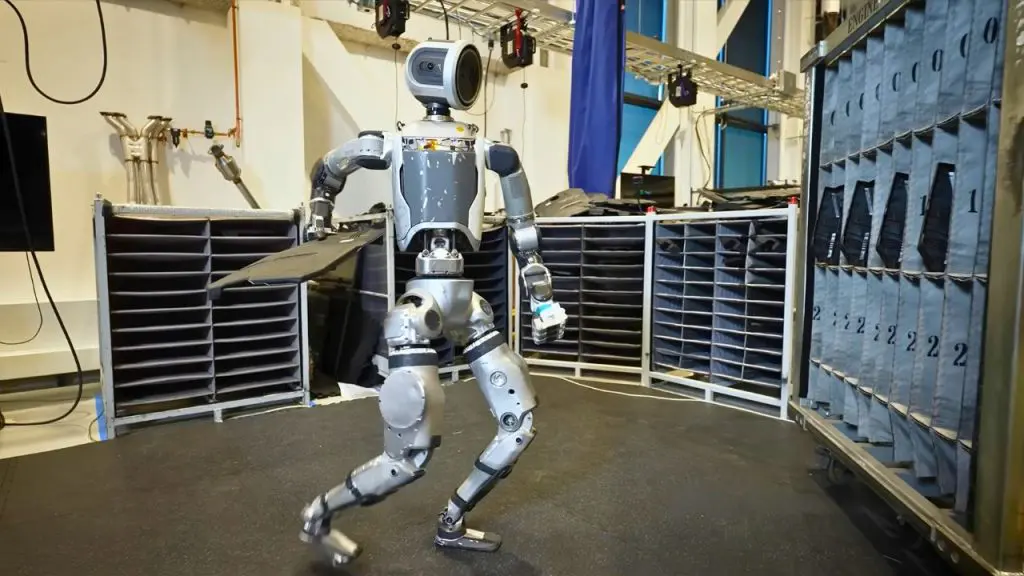
The automaker is reportedly pushing Boston Dynamics to scale to tens of thousands of robots to deploy at its factories. The plans are already being met with resistance from unionized Hyundai plant workers in South Korea, who have authorized a strike. A walk out date has not been scheduled.
The labor union, which represents about 40,000 Korean workers, wants the power to negotiate Atlas humanoid deployments. Union leaders previously warned that no new robots would enter Hyundai factories without labor-management approval. Though the robots’ abilities are limited today, the workers fear they could eventually reduce headcount.
Hyundai plans to begin using Atlas first at its Metaplant in Georgia, which has a non-unionized workforce.
Meanwhile, Boston Dynamics just announced plans to convert a 30,000 square meter (323,000 square foot) building near its Waltham, MA headquarters into an advanced AI and robotics center. Occupancy is expected to begin around mid 2027 with help from a $25 million economic development incentive from the Massachusetts state government.
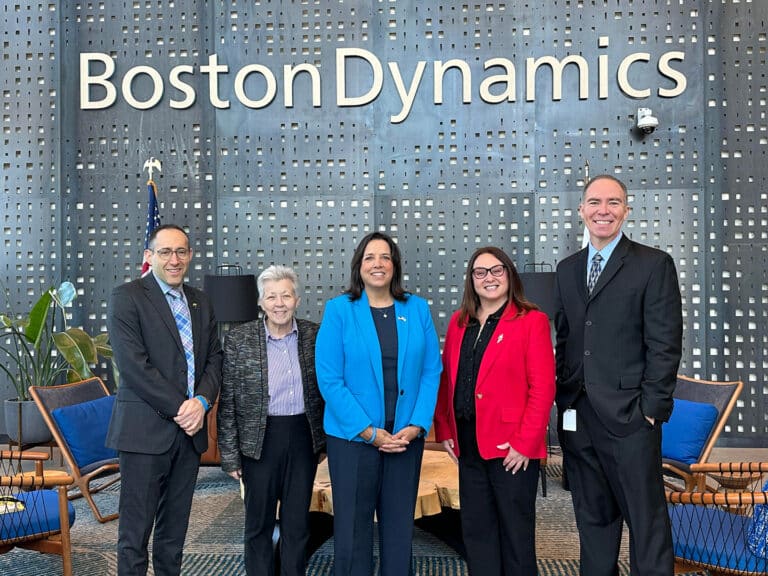
The robotics firm, which was spun out of MIT’s Leg Laboratory back in 1992, has been vocal about the influx of Chinese humanoid and quadruped robots in the United States.
Its chief legal officer, Jason Fiorillo, just testified before the US House Energy and Commerce Subcommittee on Commerce, Manufacturing and Trade, calling for a comprehensive national robotics strategy to counter China’s aggressive state-backed push.
Boston Dynamics Chief Legal Officer Jason Fiorillo pleads with lawmakers to do something about the influx of cheap Chinese robots, especially Unitree, that have eaten up its market share in recent years. https://t.co/xrbGVDDxtT pic.twitter.com/3a4H13ypt8
— Mike Kalil (@mikekalilmfg) July 1, 2026
In submitted testimony, He called out Wang Xingxing, the founder of Hangzhou-based Unitree Robotics, who has called Boston Dynamics founder Marc Raibert his idol, for attending a meeting with Chinese President Xi in February 2025.
“China, especially, illustrates through action the strategic importance of its advanced mobile robotic technologies sector,” he said. “In February 2025, the CEO of prominent Chinese robotics company Unitree, which develops and manufactures quadrupeds and humanoids, was seated prominently across from Chinese President Xi at a summit of tech executives.”
The testimony comes as support grows in Washington for restrictions on legged Chinese robots that would put them in the same regulatory category as Huawei telecommunications equipment and DJI drones.
Bipartisan proposals have been introduced in the House and Senate, and US Commerce Secretary Howard Lutnick has reportedly suggested his department could take executive action.
UBTECH’s UWorld Launch
Boston Dynamics’s remarks have mostly called out Unitree, but it arguably faces stiffer competition from UBTECH Robotics, which has already deployed humanoids for giants like Airbus, Foxconn, and Texas Instruments.
The robotics firm, which is publicly listed on the Hong Kong Stock Exchange (HKEX), is making a big push into the consumer market with its U1 series under its newly established UWorld sub-brand. The ultra-realistic androids made their public debut during UBTECH’s Global Launch Event in Shenzhen.

UBTECH says it’s already secured over 13,000 reservations for the robots, which are designed for companionship rather than physical automation. The robots are priced from $16,000 for android busts to more than $125,000 for full-bodied variants. The full-sized ultra edition features 88 high precision joints for lifelike movements, soft synthetic skin, realistic facial expressions, and a battery that lasts 2 to 4 hours per charge.
The robots are powered by UBTECH’s emotionally intelligent AI model with local and encrypted memory to protect privacy.

The launch sent UBTECH’s shares surging 18 percent.
Meanwhile, another humanoid robot from Shenzhen, the Terminator-inspired T800 from Engine AI, has arrived on US soil. Read all about what it’s doing in America here.