
China’s UBTECH Robotics shocked the world when it unveiled its lineup of ultra-realistic companions it’s preparing to mass produce.
The Shenzhen-based robotics firm pitched its vision for the future of love during a spectacle that people either viewed as groundbreaking, dystopian, or deceptive.
Now, as the initial shock wears off, harder questions are starting to surface. UBTECH has been through more robotics hype cycles than probably anyone in today’s humanoid race, but this time is different. The promise is bigger, stranger, and much harder to deliver.
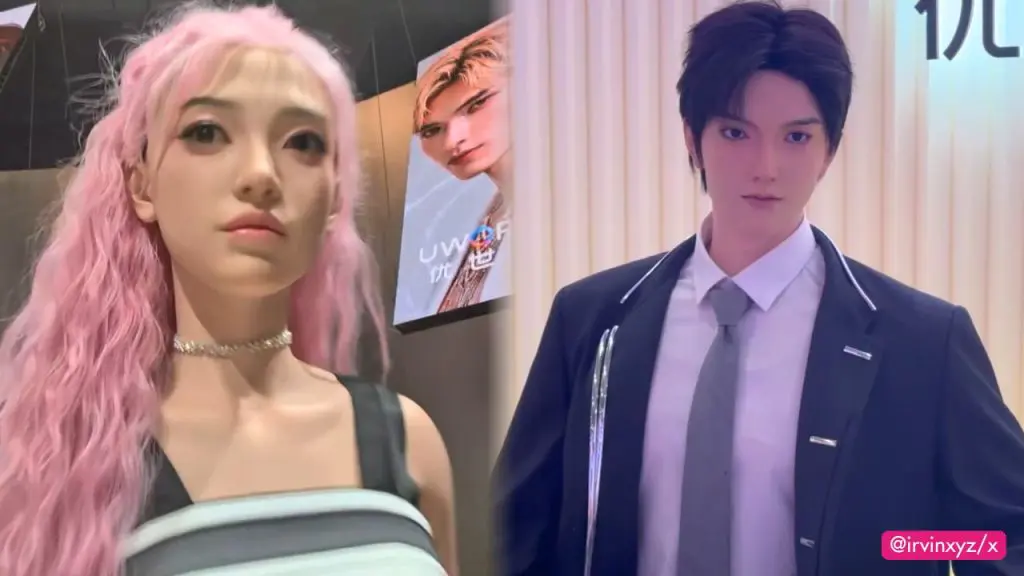
Are the robots really as advanced as UBTECH says? Or are they selling a polished illusion before they’re ready? Is the staggering demand they’ve reported actually real? And if so, how many people can actually afford to participate? Is this the future of love or the exact nightmare the movies have been warning about for a century?
UBTECH first hinted at the new direction it’s taking in late May 2026 when its founder and CEO, Zhou Jian, announced on social media the launch of a new brand aimed specifically at consumers. The sub-brand, called UWorld, has been in some media reports as a pivot, but that’s not accurate.
UBTECH has evolved steadily since its 2012 launch by adding new robot categories and expanding into new markets rather than abandoning one strategy for another.
The robotics firm first became known for its compact humanoid robots from its Alpha series, developed to compete with Nao from the now-defunct French company Aldebaran Robotics. Nao had been widely adopted in classrooms and robotics labs, typically priced between $6,000 and $8,000 per unit. UBTECH’s Alpha bots delivered a similar form factor and programmability, but at a fraction of the cost, often around $500.
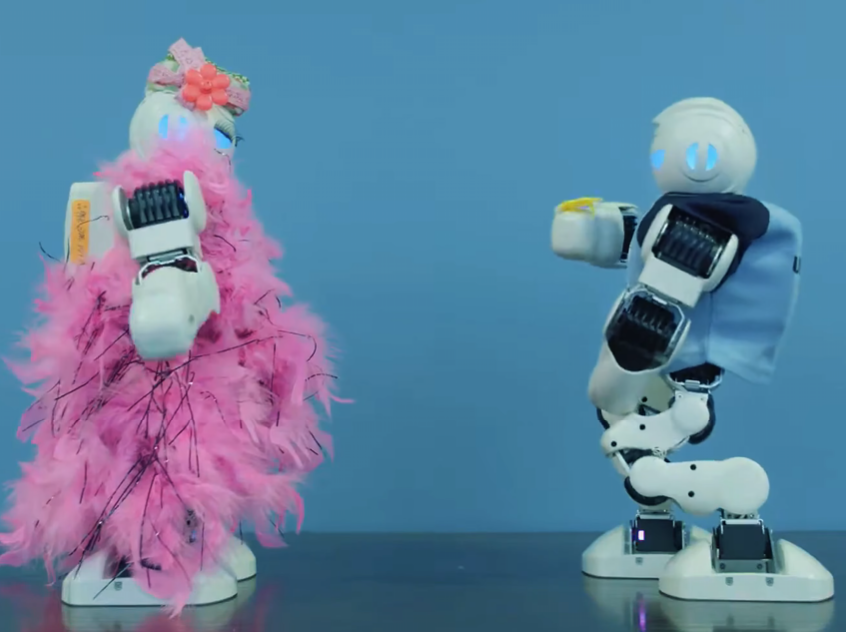
It then expanded deeper into education through DIY kits and coding platforms and even collaborated with Disney on consumer-grade robots to coincide with the release of Star Wars: The Last Jedi in 2017 and Avengers: Infinity War in 2019. Those robots, priced around $300, could be found at Best Buy and Apple stores. Around the same time, it took a swing at the US smart home market with Lynx, an Alexa-powered home assistant humanoid priced around $800.
From there, it expanded into service applications with its wheeled Cruzr robot, priced starting around $8,000 to undercut SoftBank’s Pepper. Like the Alpha series, the Cruzr robot remains part of UBTECH’s product suite.
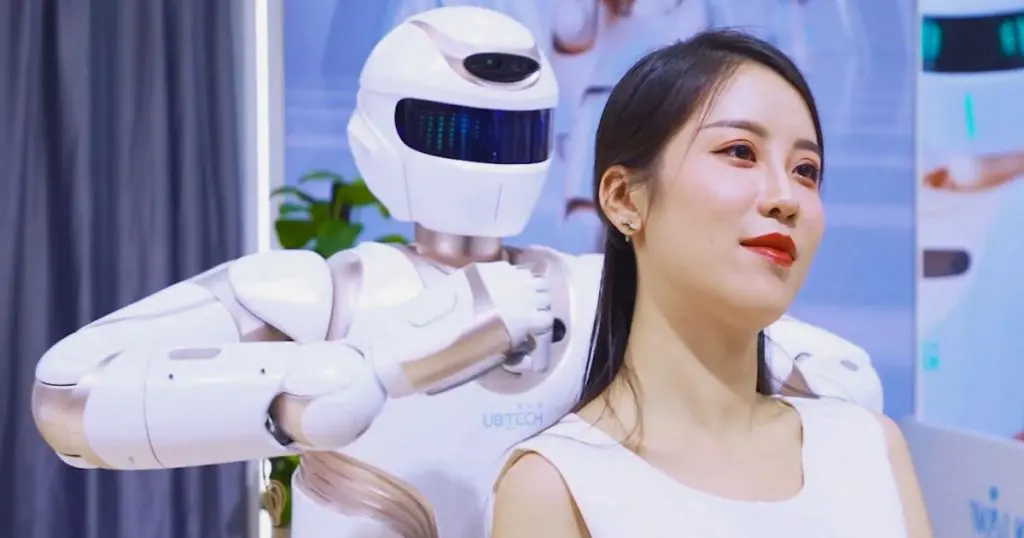
At CES 2018 in Las Vegas, UBTECH unveiled its first bipedal robot, aptly named Walker. A full-sized Walker humanoid debuted the next year, followed by the Walker X at the 2021 World Artificial Intelligence Conference (WAIC) in Shanghai. It was widely considered China’s most advanced humanoid robot at the time. The company initially positioned its Walker [music] line as consumer oriented before pivoting to industrial applications in 2023.
UBTECH became the first Chinese humanoid robot maker to go public in December 2023 when it became listed on the Hong Kong Stock Exchange (HKEX). During its listing ceremony, a bipedal robotic panda named YouYou walked confidently to the podium and presented Zhou with a gong mallet. An industrial Walker humanoid and the founder struck the gong together to open trading.
The spectacle came shortly after the Chinese government set a national goal to mass manufacture humanoids by 2025 and to lead the market by 2027. UBTECH has been one of the key players in China’s push.
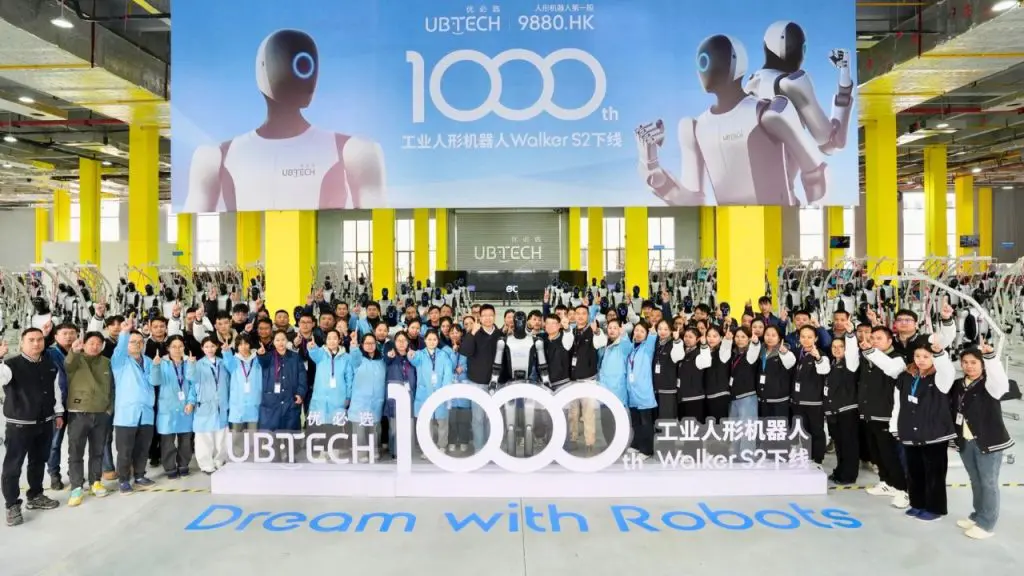
It reported shipping more a thousand of its industrial Walker humanoids in 2025. The total lagged behind fellow Chinese humanoid firms Unitree Robotics and Agibot, but UBTECH has arguably secured a stronger footing in the industrial sector. By early 2026, it had announced planned deployments with giants like Foxconn, BYD, Geely, Airbus, and Texas Instruments.
The robotics firm unveiled its first ultra-realistic robot, named Una, as well as a masculine variant in February 2025 at the LEAP Tech Conference in Saudi Arabia. UBTECH said little about it at the time other than boasting about its emotional intelligence, facilitated with state-of-the-art sensors and natural language processing.
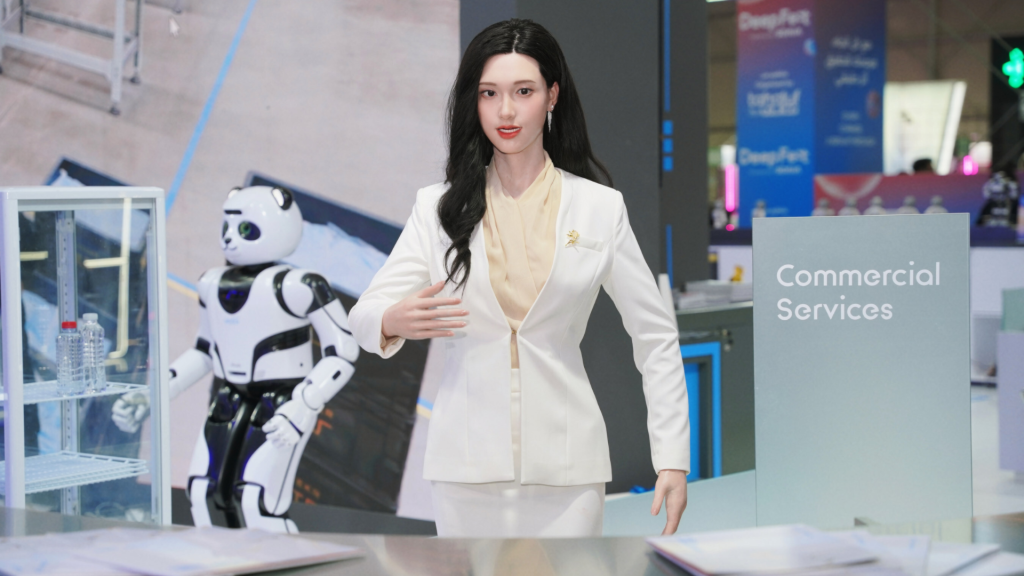
More recently, UBTECH launched a new majestic humanoid for service applications, the Walker C1, which made its public debut at the fourth China International Supply Chain Expo in Beijing. The robot performed a dance at the conference, moving in very similar ways to an ultra-realistic, female-presenting robot that slow danced with a human partner during its latest viral spectacle.

UBTECH opened advanced reservations for its U1 robots in early June 2026 through the Chinese ecommerce platform, JD.com. Registering interest required a refundable deposit of more than $400, before revealing their full specifications, model range, or final pricing. The company reported rapidly rising preorders in the leadup to the event, eventually claiming more than 13,000.
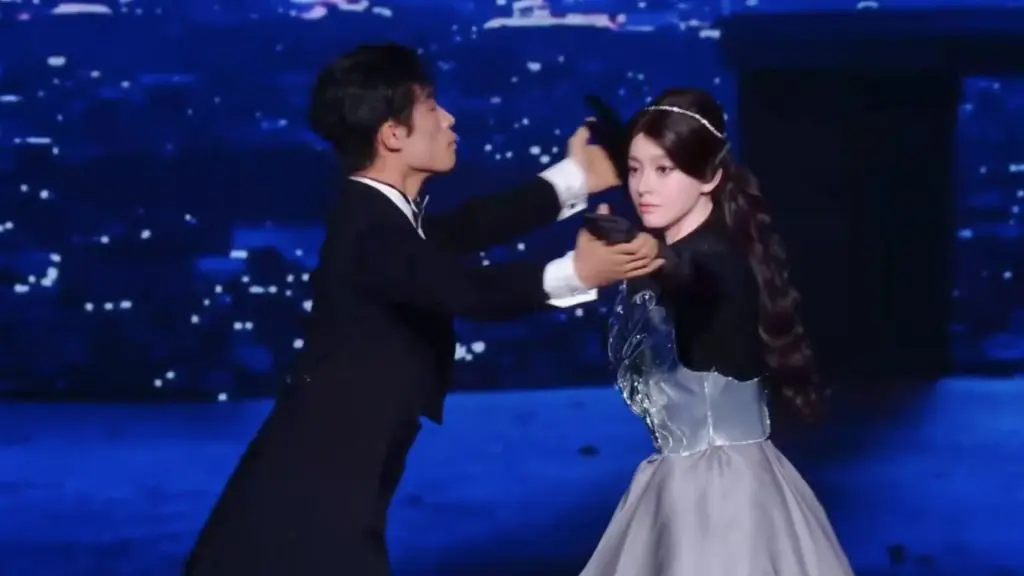
The formal unveiling featured a Westworld-like display of lifelike creations comingling with humans, including the popular Chinese cosplayer Daloatian. Her real name is Qián Bīng but she’s better known as her robotic alter ego that she channels to millions of followers as 大佬甜Giovanna across social media.
She was involved in a minor controversy back in 2024 when she appeared alongside real robots from the Dalian firm EX Robot at the World Robot Conference (WRC) in Beijing. Critics called it deceptive while others said it was obviously for entertainment purposes. It doesn’t appear that UBTECH explicitly implied that she was an actual robot during the launch, but at least one person who attended it thought she was a machine.
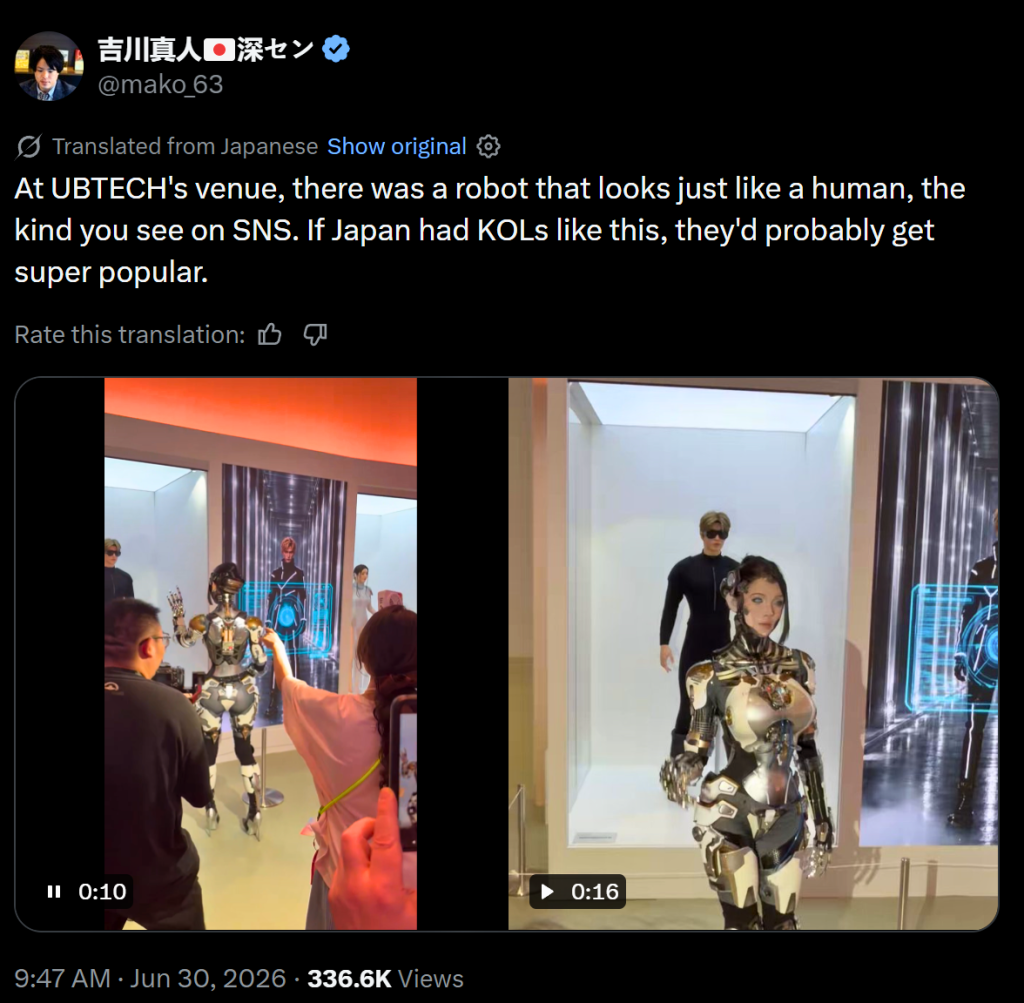
UBTECH’s U1 pricing starts around $17,600 for an android bust. A stationary full-body version is around $25,000. The most advanced version, the U1 Ultra, is priced starting around $145 for a male model and $129,000 for a female. UBTECH hasn’t offered an official explanation for the price difference, though the masculine variants are taller. The product line’s pricing is similar the US company Realbotix, though its highest-end robot has a wheeled base instead of legs.
The Ultra edition adds autonomous movement, substantially greater onboard computing power, more than 60 actively controlled degrees of freedom (DoF) in its body, and deeper customization of its face, voice, makeup, clothing, and behavior. UBTECH says the robot has 88 DoF total and is capable of replicating “90 percent of fundamental human movements.” All of the models have synthetic silicone skin and microfacial motors for human-like expressions.

At first, social media discussion mostly focused on the divisive idea of realistic robots as girlfriends and boyfriends. The mood changed when UBTECH revealed the actual products and announced its pricing.
Critics called it too expensive for robots that can’t perform tasks and lack the required gear to replace romantic partners, while others said they have luxury-level value as social companions. Reporters and social media users questioned how meaningful the number of reported sales was because the deposits were refundable.
The biggest criticism was the difference between the promotional images and videos and the machines shown in person. Their facial expressions, bipedal locomotion, and body movements still appeared stiff and mechanical. Others doubted that UBTECH could actually manufacture them at such a scale based on its previous production levels.
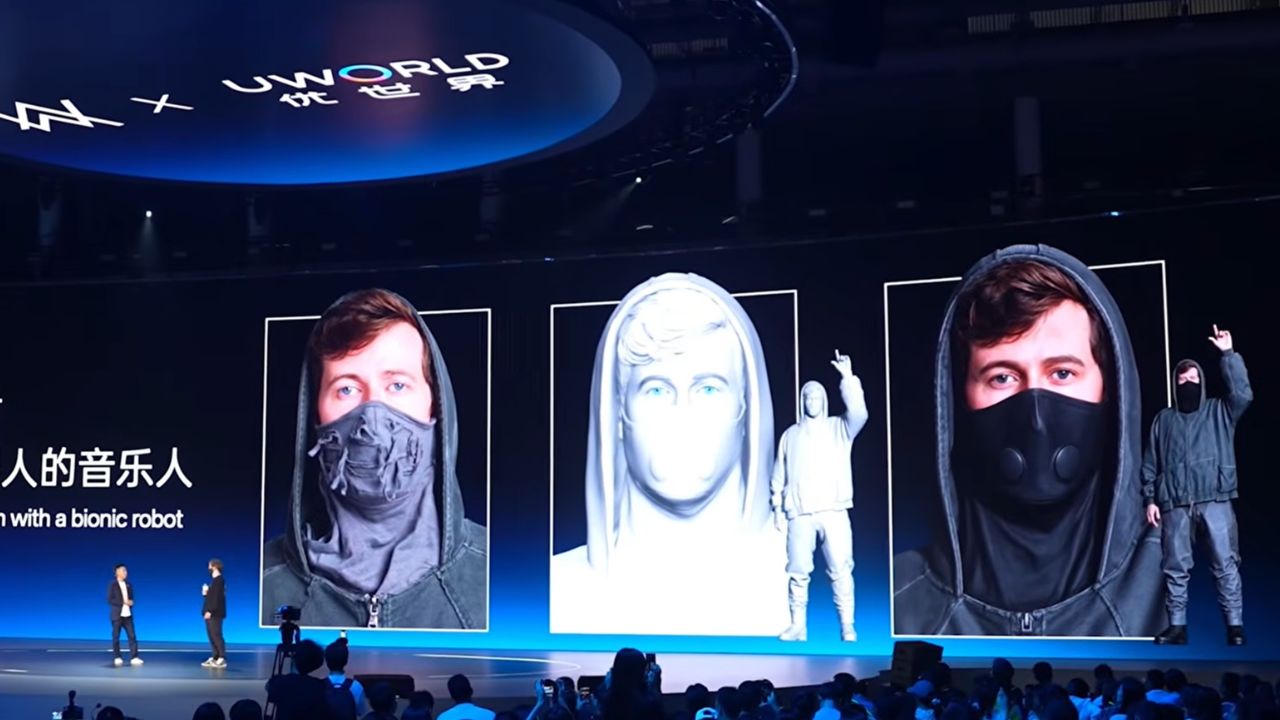
During the UWorld event, UBTECH announced the Norwegian DJ Alan Walker as its global ambassador. They plan to create a robotic twin of the artist for use during upcoming shows. The collaboration could give UBTECH valuable exposure with Walker’s sizable fanbase that’s driven 17 billion views on YouTube alone (though mostly in the 2010s) and his connections to major popstars like Ava Max.
But it also raises deeper questions about where humanoid robotics is headed. The robotic replica would turn the artist’s face, body language, voice, and stage identity into a repeatable machine performance.
Could it lead to a scenario similar to what the 1927 silent film Metropolis warned viewers about a century ago? In the Fritz Lang film, a well-liked citizen, Maria, is replicated in robotic form to incite chaos and political unrest.

UBTECH said customers can create customized robots, which could copy a person’s face and voice. The technology could be used to potentially comfort grieving families by recreating loved ones in robotic form. Las Vegas-based Realbotix demonstrated an early version of this in 2025 when it collaborated with Alan Hamel, the widower of Suzanne Somers, on an android replica powered by her digital twin.
UBTECH says it’s created an ethics committee to confront concerns as the technology advances. In a press release, the company said UWORLD “emphasizes the principle that users retain ownership of their data” and that it’s “established a three-layer architecture consisting of local-first processing, minimal cloud dependency, and user-controlled hardware safeguards.” The system, the company said, “enables humanoid robots to evolve from functional tools into emotionally responsive companions.”
Regardless of current limitations, supporters still view the launch as important, arguing that companionship may become the first major home use for humanoid robots. State-linked media, in general, repeated UBTECH’s messaging that the line represents a major step toward closer cooperation between humans and machines.

Whether UBTECH can deliver on what it’s promised remains to be seen. The company says it will start shipping initial units later in 2026.
Meanwhile, there’s no shortage of competitors in China working toward lifelike synthetic humans. Among the standouts is Shanghai’s DroidUp, whose viral humanoid robot Moya just made its European debut at the Davos Tech Summit. Read all about DroidUp’s plans to release the ultra-realistic walking robot into the world at scale right here.