
The videos look convincing.
Humanoid robots performing surgery, handling delicate objects, and showing off hands that look humanlike on the surface and alien the closer you examine. The claims surrounding them are even bigger. But the reality behind them is more complicated.
The reported breakthroughs are dominating headlines and social media feeds, but what has actually been achieved? Can robots available on Amazon really make medical school obsolete. And has one of the hardest problems in robotics actually been solved by one of the biggest tech memes of the past year?
Can today’s technology and economics actually support the future that’s being hyped as imminent? And if so, then what?
Unitree G1 Robot Surgeons
Viral footage from UC San Diego’s Advance Robotics and Control Lab (UCSD ARClab) shows what researchers call a breakthrough in robotic surgery.
The team says the pair of Chinese Unitree G1 humanoids removed a pig gallbladder while controlled by a teleoperator. They say it’s the first time humanoid robots have completed a major surgical procedure on a live animal.
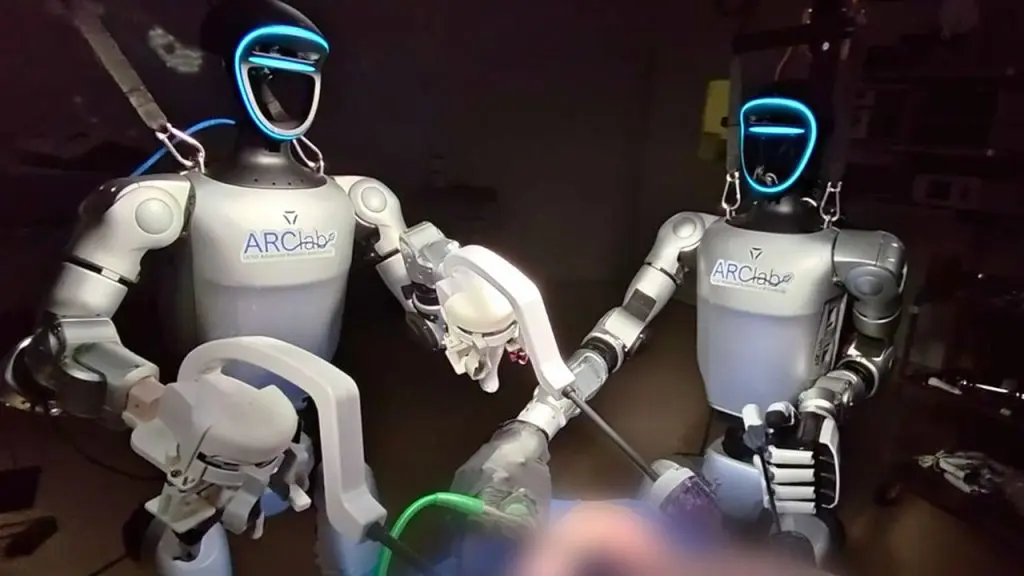
Though the work is not autonomous, the study shows that humanoids can be used as Da Vinci-style surgical robots. The difference is, the humanoids, nicknamed Surgie, are general-purpose robots rather than machines built for specific surgeries. And they’re priced a lot more modestly, in the tens of thousands of dollars rather than the millions that Intuitive’s iconic surgical system goes for.
According to the researchers, the compact humanoids performed the procedure with the same laparoscopic tools that human surgeons use for the minimally invasive cholecystectomy. However, they still required custom mounts to hold and articulate them.
The robots do not pose a near-term threat to Da Vinci and other surgical robots. The researchers described the system as very early stage. The robots needed repeated calibration and moved much slower than established surgical robots.
Elon Musk’s 3-Year Prediction
Others, like Elon Musk, see highly dexterous humanlike hands as the future of medical procedures. He has repeatedly said he believes Tesla’s Optimus could become better than the best human surgeon within just a few years.
“Three years. And by the way, that’s three years at scale,” he told futurist Peter Diamandis in early 2026. “There will probably be more Optimus robots that are great surgeons than there are surgeons on Earth.”
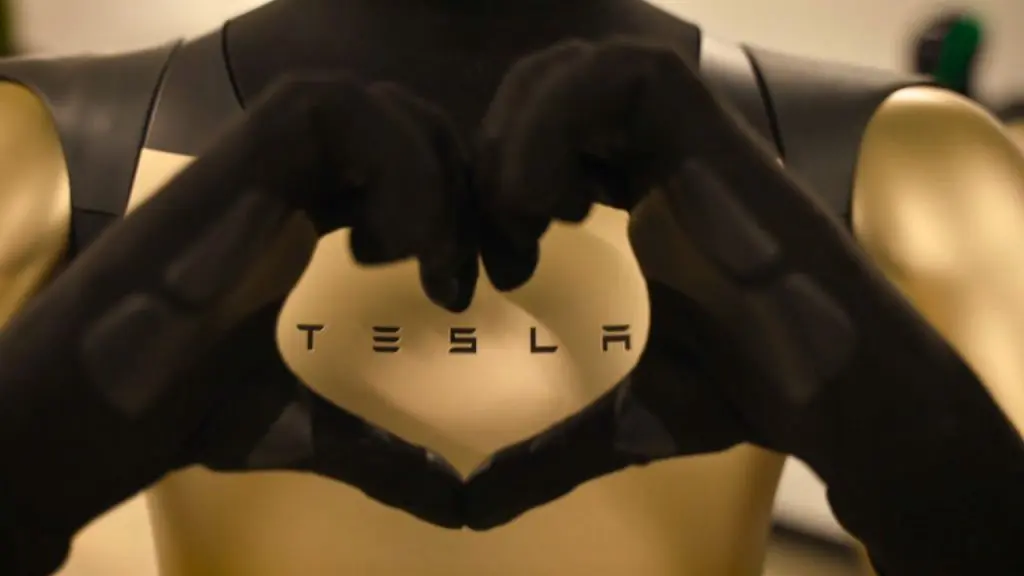
He went as far as saying going to medical school will be pointless. Though there are major regulatory hurdles that make his prediction unlikely, even in the most optimistic scenarios.
Tesla is expected to unveil the highly anticipated third-generation Optimus sometime in 2026, though Musk has pushed the timeline back several times. He has said engineering the humanoid’s hand is the hardest part of going to market. According to Musk, the goal for Optimus is a hand that can do basically anything a human can.
1X Hand Goes Viral
Musk has almost certainly caught wind of 1X’s newly unveiled robotic hand, which the Silicon Valley startup calls “the most advanced in human history.”
1X, which launched in 2014 in Norway as Halodi Robotics and is now headquartered in Palo Alto, went viral on Musk’s X social media platform as it offered a closeup look of its NEO humanoid’s end effectors. The startup shared a marketing video showing its flagship robot doing a range of tasks requiring human-level precision like screwing in a lightbulb and handling a wine glass.

According to 1X, NEO’s hand has a tendon-driven system with 25 degrees of freedom (DoF), including 22 powered movements in its fingers and palm plus three in its wrist. 1X says it has force control, tactile sensing, shear detection, waterproofing, food-safe materials, and enough strength for real household tasks.
The hand’s low-ratio drives operate similar to human tendons, which makes the fingers back drivable. That means when the hand touches something, the fingers safely give way as they sense the force coming through the joints.
The reported number of controllable joints is top tier compared to the most advanced robotic hands on the market today, matching Singapore’s Sharpa Wave and surpassing China’s Wuji Hand, which have 22 and 20 active DoF, respectively. On paper, they almost match the dexterity of human hands which typically have 27 DoF.
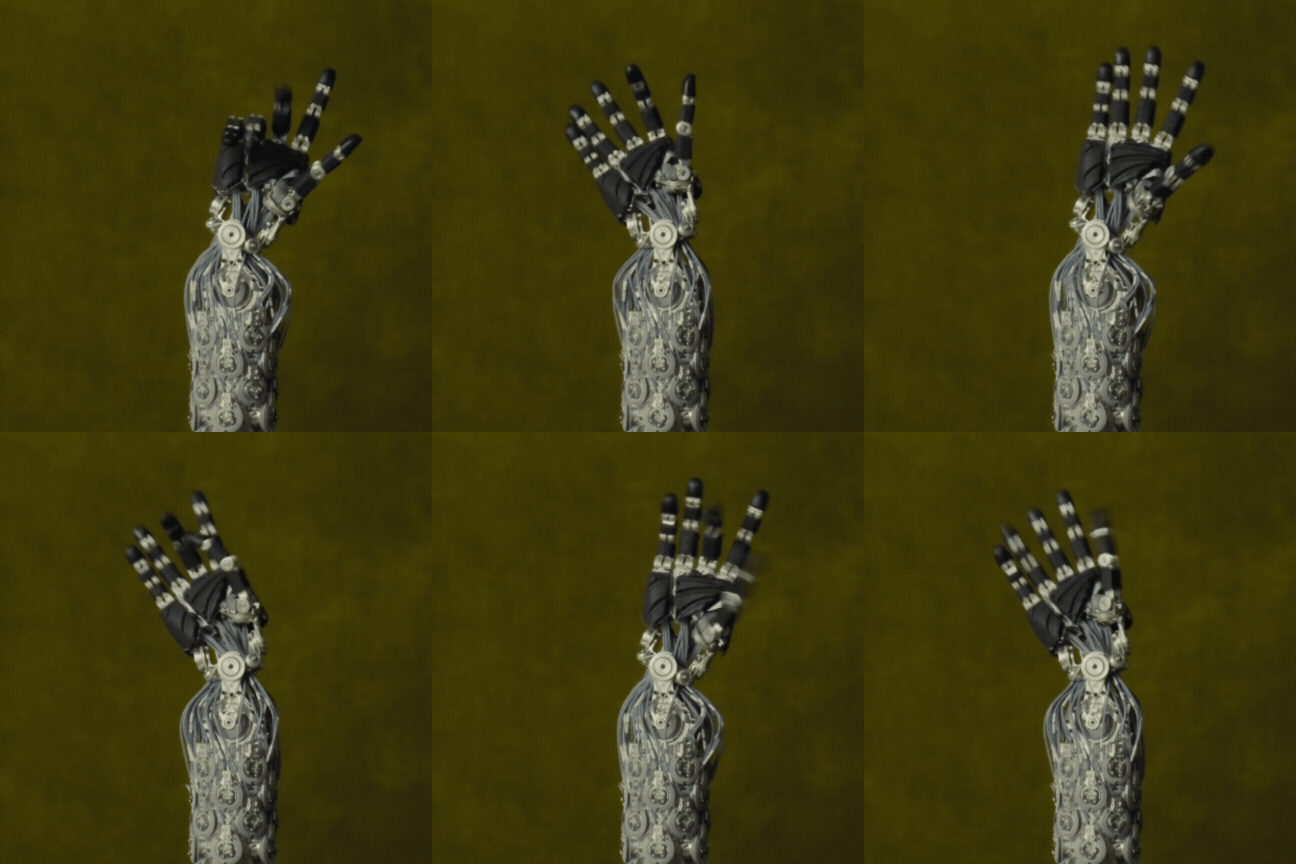
The specs are legitimately crazy for a consumer product. 1X has priced Neo at $20,000 to buy outright or $500 dollars per month to lease. The startup recently announced a new factory in Hayward, Calif., to fulfill more than 10,000 preorders.
They’re almost certainly doing this at a huge loss. Hands in NEO’s range typically go for at least $20,000 alone per hand, especially outside China. Most full-sized humanoids like Neo are also well over $20,000. Shanghai-based DroidUp’s Moya, which uses a similar rope-driven actuation system as NEO, is priced over $160,000. Even Unitree’s G1 costs at least $30,000 for versions that are not limited to remote control.
The total loss on hardware production alone could climb quickly into the hundreds of millions, especially when you consider support costs for highly complex parts.
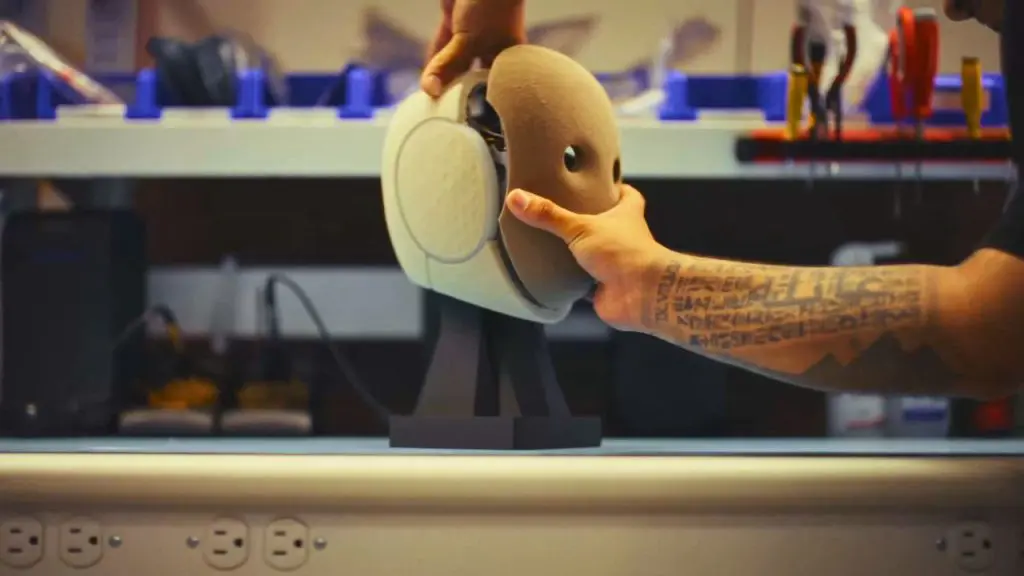
1X’s deployment strategy is also untested and unquestionably expensive. While it works toward full autonomy, they plan to hire human teleoperators to fill in for tasks NEO can’t yet handle on its own. To support 10,000 units, the labor costs could easily exceed $100 million per year, especially since 1X insists the remote helpers won’t be overseas.
There’s also a funding gap that’s impossible to ignore. 1X has announced about $137 million raised since 2023. That sounds like a lot until you compare it to its biggest US rival, the much younger Silicon Valley-based firm Figure AI, which raised more than $1 billion in 2025. It also pales in comparison to several Chinese startups like Robotera, Linkerbot, EngineAI, Galbot, Agibot, NOETIX Robotics, and LimX Dynamics that have raised more already in 2026. And then there’s Unitree, which has been approved for a Shanghai IPO that could raise around $619 million.

This may explain why 1X is making such a big deal about the hand right now, even with its significant order backlog. It needs investors to believe it has solved one of the hardest problems in robotics: useful, humanlike manipulation. Because without a much larger funding round, the economics are hard to square up.
Previous reports indicated that 1X was seeking to raise $1 billion for a valuation of $10 billion or more. Even that may not be enough for everything they’re trying to do at once.
On top of scaling a new category of hardware and supporting robots inside homes, 1X is also building a world model, which is a major undertaking. It requires hiring elite AI researchers, collecting massive amounts of robot interaction data, building training infrastructure, running expensive compute, and continuously improving the model while the hardware is already in the field.
But then again, none of its competitors are sure bets either. So, if they pull it off, the payoff will be major.

If the economics get too ugly, 1X may eventually need something closer to state-backed support. The idea of the US government backing a humanoid company would’ve seemed far-fetched just six months ago. Now it feels plausible as the Trump White House treats frontier AI as strategic infrastructure and floats direct government stakes in companies like OpenAI.
If Washington is willing to intervene around AI models, chips, and datacenters, it’s not a stretch for humanoid robotics to become part of the same national security playbook. That could also mean that NEO robots for homes double as next-generation soldiers.