
The US military has officially begun field testing humanoid robots as the race to replace soldiers with machines escalates globally.
While one Silicon Valley startup has dominated headlines with its claims of military contracts and battlefield testing, a far less publicized humanoid named Alex is undergoing actual evaluations, backed by millions in Pentagon funding and decades of robotics research.
Alex is a product of the Florida Institute for Human and Machine Cognition (IHMC) which launched in 1990 in Pensacola as a research not-for-profit associated with the Florida State University System. The Institut initially worked on technologies to help people make better decisions like ICONKAT, a primitive software tool for capturing expert knowledge and organizing it into visual diagrams.

By the Y2K era, its researchers began participating in Pentagon-funded programs for improving how soldiers communicate and operate in dangerous situations. In the 2000s, IHMC worked on DARPA’s Augmented Cognition (AugCog) program, which explored how computers could detect when a soldier was becoming mentally overloaded and adjust the information being presented. The researchers also worked on intelligent software agents that could share data across military networks and help coordinate operations.
The institute officially expanded into robotics in 2002 when Jerry Pratt joined to continue research he began in 1990s at MIT. Early experiments included Spring Turkey and Spring Flamingo, both of which moved, as their names imply, with spring-like mechanisms. Pratt developed those machines before he launched the Florida institute’s robotics division, but the concepts laid the groundwork for its future research.
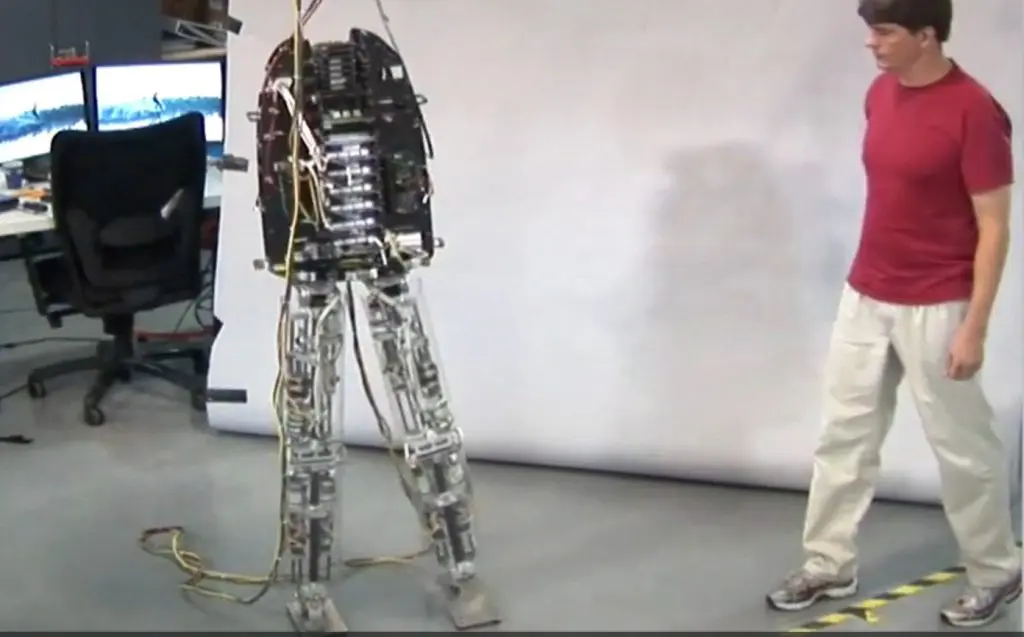
One of the institute’s first major robotics projects was the M2V2, which was essentially the lower half of a humanoid robot. Using a technique called Capture Point control, developed in collaboration with the Honda Research Institute, the biped continuously measured its body’s position and movement to predict where it would lose its balance, then used mathematical calculations to determine where to place its foot to prevent a fall.
Sensors in the robot’s joints and body tracked leg positions, speed, and balance as an onboard computer ran calculations in real time. As the robot moved faster or leaned farther off balance, the calculated landing point shifted to compensate.
The robotics lab also participated in DARPA’s learning locomotion program using Boston Dynamics’s Little Dog quadruped, a precursor to Spot, to develop software to navigate rocks, uneven surfaces, and other obstacles. To help the robot navigate, they used an external motion-capture (MoCap) system that tracked its position and detailed terrain maps generated with high-resolution 3D scanning equipment.
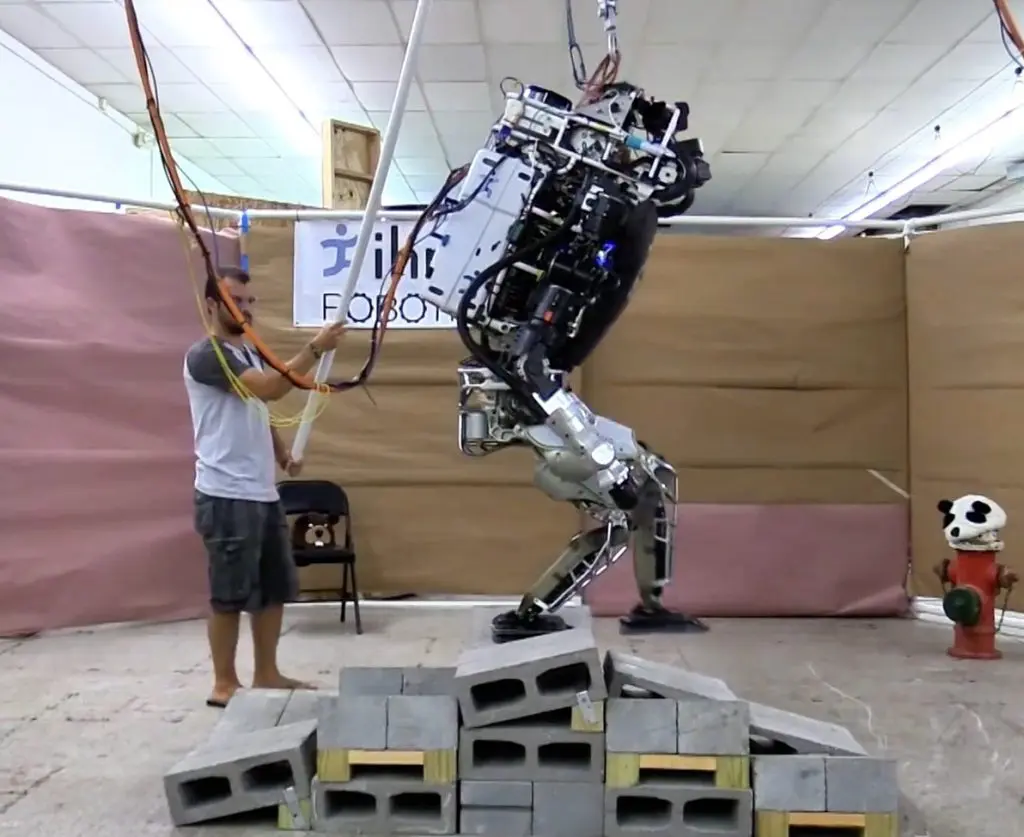
By the early 2010s, IHMC was experimenting with faster-moving concepts like the two-legged Fastrunner. Though that robot’s full running capabilities were mostly demonstrated in computer simulations, the research led to Hexrunner, a six-legged robot that reached a top speed of 48 km/h (30 mph) during outdoor testing in 2015.
The institute was also one of the first seven research labs to get access to an early version of Atlas by Boston Dynamics. The team earned the opportunity by finishing first out of 26 teams in DARPA’s 2013 Virtual Robotics Challenge, a competition that tested control software for robots in simulated disaster zones. IHMC’s robot, nicknamed Running Man, finished second in DARPA’s physical robot trials in December 2013 and again in the 2015 finals, earning $1 million in prize money.
The DARPA competitions are widely considered milestones in the evolution of robotics because they accelerated advances in humanoid mobility, balance, and manipulation. However, the hardware still relied heavily on human operators and required extensive programming for each motion.

The institute applied the lessons it learned with Atlas to help improve the walking and balance control systems of NASA’s Valkyrie humanoid robot. The research helped IHMC refine its software that it would soon use for its own humanoids as it pursued more direct military use cases in the 2020s.
Boardwalk Robotics, a startup spun out of the nonprofit to commercialize the technology, collaborated with the Institute on Nadia. The full-sized humanoid was named after the Olympic gymnast Nadia Comăneci. The Romanian athlete became the first gymnast in Olympic history to receive a perfect score at the 1976 Montreal Olympics when she was just 14 years old.
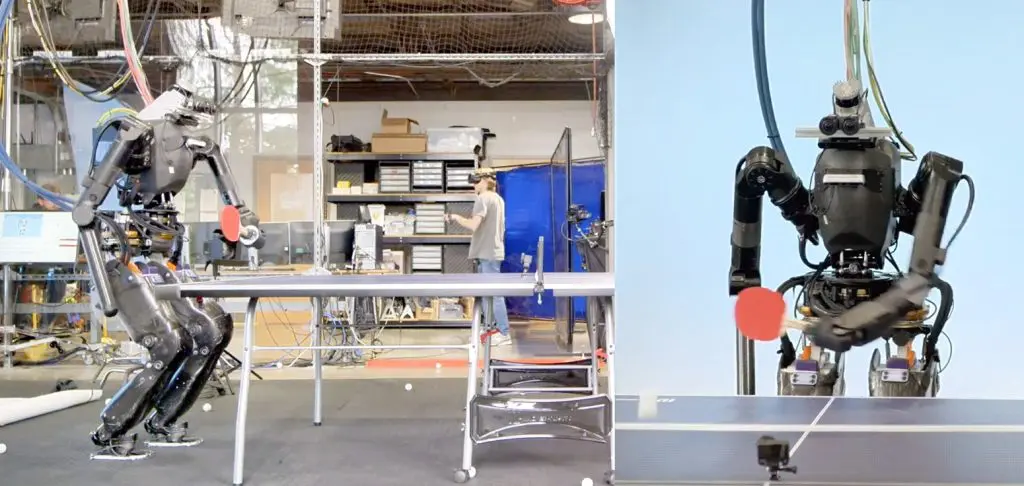
Standing 100 kg (220 lbs), Nadia boasted 29 degrees of freedom (DoF) that allowed for an unusually wide range of motion for the era. Outside of the robotics world, it gained attention with demonstrations of it playing ping-pong and boxing years before humanoid fighting emerged as one of the technologies first commercial applications. Nadia’s athletic abilities relied on a human operator using a virtual reality setup, but the humanoid was learning to do more practical tasks autonomously as the institute racked up military funding.
It served as the foundation for Squadbot, a humanoid engineered for work alongside soldiers in urban environments. That project kicked off in 2019 with a $4.4 million award from the US Office of Naval Research. IHMC also won a separate $3 million Navy contract for research into high-speed humanoid movements for tactical operations, bringing its military funding to $7.4 million that year.
By 2022, the institute got another $3 million that went toward improving Nadia’s mobility, autonomy, and its ability to recover from falls. The long-term goal was to build a humanlike machine that could enter dangerous buildings, inspect unfamiliar areas, and take on hazardous jobs without putting soldiers in harm’s way.
That same year, Pratt left the institute after two decades to join the new Silicon Valley humanoid startup Figure AI, which was still operating in stealth under the leadership of Archer Aviation founder Brett Adcock. Pratt would go on to found Houston-based Persona AI with Nic Radford, the former lead of the NASA Valkyrie program to build humanoids for shipbuilding. Robert Griffin, who competed against IHMC in the 2015 DARPA Robotics Challenge while working on Virginia Tech’s Escher humanoid, took over as the leader of the institute’s robotics program.

In 2024, Boardwalk introduced its first commercial product after Michael Morin joined to push its technology into the industrial sector. The upper body only humanoid, named Alex, was designed for factory work using tools meant for humans. It featured 19 DoF and could handle payloads around 10 kg (22 lbs). At the time, Boardwalk said it prioritized upper-body dexterity over walking, believing that a stationary humanoid could take on industrial work without the added complexity, cost, and safety concerns that bipedal locomotion brings.
Four months after its unveiling, the San Francisco startup Foundation Future Industries acquired Boardwalk for an undisclosed amount in December 2024. Its founders, Sankaet Pathak and Mike LeBlanc, rebranded Alex as the Phantom MK1 and explicitly marketed it as a humanoid built for the battlefield. The half humanoid made its debut at SF’s Temple Nightclub in early 2025 as the newly inaugurated Trump administration vowed to fast track autonomous tech into defense.

Foundation quickly became known for its eagerness to deploy its humanoid onto the battlefield. In the months that followed, Eric Trump became an investor and a chief strategic adviser as mainstream media outlets reported that it had won a $24 million Department of War contract to train Phantoms alongside US Marines and that the robots had been tested in Ukraine. However, the claims largely originated from Foundation, and there are many reasons to take them with a grain of salt.
As Foundation aggressively marketed itself as America’s killer robot company, IHMC quietly built its own version of Alex under its Squadbot research program. In August 2025, the institute received a naval research contract with a maximum potential value of $24.8 million to build the third generation Squadbot using the Alex platform.
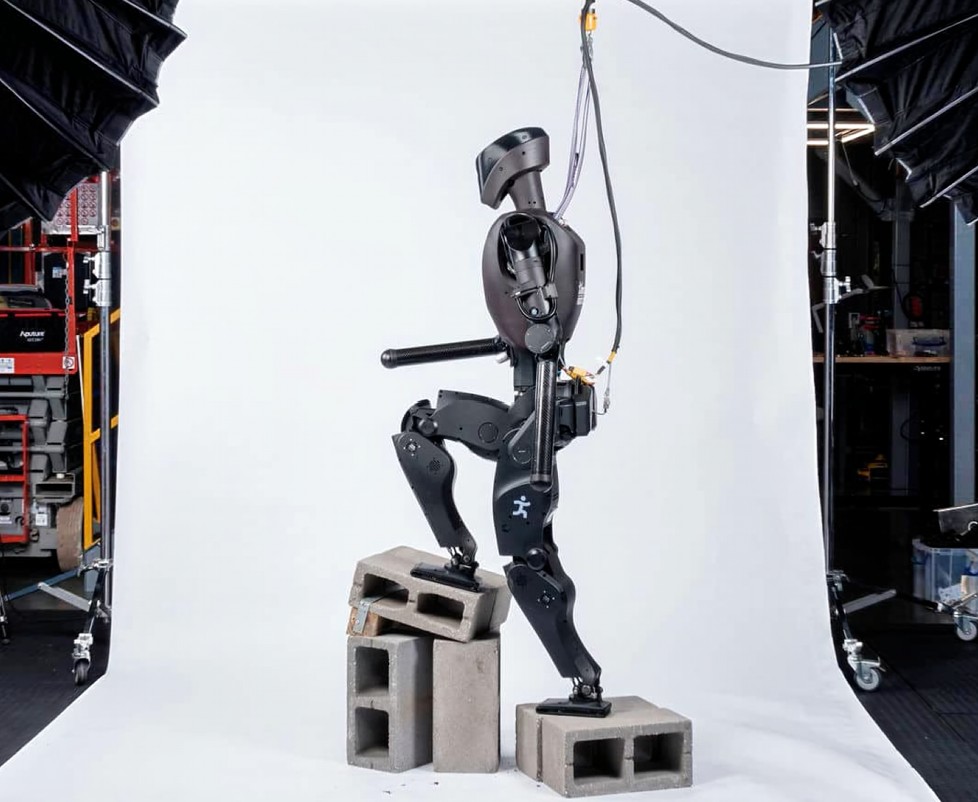
The new Alex is a major advancement over the Institute’s earlier platforms because it carries its own batteries, computers, and sensors, so it can work without being tethered to external equipment. Standing 179 cm (5 feet 10 inches), Alex weighs 85 kg (187 lbs) and has a reported 29 DoF. It can travel at speeds exceeding 1.5 m/s (3.4 mph) and operates for 2 hours per battery charge. According to its developers, the humanoid uses a hybrid control system that allows for remote control with Alex’s onboard AI handling certain movements and tasks independently.
The robot has officially moved from the lab to field testing. In May 2026, IHMC demonstrated Alex for the Office of Naval Research in Maryland, where it reportedly walked untethered across rocky gravel, slippery surfaces, and uneven pavement.
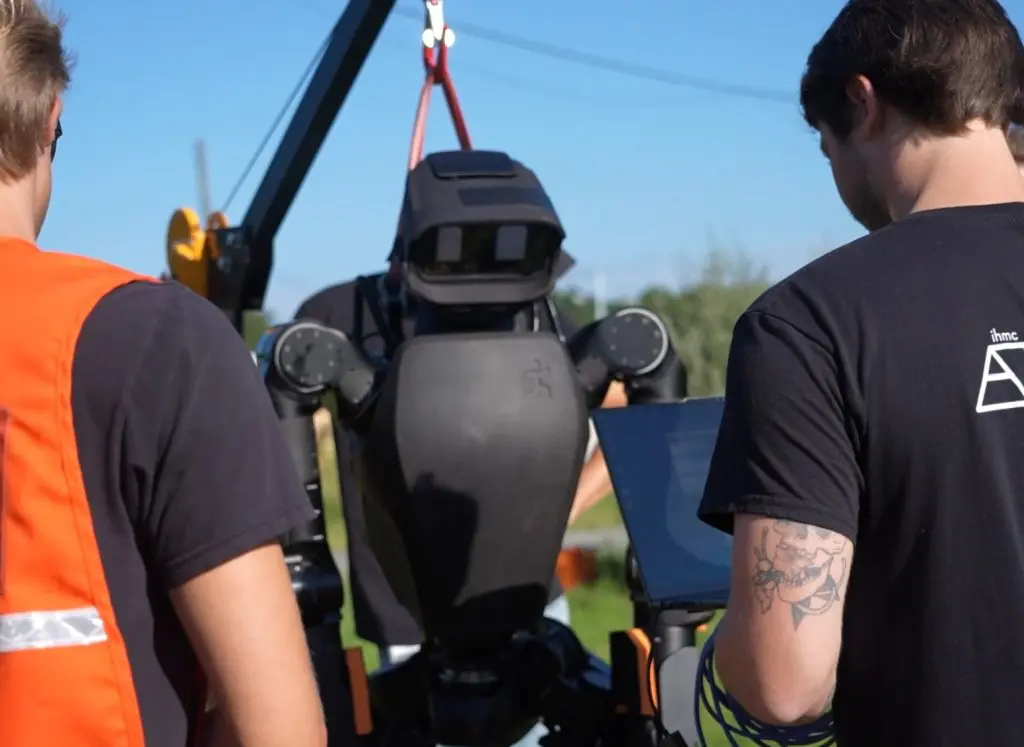
Alex was one of nine finalists to compete in the US Army’s Xtech Humanoid Competition at Marine Corps Base Quantico in Virginia in September 2026. The contest attracted 103 initial submissions. The institute’s robotics team was selected as one of five winners and the only one with a complete humanoid robot. IHMC won $100,000 and potentially $1.25 million in follow-on government contracts.
The other four winners were:
- ACES Group (Huntsville, AL) for its advanced battery and power system
- Hydroplane Limited (Lancaster, CA) for its compact power-generation technology
- RAS Labs (Boston) for its sensitive fingertip sensors for robotic hands
- Velocity Explorations (Melbourne, FL) for its software that translates military commands into actions that robots can perform.
In its announcement, Army officials highlighted Alex’s impact resistant actuators, ballistic protection, and hybrid autonomy.
Footage from the demo provides details about Alex’s current capabilities and limitations. Its developers confirmed that the robot was being remotely operated as it navigated wooden terrain, while human operators controlled its walking speed and slowed it down whenever it appeared to stumble.
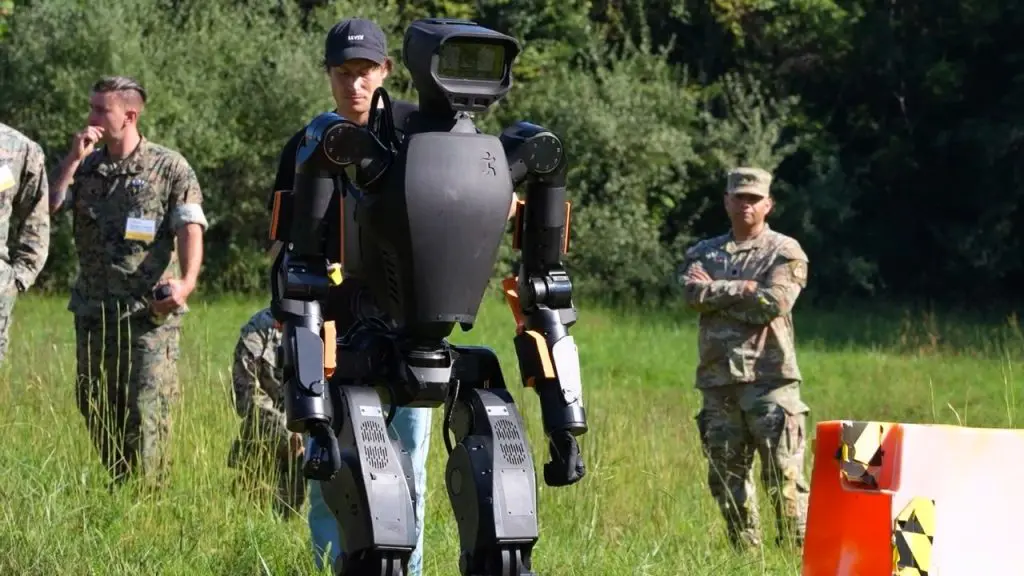
The humanoid also demonstrated the ability to dig holding a small shovel with a five-fingered dexterous hand from the Austin company PSYONIC, whose technology is also used for prosthetics. According to the researchers, Alex was following movements it had been taught prior rather than independently deciding how to perform the task, which is why it continued on here even after dropping its shovel.
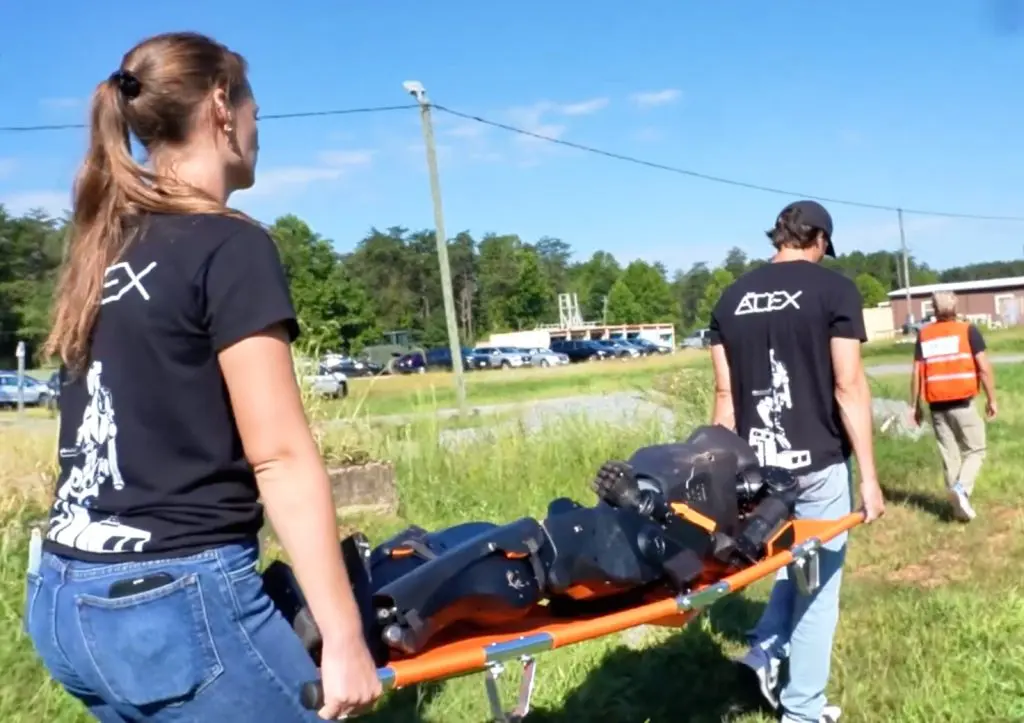
The team said there are remaining challenges involving robotic hand strength and the ability to securely grip objects. The researchers appeared pleased with Alex’s performance, though the demo ended with the robot being carried away on a gurney. While it showed promising capabilities in difficult outdoor terrain, there’s clearly a long way to go before the humanoid is ready for deployment on an actual battlefield.
While battlefield ready humanoids may still be years or even decades away, the technology is advancing rapidly amid an arms race with China.
The Trump administration has restricted imports of new foreign-made humanoids in hopes of bolstering the sector domestically. The DoW has launched a new initiative called Project Meridian, led by Elon Musk, Anduril founder Palmer Luckey, and former House Speaker Newt Gingrich to recommend which emerging tech the military should prioritize in the next 10 to 30 years. Depending on what they recommend, it could influence future military investments in humanoids as the Pentagon explores how intelligent machines might eventually work alongside soldiers.
Meanwhile in China, the People’s Liberation Army is reportedly actively investing in humanoid tech for reconnaissance, patrols, transporting supplies, and potentially urban combat. During the 2026 World Robot Conference (WRC) in Beijing, the major Chinese defense manufacturer NORINCO showcased its humanoid Fuxi, a teleoperated robot for jobs like guard duty and riot control.

As Chinese manufacturers own an estimated 95 percent of the global humanoid market, the country’s robust robotic supply chain gives its military a significant advantage, developing and deploying humanoids at scale.
Humanoid technology has also been identified as a priority in Ukraine, whose Brave1 defense innovation program recently announced new funding opportunities specifically for humanoids. And then there’s former defense minister Mykhailo Fedorov’s newly announced Army of Robots program. The ex-military official describes it as an ecosystem that will invest in defense tech firms, aiming to eventually replace frontline soldiers with humanoids.