
Dairy Queen just hired its first robot worker.
Its estimated value is many times more than what the typical employee makes a year doing the same tasks. So, on the surface, the economics make little sense until you consider the wider implications.
It could be the first public-facing deployment of a robot with highly dexterous hands amid an intense race to bring humanlike manipulation into the workforce. Is this the beginning of a new era of humanlike automation? Or will it expose the limits of replacing people with machines?
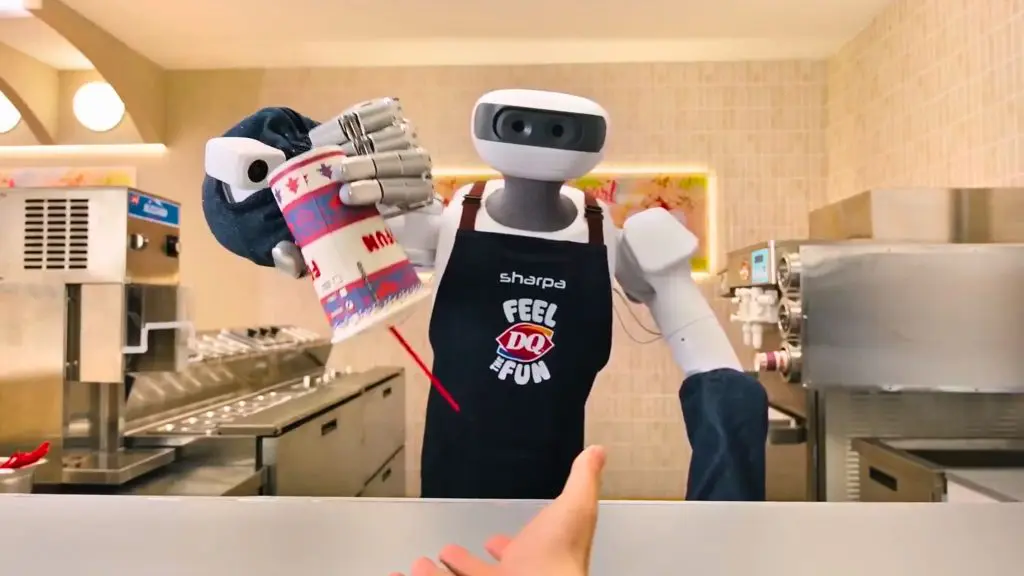
Dairy Queen is teaming up with the fast-rising startup Sharpa Robotics to automate ice cream service, starting with its quickest growing market in China.
The 86-year-old soft-serve pioneer entered China in 1992 with its first location in Beijing. By 2026, DQ operated more than 1,800 Chinese locations, making China its second-largest market by store count behind the United States. DQ and local partner CFB Group plan to open 600 additional restaurants by 2030.
The Minnesota-based company, which has been owned by Berkshire Hathaway since 1998, was built around a labor-saving technology. The continuous-flow, soft-service freezer made it possible to produce and dispense a consistent frozen product much faster than traditional hand-scooped ice cream.
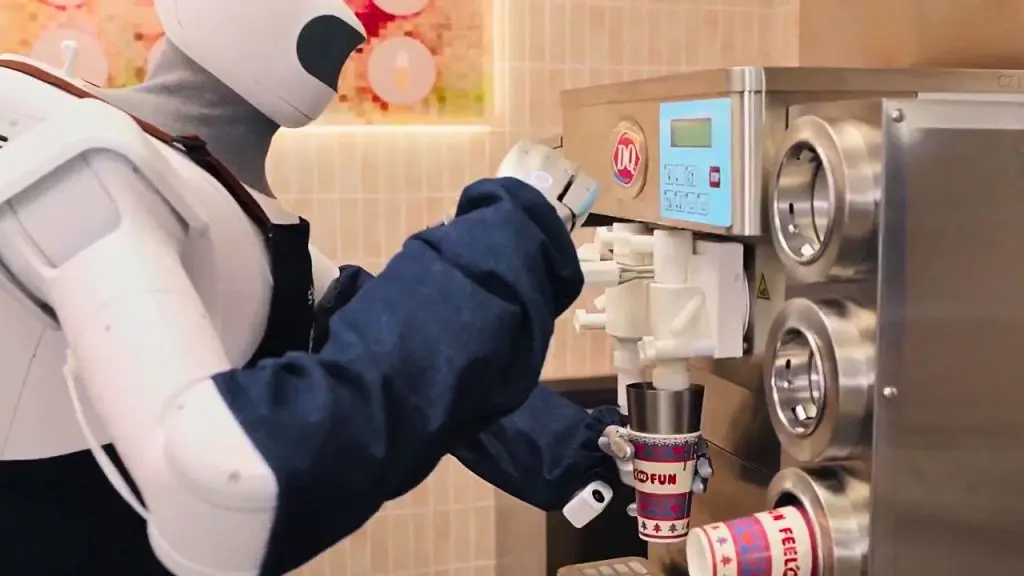
Its collaboration with Sharpa is the latest move to modernize its operations in the age of artificial intelligence. DQ has been expanding its use of AI for taking drive thru orders developed by the Bay Area company Presto AI in 2025. The system takes orders, repeats them for confirmation, attempts upselling, and enters them into the ordering system. Complicated orders still require human intervention.
The robot deployment at DQ’s new Shanghai location is Sharpa’s first high-profile commercial agreement. The companies announced the plans with stylized footage of Sharpa’s wheeled humanoid, North, taking over a DQ so everyone can watch the FIFA World Cup.
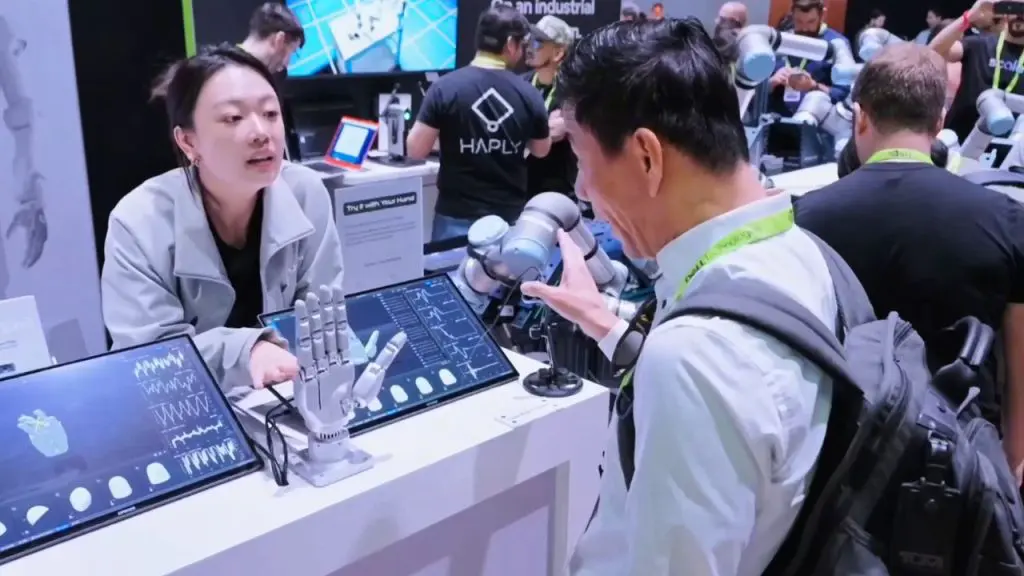
Launched in 2024, the Singapore-based robotics firm has gained significant international attention since its appearance at CES 2026 in Las Vegas, where it received an Innovation Award in the robotics category.
Its wheeled humanoid has gone viral for its autonomous abilities like playing ping pong, card dealing, building paper windmills, and assembling a PC. In footage from NVIDIA’s GTC 2026 conference, North inserts a GPU into a PCIe slot, which is an extremely challenging task for traditional industrial robots because of the tight tolerances and high risk of damaging sensitive components.
Sharpa is led by David Li, the cofounder and CEO of the leading LiDAR firm Hesai Technology, which launched in San Jose in 2013 and relocated to China the following year. He cofounded Sharpa with Hesai’s CTO Xiang Shaoqing and chief scientist Sun Kai.

According to Pitchbook, they’ve raised nearly $85 million to date, and Singapore’s Economic Development Board says it’s valued at more than $1 billion. It’s grown to more than 100 employees spread across China, Singapore, Hong Kong, and the US. Sharpa’s headquarters is in Singapore while its manufacturing and R&D are in Shanghai for the proximity to supply chains and domestic expertise. It also has an office in Silicon Valley for business and partnership operations.
To show North is almost ready for the Dairy Queen job, Sharpa shared a video of the humanoid doing the fast-food chain’s iconic upside-down flip to demonstrate its precise force control.
Though North isn’t the first robot to enter the restaurant business, its deployment is notable for using human-scale, five fingered hands for the job. The most common restaurant robots deployed at meaningful scale before the current humanoid push were wheeled service bots from companies like Shenzhen-based Pudu Robotics, Shanghai’s KEENON Robotics, and California-based Bear Robotics. They mainly deliver food, return dishes, and move supplies while human employees cook and handle complex customer service.

Humanoid-style robots that work in customer-facing roles, like Beijing-based Galbot’s G1 and Adam from the Las Vegas company Richtech Robotics, use parallel grippers and suction end effectors.
According to Sharpa, North will perform an end-to-end workflow consisting of more than 50 consecutive manipulation steps. Each hand has a reported 22 degrees of freedom (DoF), which approaches the dexterity and range of motion of human hands, which typically have 27 DoF. The Sharpa Wave is widely considered one of the world’s most advanced robotic hands on the market along with China’s Wuji Hand and 1X’s recently unveiled humanoid hand it claims is the most advanced in human history.
Each finger on the Sharpa Wave has more than a thousand tactile pixels that detect tiny changes in pressure and contact. The sensors send updated info up to 180 times per second to the robot’s AI brain, which uses the stream of data to make split-second decisions.
North is powered by what Sharpa calls a vision-tactile-language-action (VTLA) model called CraftNet that’s specifically geared toward jobs requiring fine manipulation. CraftNet uses a slower planning system for choosing actions and a faster, reflex-like layer for adjusting grip and force in real time. Sharpa says this helps North handle delicate objects and complete precise tasks that simple grippers can’t perform.
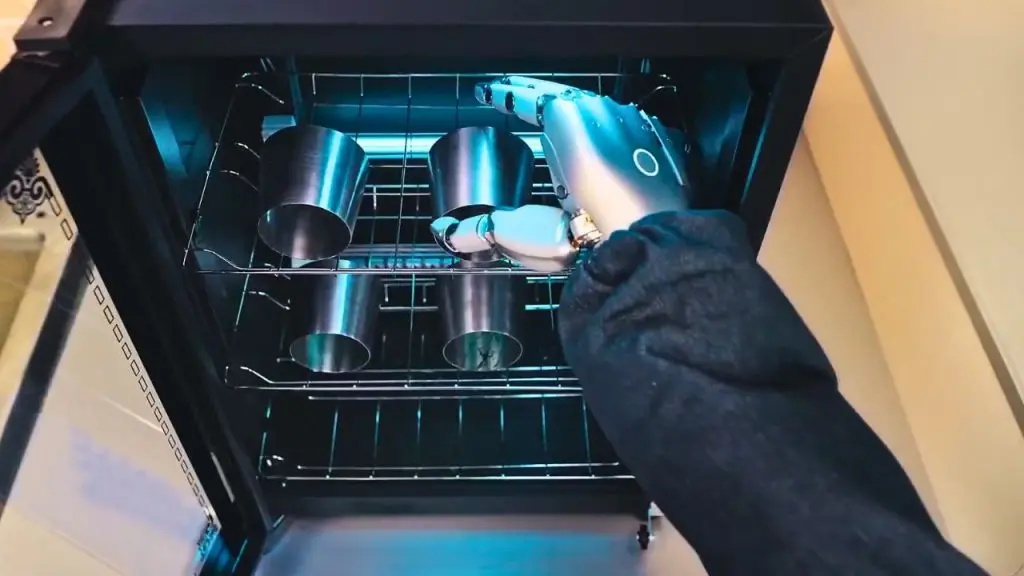
Sharpa says its humanoid will work in the DQ restaurant that’s designed for human workers using standard equipment, handles, containers, and food-preparation processes. This is known as a brownfield-style deployment, and it could back up one of the central arguments in favor of the humanoid form factor.
Though technically impressive, the deployment still presents serious near-term business challenges.
Sharpa’s hand has a complex design that includes tactile sensors, compact actuators, and control electronics, which is much harder to maintain and repair than simple robot grippers. It also introduces more potential failure points, especially in a restaurant setting that requires frequent cleaning.
Sharpa, however, says its Wave hand is built for industrial durability, reporting that it’s survived 2.5 million press cycles, hundreds of impacts, more than 3,000 mechanical shock cycles, and more than 1,000 hours of extreme-temperature testing.
Even if North can complete tasks simpler robots cannot, the total cost of the hardware, maintenance, supervision, training, downtime, and replacement parts will likely far exceed the labor savings for the foreseeable future. The hands alone are reportedly priced around $50,000 dollars apiece. The cost of the hardware could likely pay for at least a dozen of workers for the same job, according to recent DQ job listings in Shanghai.
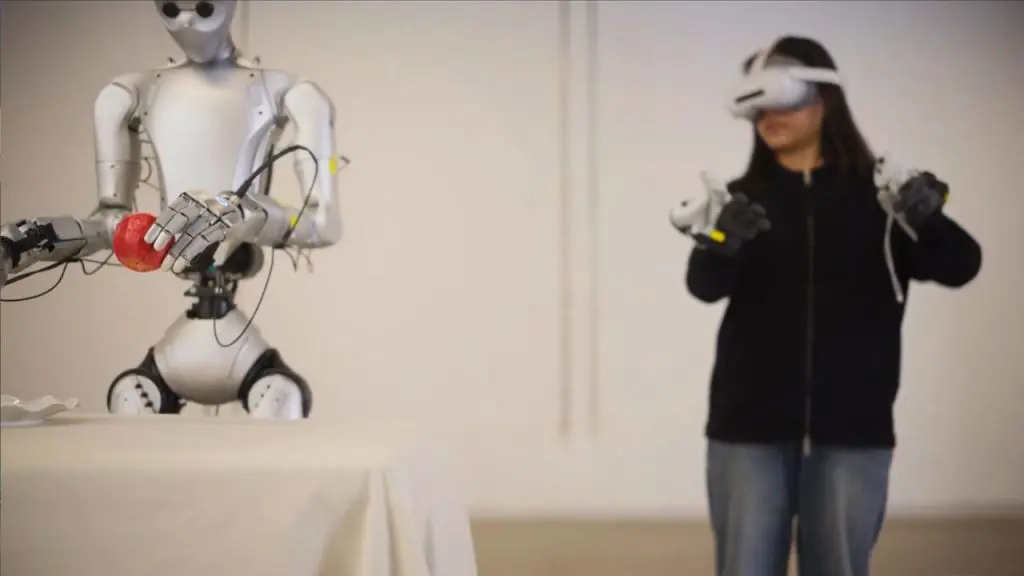
Though the Sharpa Wave is expensive now, its price is bound to go down as production scales. NVIDIA selected the end effector to integrate with a Chinese Unitree H2 robot for its first reference humanoid, suggesting it sees a path toward wide adoption and standardization.
It’s unlikely that Dairy Queen is paying the full price for the deployment. Sharpa has strong incentives to subsidize or even fully fund it because it gives them a highly visible real-world use case with a globally recognized brand. The startup can use it to collect valuable training and reliability data while it gets promotional footage that prove its hands can use the same tools as humans.
The deployment could also create significant reputational risk because North will operate in front of customers carrying smartphones. So, it could generate valuable publicly when it works, but one widely shared failure could shape public perception of the entire project.
It’s a dynamic that the Silicon Valley startup 1X Technologies will have to navigate as it begins shipping its NEO humanoid for homes to thousands of customers. 1X is making grandiose claims about the robot’s newly updated hands, calling them the most advanced in the history of everything.