
Before she became one of the most powerful names in tech, Mira Murati was a curious engineer obsessed with the intersection of humanity and machines.
When she came across Vernor Vinge’s 1993 paper, “The Coming Technological Singularity,” the Albanian-born engineer was struck by the bold prediction that superintelligent systems could transform the world beyond human comprehension.
Vinge, a computer scientist, mathematician, and science fiction author, predicted that artificial intelligence would one day become smarter than any human and become capable of improving itself rapidly. This would trigger a runaway effect where intelligence accelerates beyond people’s control or understanding. It could be dangerous or glorious, but no matter what, Vinge predicted the impact would be transformative.

Now, at age 36, Murati finds herself at the frontier of this technological revolution. As experts predict that AGI is just around the corner, or maybe already here, she’s building the systems of the future with an unprecedented level of funding.
Her new company is already one of the highest valued AI startups in the world without a product. How did she get to this point and where’s this all headed?
Albanian Origin
Born in Albania in 1988, Mira Murati earned a scholarship to study at the prestigious Pearson College in Canada at age 16. Murati’s formative years in Albania profoundly influenced her trajectory.
During her upbringing, her homeland was transitioning away from a rigid communist regime known as the People’s Socialist Republic of Albania. The period was marked by extreme isolationism, economic hardship, and political repression.
In interviews, Murati has said the lack of access to technology fostered a deep appreciation for theoretical knowledge. Mathematics and physics were emphasized in the Albanian education system.
Murati’s parents, both literature teachers, nurtured her academic pursuits. At age 16, she earned a scholarship to study at the prestigious Pearson College in Canada.
Tesla and the First Leap into AI
After graduating from Dartmouth with a degree in mechanical engineering, she began her career at Tesla in 2013. Her role as product manager for the Model X electric SUV sparked her interest in the practical applications of artificial intelligence in industry.
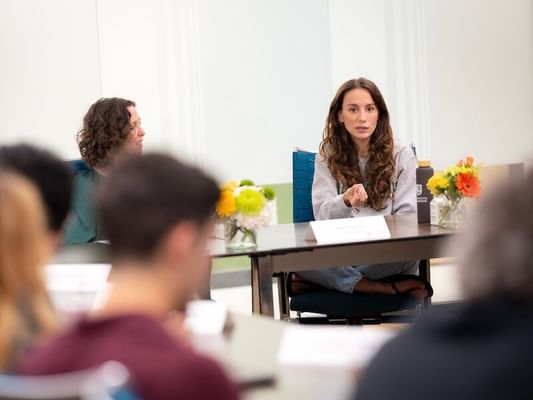
In 2016, she moved to Leap Motion, an augmented and virtual reality startup, as vice president of product.
OpenAI’s Early Days
When Murati joined OpenAI in June 2018, the San Francisco-based startup was still a small, tightly knit research lab. At the time, fewer than 100 people worked there, a mix of machine learning researchers, engineers, and safety-focused scientists, many of whom came from academia or other top labs like Google Brain and DeepMind.
The company had the energy of a startup but the ambition of a moonshot lab. Models like GPT-1 had just been published and GPT-2 was in the early stages of development, but the language model arms race hadn’t yet begun.
The company still operated as a nonprofit, with its mission rooted in AI safety and public benefit. Salaries were modest compared to Big Tech, and some researchers even took a paycut out of belief for the vision. There was no splashy product launches, no ChatGPT, and no billion-dollar Microsoft deal yet.
Elon Musk, who co-founded the nonprofit in 2015, had already exited, citing a conflict of interest with Tesla’s work, but his influence lingered. There was no CEO yet, though co-founder Sam Altman was already heavily involved steering its direction.
Murati walked in just as the lab was preparing to pivot toward building real-world applications. She quickly became a central figure in shaping the transition from pure research into applied, deployable artificial intelligence.
Initially serving as vice president of applied AI and partnerships, Murati was promoted to chief technology officer in May 2022. As CTO, Murati oversaw research, product, and safety teams. She led the development of ChatGPT and DALL-E, the startup’s breakthrough image generator, and guided the launch of advanced models like GPT-4.

“When we’re developing these technologies, we’re really pushing toward general intelligence, general capabilities with high reliability, and doing so safely,” Murati told TIME Magazine in 2023. “But when you open it up to as many people as possible with different backgrounds and domain expertise, you’ll definitely get surprised by the kinds of things that they do with the technology, both on the positive front and the negative front.”
Murati frequently represented OpenAI in public alongside Altman, becoming one of the company’s most recognizable faces during the rise of generative AI.
CEO Drama
Her visibility reached a new level in November 2023.
When the OpenAI board abruptly fired Altman, they chose Murati as the interim CEO because she was already in the C-suite, highly respected, and deeply involved in product and safety efforts. Basically, she was the most trusted internal leader at the time.
Over the next five days, chaos erupted. As the general public speculated about the reasoning behind the firing, almost the entire OpenAI staff threatened to quit. Microsoft and investors leaned hard to get Altman back. Under intense pressure, the board reinstated Altman on November 22.
Murati stepped aside gracefully upon his return. The episode showed that Murati was a legitimate candidate for top leadership in AI. Essentially, she had the credentials, the respect, and the vision to serve in the role, but lacked the political backing to override Altman’s massive internal and investor support.
OpenAI Departure
After six and a half years, Murati tendered her resignation in September 2024, saying she wanted time and space to do her own exploration. The announcement came during a turbulent period for the company, which saw several high-profile departures.
“We didn’t merely build smarter models, we fundamentally changed how AI systems learn and reason through complex problems,” Murati wrote in a note shared on X. “We brought safety research from the theoretical realm into practical applications, creating models that are more robust, aligned, and steerable than ever before.”
Following her exit, Murati immediately began assembling a new team for an unnamed artificial intelligence startup that would launch just months later. Reports emerged in October 2024 that she was already seeking around $100 million in funding for a stealth venture focused on proprietary AI models.
As observers speculated, Murati quietly recruited top talent from major AI labs, pouching researchers and engineers from OpenAI and other companies like Character.AI and Google DeepMind. Jonathan Lachman, who led special projects at Open AI, was one of the first key hires.
By mid-January 2025, Murati’s startup was still in stealth mode, but it had already assembled an impressive roster of top AI experts. Reports at the time noted that the new venture had no definitive product definition, but the caliber of talent suggested she had substantial resources and a compelling vision.
Thinking Machines Lab
In February 2025, Murati formally launched the AI startup under the name Thinking Machines Lab. The founder unveiled that her team had already grown to about 30 leading researchers. Roughly two-thirds of the new company’s staff were former OpenAI employees.

Barret Zoph , a prominent Open AI research leader who resigned the same day as Murati, was appointed as CTO, and Open AI co-founder John Schulman joined as chief scientist. Schulman had left OpenAI for Anthropic in 2024 to focus on AI alignment, but quit to reunite with Murati on the new project.
The company’s launch announcement emphasized its overarching goal of developing technology focused on the interaction between humans and artificial intelligence. The startup distinguishes its approach from other companies aiming for ever-more autonomous systems. A company blog post outlined an ambitious research agenda, while media coverage spotlighted Murati’s ability to pull in expertise.
By late March 2025, even more notable AI veterans joined the effort, including former OpenAI chief research officer Bob McGrew and scientist Alec Radford, who signed on as advisors.
As rumors swirled about a massive upcoming funding round, a Bloomberg report estimated Thinking Machines Lab’s valuation around $9 billion based on investor interest. By April 2025, Thinking Machines made headlines with reports that Murati’s startup was attempting to close one of the biggest seed rounds in history, targeting $2 billion for a valuation of at least $10 billion.
The figure doubled the initial funding target due to intense investor enthusiasm. If completed, the round would instantly place Thinking Machines among the most richly valued AI startups ever.
As for product offerings, Murati’s team is aiming for AI systems that work collaboratively with people rather than purely autonomous AI agents. This means the lab’s research is focused on technology that interacts naturally with humans, adapts to user needs, and is guided by human values. The official mission statement encapsulates this.
In practical terms, Thinking Machines Lab is developing core AI technologies, likely large-scale machine learning models, with an emphasis on human-AI interaction, customization, and safety. While still early in its journey, the startup has outlined several key focus areas.
The company plans to build AI models that are multimodal, meaning they can understand and generate various types of data, including text, images, and audio. The lab says multimodality is key to enabling more natural and efficient communication and supporting deeper integration into real-world environments.
Future products might involve AI assistants that can see, listen, and converse with users or AI tools that combine language and vision for complex tasks. Unlike AI approaches aiming to replace humans, Thinking Machines focuses on collaborative technologies. This involves developing AI that can take guidance, incorporate human feedback easily, and assist in workflows rather than operate in isolation.
They want AI to be flexible, personalized, and adaptable to individual users and diverse fields. This suggests their technology will be applicable beyond coding or chatbots, potentially in areas like scientific research, engineering, design, education and more.
Murati’s startup explicitly cites alignment as a key focus. It seeks to encode human values into AI models to make them safer and more reliable. The name Thinking Machines evokes the idea of versatile, intelligent systems, as the startup aims to develop generally capable AI models that can be applied across many tasks.
As of now, Thinking Machines has not yet launched a commercial product. The company remains in the research and prototype-building phase, and Murati has not disclosed any specific plans or timelines. The target industries or customers are likely broad.
Murati has said AI will impact everything and that she wants the tech to help in every field of work. Part of the company’s mission is to make advanced AI more accessible to people and organizations that don’t have in-house AI expertise.
Murati’s approach seems to be to secure a war chest early so the lab can focus on research and building core tech without financial constraints in the near term. This is similar to how OpenAI took on a $1 billion investment from Microsoft to fuel its ambitions back in 2019.
As the company grows, additional rounds of financing could follow, but it’s already clear that financial backing is not a limiting factor.