
Two of the US humanoid sector’s heavyweights are swinging for the fences as they race to send their autonomous machines into the real world at scale.
Tesla is going to shocking lengths as it prepares an Optimus humanoid robot factory to scale production into the millions. The EV maker is relying on the Tesla Bot to steer it into a future in which Elon Musk predicts work will be optional. As he delivered an update about Tesla’s Optimus rollout plans. Musk made some remarks Western competitors are likely to take exception to, including Figure AI, which says its newly upgraded Helix model is a giant leap toward a world run by robots.
As they take on a truly staggering number of robotics firms, mostly from China, 2026 is shaping up to be a make-or-break year for both humanoid ambitions.
Figure Reports Helix Breakthrough
In Silicon Valley. Figure AI says its flagship humanoid is more autonomous than ever thanks to its newly upgraded robot brain, Helix 02.
The $39 billion robotics firm just shared footage of its third-generation fake human, the Figure 03, unloading and reloading a dishwashing machine entirely on its own. Figure claims this is the longest horizon and most complex autonomous task ever performed by a humanoid robot.
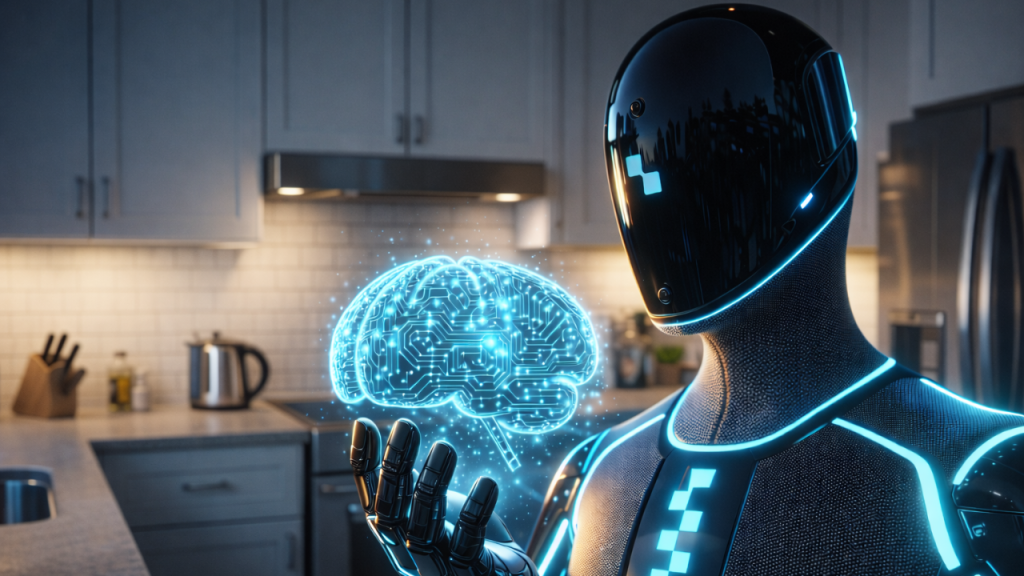
The actions are powered by Figure’s self-developed Helix vision-language-action (VLA) model. The company introduced Helix last year after severing ties with OpenAI. At the time, figure founder Brett Adcock said the decision was because he considered large language models a (LLMs) a dead-end path toward real-world robot autonomy. He presented Helix as a response to that limitation, describing it as a model to tightly controlled perception, decision and full body motions rather than treating language, intelligence, and motor control as separate layers stitched together.
Most modern humanoids rely on multiple control systems that handle bipedal locomotion, balance, and manipulation, often by separate software modules. Figure says Helix eliminates the fragmentation by directly connecting what the robot sees and hears to how its entire body moves. In other words, Helix 02 treats perception as an ongoing process rather than a pre-step.

The Figure 03 perceives its surroundings through a suite of cameras and sensors. Head-mounted cameras give it wide area scene understanding while wrist embedded cameras provide closeup task-level visual feedback during dexterous manipulation. The wrist camera approach is similar to what the fast-rising Singapore-based firm Sharpa Robotics recently showcased at CES 2026.
LeCun’s Critiques
Figure dropped the demo as Meta’s former chief AI scientist, Yann LeCun, went viral for inflammatory comments about the humanoid sector.
“None of these companies, absolutely none of them, has any idea how to make those robots smart enough to be useful,” he said at Davos 2026.
Figure founder Adcock, a serial entrepreneur who previously launched Archer Aviation, has been especially insistent that general-purpose usefulness in robotics is within reach. Launched in 2022, Figure is racing to deploy at least 100,000 autonomous humanoids by 2029.
Tesla’s Robotics Pivot
LeCun’s comments also caught the attention of Elon Musk, who is also among the most bullish on the humanoid form factor. During Tesla’s latest quarterly earnings call, Musk announced that the automaker plans to wind down the production of its original flagship vehicles at its Fremont factory to make space to mass-produce Optimus humanoid robots.
“We’re going to take the (Models S and X) production space in our Fremont factory and convert that into an Optimus factory with a long-term goal of having a million units a year,” he said.
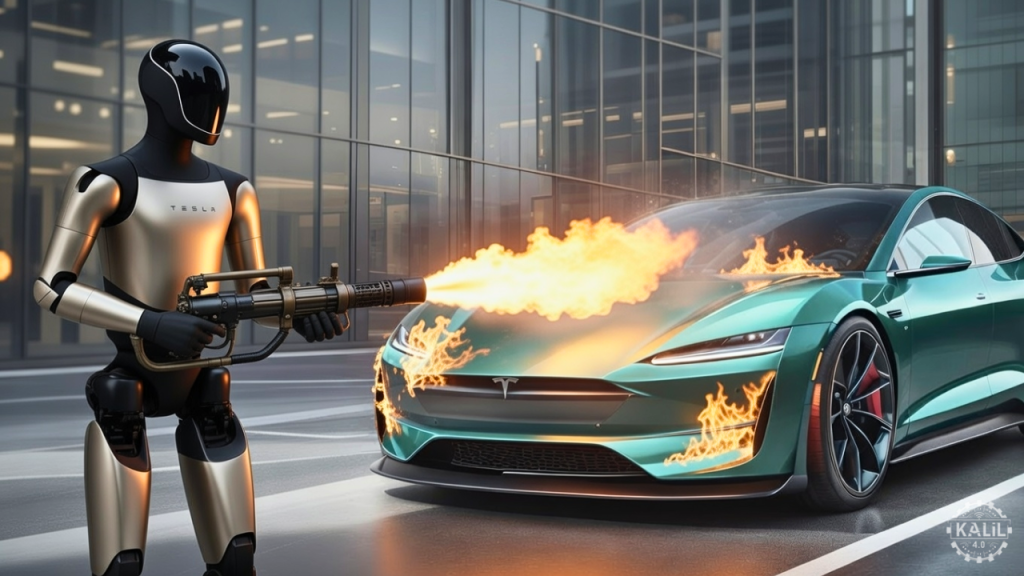
Musk presented Optimus as central to the EV maker’s future. He said 2026 is when Tesla begins its transition from an automotive manufacturer to a robotics company.
Tesla began building the Model S at its Fremont plant in June 2012. It was the first vehicle the automaker built at that facility after acquiring it from GM and Toyota. Production of the Model X followed in 2015. Both cars were assembled exclusively at the California plant, though output has declined in recent years as demand shifted toward higher volume models.
Musk hyped up Optimus as Tesla’s savior as he explained away a painful quarter. Lower vehicle deliveries reduced net income compared to prior years, while 2025 marked the first annual revenue decline in the manufacturer’s history. Though earnings beat Wall Street projections, they were still weak where Tesla has historically been strongest. Optimism now rests on what Tesla might become rather than what it’s doing right now.

Musk said he expects to unveil the third-generation Tesla Bot within a few months. He expects production to scale up by the end of the year, though the project’s timeline has shifted pretty much every time he’s spoken about it since he first introduced the concept in 2021. Before there was even a physical prototype to show, he suggested it could reach production within a few years.
Tesla entered 2025 aiming to manufacture at least 10,000 Optimus humanoids, but that goal was later pushed into 2026. Musk said he expects the ramp up to begin toward the end of the year. When production is scaled, he has said he expects pricing to be around $20,000. That’s the same range targeted by competitors like 1X Technologies, which plans to begin shipping its NEO humanoids for home later this year.
Musk on China
Despite bold production targets, Musk said the Tesla Bot is far more challenging to manufacture than automobiles. Tesla is competing with a truly staggering number of robotics firms, mostly in the US and China, as it pushes to make Optimus the world’s default general purpose labor platform.
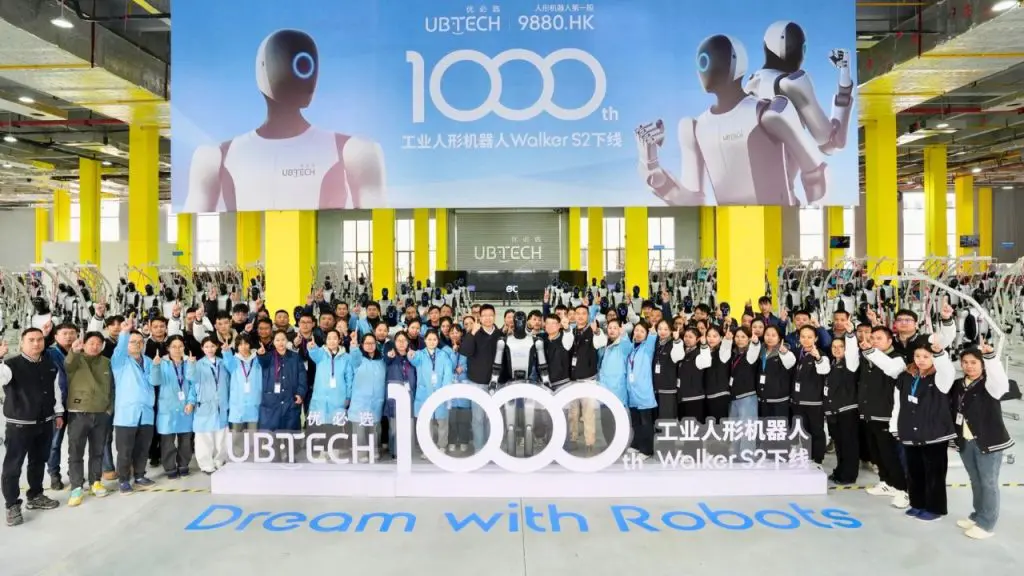
Much of the earnings called focused on China, where companies like Shenzhen’s UBTECH Robotics are already mass- producing humanoids and deploying them at scale. UBTECH has secured major contracts from companies like Texas Instruments and Airbus. The company says its flagship industrial humanoids operate at roughly 30 to 50 percent of human productivity in certain factory tasks like stacking boxes and basic quality control. UBTECH aims to raise that to around 80 percent by 2027 as it improves the hardware and real-world data collection.
Musk said he views the humanoid races between Tesla and China.
“China is very good at AI, very good at manufacturing, and will definitely be the toughest competition for Tesla,” he said. “To the best of our knowledge, we don’t see any significant competitors outside of China. We think Optimus will be much more capable than any robot that we are aware of under development in China, so we think we’ll be ahead in terms of the real-world intelligence and the electromechanical dexterity, especially the hand design which is by far the hardest thing in the robot.”