
The nightmare factories from HBO’s Westworld, where lifelike synthetic humans are manufactured from the inside out, may be closer than you think.
Ten years after the show’s premiere, scientists in Japan are developing technology to 3D print bones, tendons, and ligaments for humanlike machines. They’re not the only ones trying to replace traditional manufacturing processes with something closer to growing a human body.
Researchers from the University of Tokyo’s JSK Robotics Laboratory built a new type of robotic leg using 3D-printed plastic for bones and a soft, rubberlike plastic called thermoplastic polyurethane (TPU) for artificial muscles, tendons, ligaments, and cushioning. The legs measure 95 cm (3 feet 1 inch), which is about the size of an average adult human’s legs.
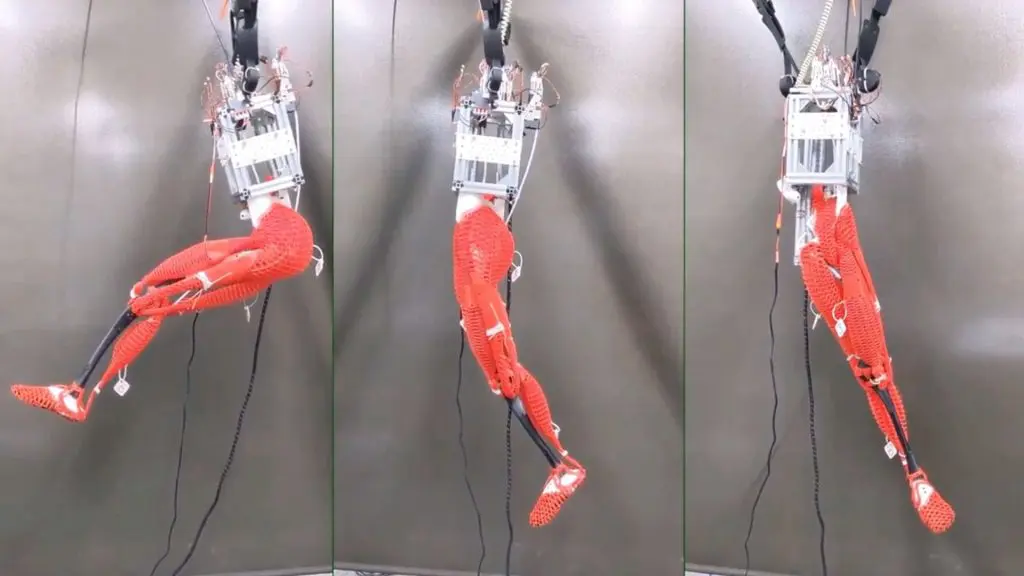
They figured out a way to use the same flexible material for different jobs by changing internal patterns. The method creates parts with varying levels of stiffness and flexibility, much like different tissues found throughout the human body.
Back in the real world, JSK’s researchers built a new type of robotic leg using 3D printed plastic for the bones and a soft rubber-like plastic called thermoplastic polyurethane or TPU for artificial muscles, tendons, ligaments, and cushioning. They figured out a way to use the same flexible material for different jobs by changing internal patterns. The method creates parts with varying levels of stiffness and flexibility, much like different tissues found throughout the human body.
The lab has specialized in so-called musculoskeletal humanoids since the 1990s. Kenta, introduced in 2001, is considered the first full-body musculoskeletal humanoid. Instead of a stiff mechanical torso, it had a humanlike spine connected to dozens of artificial muscles so it could bend and move more naturally.
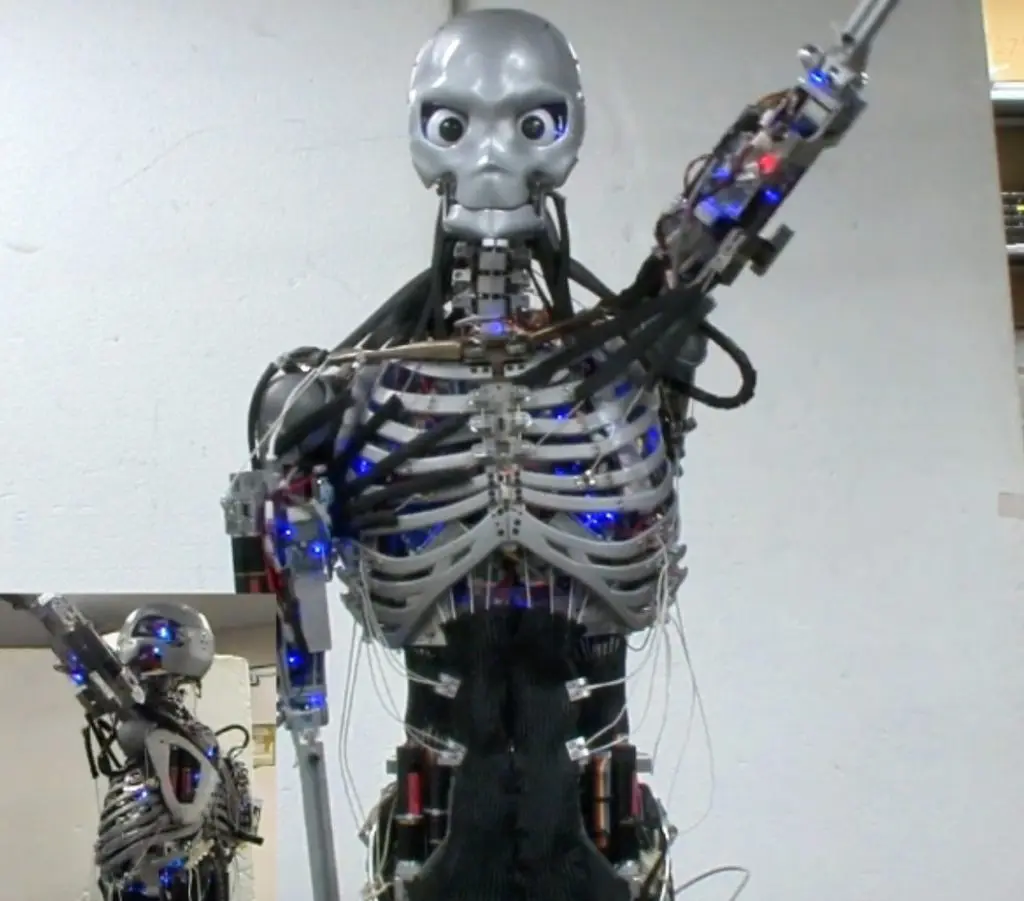
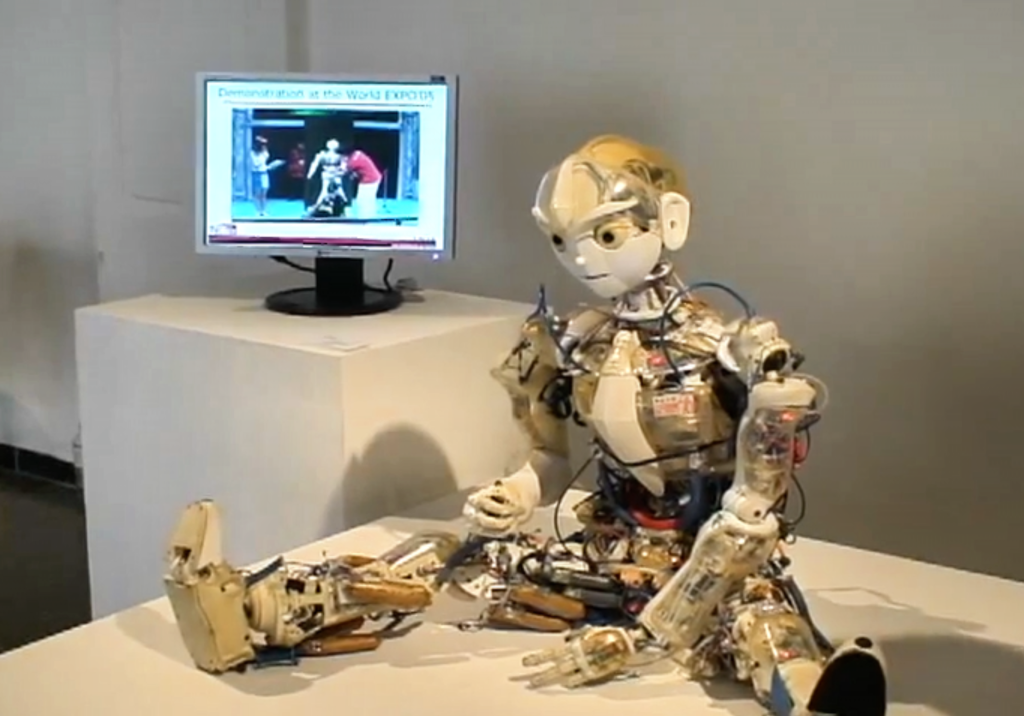
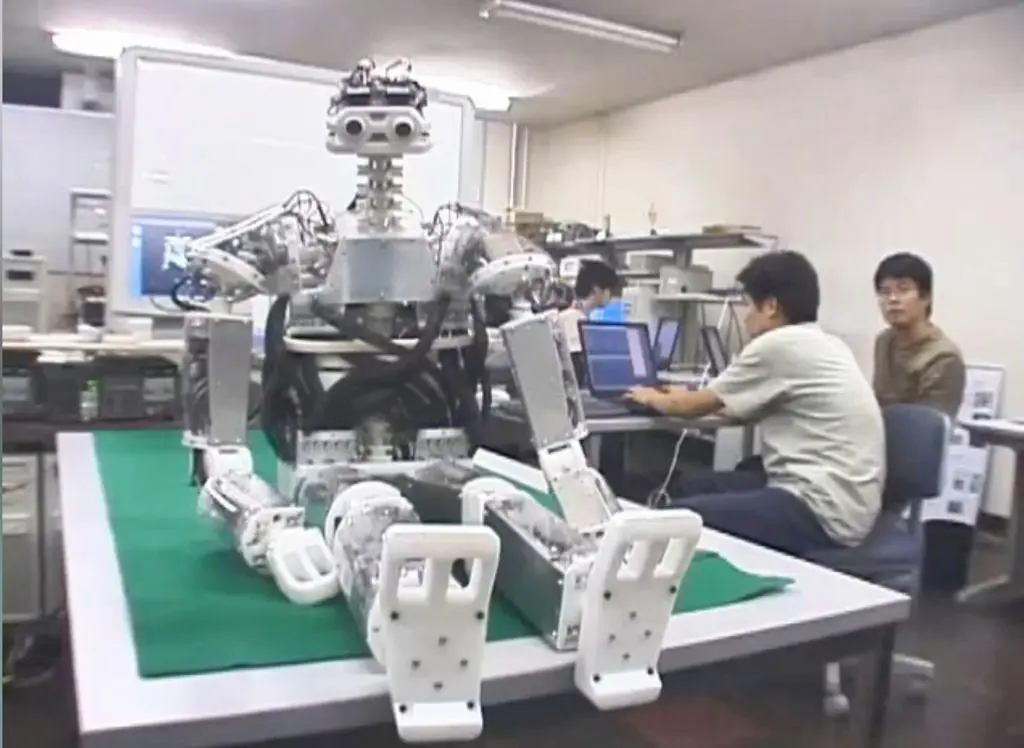
Kotaro, unveiled in 2005, had a more advanced skeleton with movable shoulder blades and improved muscle control. Kojiro followed in 2007 with stronger artificial muscles and more coordinated body movements. In 2012, the lab introduced Kenshiro, a humanoid designed to closely match human anatomy. It had realistic body proportions, a detailed skeleton, and 92 artificial muscles.
JSK’s most well-known project is its Kengoro humanoid, which debuted in 2016. It had more than 100 artificial muscles throughout its body and a cooling system that mimicked human sweating during strenuous activities like doing pullups and pushups.

By 2019, the lab was placing greater emphasis on artificial intelligence to explore how robots could control their own complex muscular systems rather than going on preprogrammed movements.
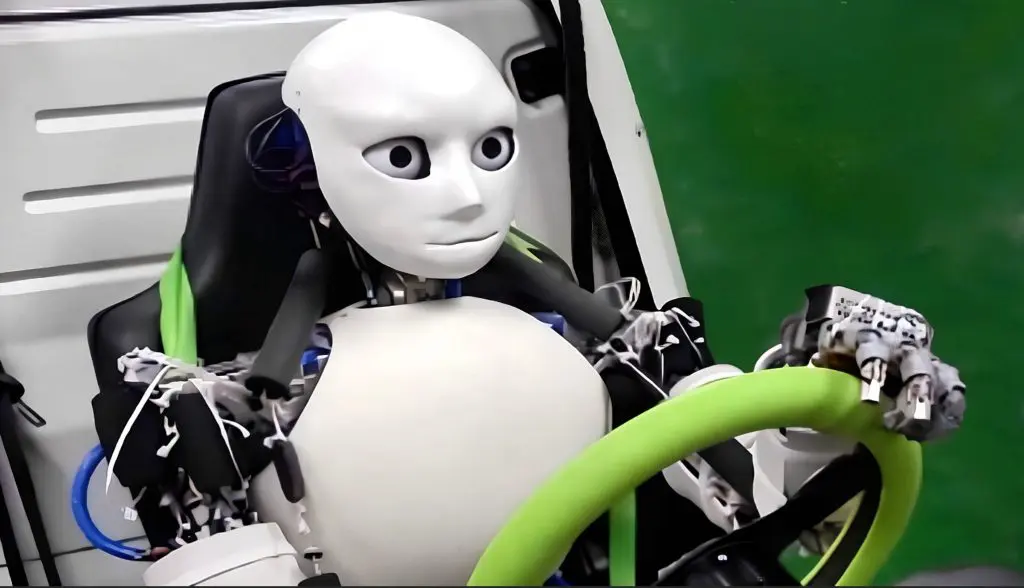
The team showcased its progress with Musashi, a humanoid they taught to drive a car. The robot used its legs to press the accelerator and brake pedals, its arms to turn the steering wheel, and its cameras to monitor the road. In a controlled experiment, Musashi detected a pedestrian and hit the brakes. While the robot was still way too slow for real-world traffic, the project showed that AI could help musculoskeletal humanoids like Musashi coordinate multiple body parts for complex tasks.
The JSK Lab was also an early adopter of 3D-printing technology in the early aughts. Its researchers used selective laser sintering (SLS) to produce custom parts for its first musculoskeletal prototypes.
By 2023, JSK’s researchers used additive manufacturing to make flexible, integrated parts for humanoids. They printed flexible skin and the internal skeleton for a five-fingered robotic hand with a Formlabs Form 3 SLA printer. The end effector, which had 15 degrees of freedom (DoF), had soft, rubberlike skin made from flexible resin.
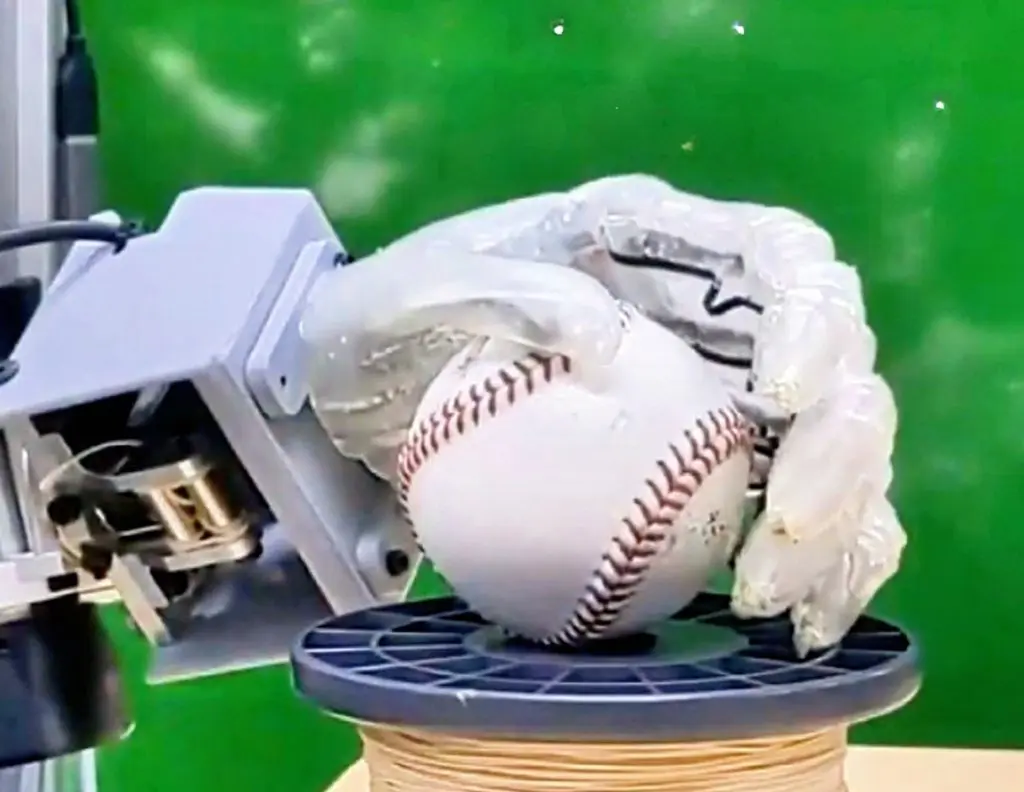
More recently, the JSK lab developed flexible 3D-printed skin for giving robots a sense of touch. They used a multi-material fused deposition modeling (FDM) printer from the Prague company Prusa. The type of printer heats plastic filament and deposits it layer by layer. The setup could print both electrically conductive and non-conductive flexible plastics to embed the pressure sensors directly onto the material. The researchers tested the technology in a shoe-shaped sensor that measured pressure patterns during walking and stair climbing and also printed and with simple robot grippers.
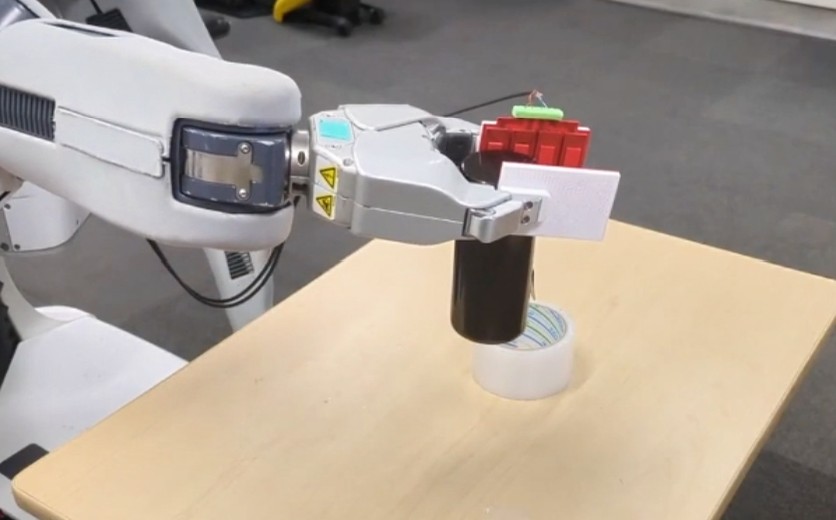
The lab’s latest research brings humanoid robotics a step closer to the futuristic manufacturing techniques depicted in HBO’s Westworld.
In the sci-fi Western, pale and faceless human-shaped machines known as host drones are produced through a highly automated and vertically integrated process. The lifelike robots are non-sentient service automatons that work behind the scenes at the theme park where wealthy guests live out immersive Wild West fantasies. Ultrarealistic androids, known as narrative hosts, are fully programmed characters with personalities and backstories that act out scripted loops to convincingly interact with guests.

The show peels back the curtain on the production methods that the 1973 film it’s based on only hints at. The production team sought to make the process seem plausible by basing it on emerging tech like machine learning, advanced robotics, and additive manufacturing. Westworld’s fake humans are formed layer by layer using large robotic bioprinters that extrude synthetic muscles, connective tissue, and skeletal structures in a continuous fabrication sequence.
Unlike the lifelike androids in Westworld, the JSK Lab’s experimental legs still depend on electric motors and cables for movement. The motors, located near the robot’s pelvis area, pull cables connected to artificial muscles. The researchers combined the two legs into a single system, which demonstrated repeated stepping movements at strides of up to 80 cm (2 feet 7 inches).
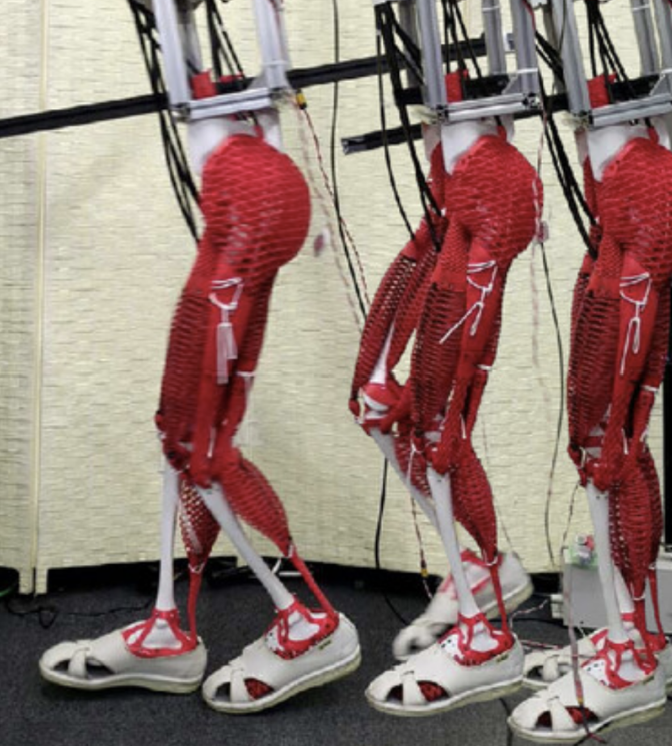
However, the robot still needed external support to maintain its balance. During testing, the leg structures completed 999 repeated loading cycles without breaking or tearing, but their joints lost between 6 to 21 percent of their original torque, reducing their ability to resist twisting forces.
JSK is not alone in pursuing new ways to scale humanoid manufacturing.
In Hungary, the 5-year-old startup Allonic is commercializing a process called 3D tissue braiding, which is closer to textile manufacturing than JSK’s 3D-printing approach. Instead of stacking material layer by layer, the Allonic system intertwines fibers that are braided and tensioned for strength and flexibility. It braids high-strength fibers, elastic materials, tendons, cables, and other wiring around a 3D-printed internal frame.
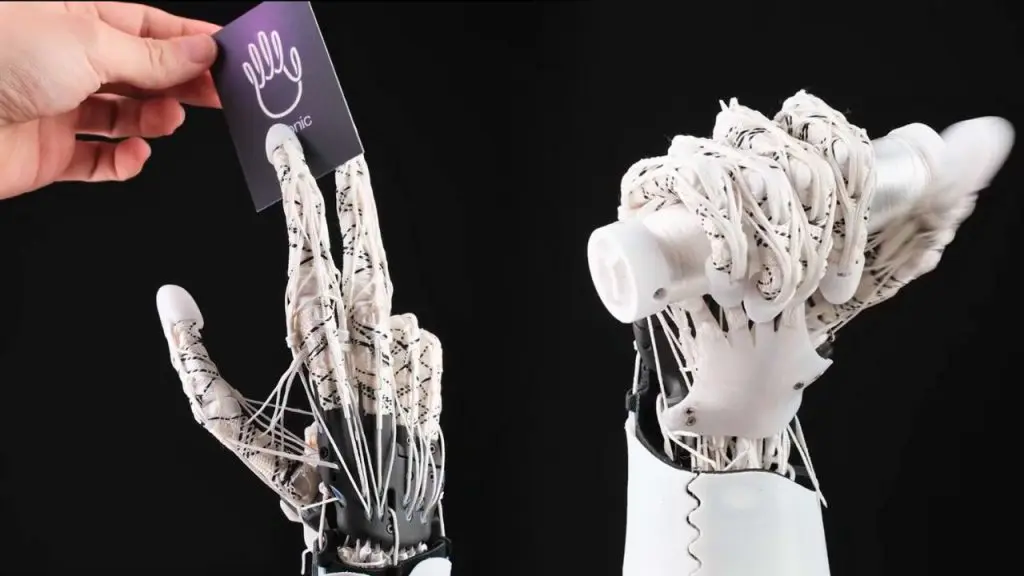
According to the startup, the method simplifies the production of next-generation robots by reducing part count and eliminating failure points. The Budapest-based company shared footage of a five-fingered robotic hand made with the system to showcase the technique.
The JSK system is also drawing comparisons to the Westworld-like humanoids that Clone Robotics is developing. Instead of electric motors, the Polish-American startup uses water-powered synthetic muscles called myofibers.
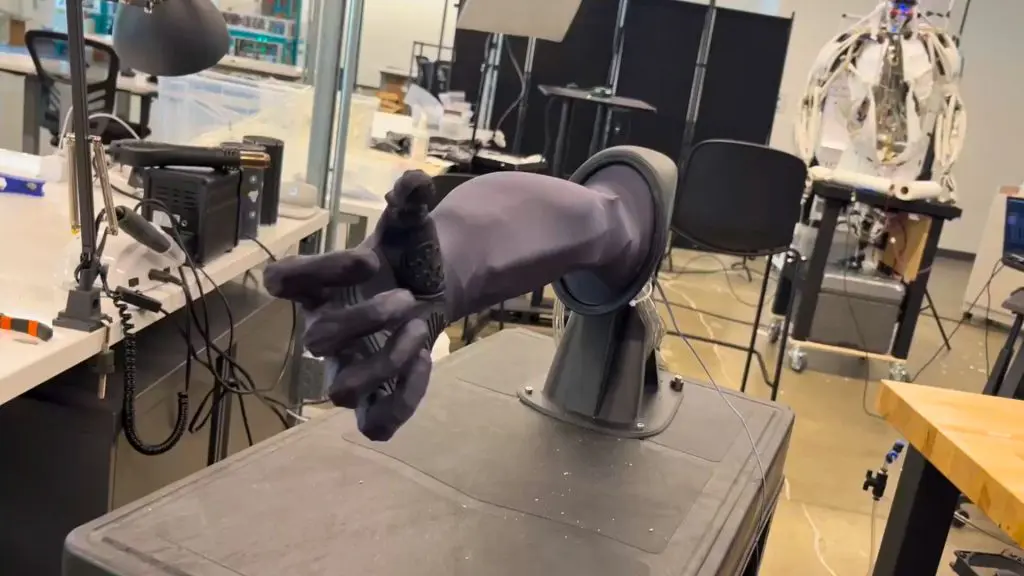
Founded in 2021, Clone has demonstrated the technology with robotic hands, upper-body systems, and a full-body synthetic human called Protoclone. The company recently shared footage of its third-generation robotic hand controlled by a human operator.
Clone says it will soon unveil Torso 4, an improved upper-body robot designed to use both its arms to perform tasks at a workstation. The startup aims to achieve humanlike bipedal locomotion by 2027.