When Real-World Tech Catches Up to Westworld

The Westworld aesthetic is all over today’s global humanoid frenzy, as are the parallels to emerging technology.

Additive manufacturing produces complex parts layer by layer, unlocking new possibilities for design, customization, and efficiency.
The Westworld aesthetic is all over today’s global humanoid frenzy, as are the parallels to emerging technology.

Shenzhen Dobot is entering the race toward fake humans with a massive head start.

A truly staggering number of AI-powered machines are emerging basically every day.

In a world first, an AI-powered humanoid robot from Italy just flew using jet power. It’s likely not the last.

Robotics firms are locked in a price war as they undercut each other in hopes of capturing early market share.

Just a year after its launch, Palo Alto-based K-Scale Labs is already ruffling feathers in the robotics world.

Researchers at UC Berkeley just introduced a lightweight humanoid robot that can be built with 3D printed parts for less than $5,000.

One of the most influential companies in artificial intelligence just took a big step toward bringing robotics to the masses.

The attention EX Robot is getting now is the result of years of work that started long before the current humanoid robotics craze took off.

As Unitree’s G1 AI robot enters the world of high fashion, other rising Chinese firms are disrupting the service sector and dominating global competitions.
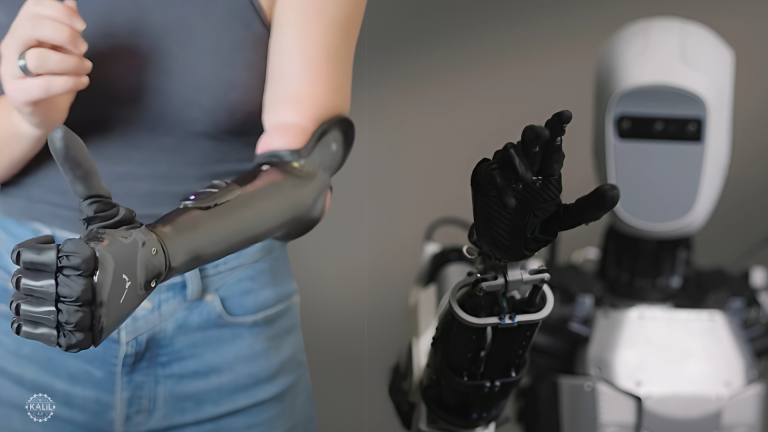
The fusion of AI-driven prosthetics and humanoid robotics could shape the future of work and even space exploration.