Ex-Tesla Engineer Launches Matrix-3 Humanoid Robot for Mass Production

The Matrix-3 is covered in 3D woven biomimetic skin with embedded tactile sensors that’s sensitive to pressures as light as a gentle fingertip touch.

E-skin, or electronic skin, is a flexible, stretchable material embedded with sensors designed to mimic the sensory functions of human skin. It can detect pressure, temperature, touch, and strain, enabling robots, prosthetics, and wearable devices to perceive and respond to their environment more naturally. Developed using materials such as silicone, graphene, or nanomembranes, e-skin plays a key role in advancing human-robot interaction, healthcare monitoring, and soft robotics by providing tactile feedback and enhancing sensitivity in artificial systems.
The Matrix-3 is covered in 3D woven biomimetic skin with embedded tactile sensors that’s sensitive to pressures as light as a gentle fingertip touch.
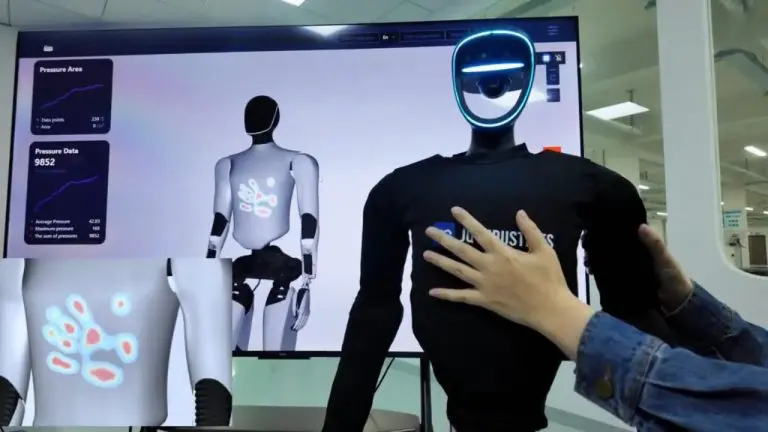
The Chinese company JQ Industries just introduced a fabric-based electronic skin (e-skin) to give robots a humanlike sense of touch.

Researchers from the City University of Hong Kong developed the NRE-skin that triggers reflexes to avoid damage without routing signals to the robot’s central processor.

UK scientists have developed a robotic hand with skin that feels pain, heals itself, and can be melted down to make another robot.

Atlas, Boston Dynamics’s iconic humanoid robot, is back in action. Atlas Warms Up This is fresh footage of the new …