
Elon Musk envisions a future where humans can upload their minds into robots, allowing them to continue existing in some form after death.
He shared this prediction on his X platform, responding to a post that asked if one would copy their brain into an Optimus robot to live longer after their physical body dies.
Musk said that eventually, humans will likely be able to upload a good approximation of their memories and mind states into the cloud, which could then power a humanoid robot. However, he acknowledged that this digital twin wouldn’t be exactly the same as the original person.
Eventually, you will probably be able to upload a good approximation of your memories & mind state to “the cloud” with the ability to download it to a humanoid robot.
— Elon Musk (@elonmusk) August 17, 2024
You obviously won’t be quite the same as you are today.
This vision is similar to what futurist Ray Kurzweil predicts for the 2040s. Kurzweil, the author of “The Singularity Is Near,” believes human consciousness could be stored digitally to achieve digital immortality.
Comprehensive brain scans would capture all the connections that create thoughts and memories, and this data would be uploaded to a computer to continue the mind in digital form.
Critics, however, argue that the complexities of human consciousness are too vast to fully capture, even with future technology.
Another Musk company, Neuralink, is working on connecting human brains directly to computers, potentially facilitating mind uploading in the future. However, this is still a long way off, with Neuralink in early human trials and the Tesla Bot gearing up for limited production. For now, let’s focus on the current state of humanoid robotics.
Agibot Targets Tesla Bot
A new advanced AI robot is set to compete with Tesla’s Optimus, according to Peng Zhihui, founder of Agibot, also known as Zhiyuan Robot.
Zhihui, a former Huawei Youth Genius, just unveiled his company’s humanoid robot line, including the flagship Expedition A2.
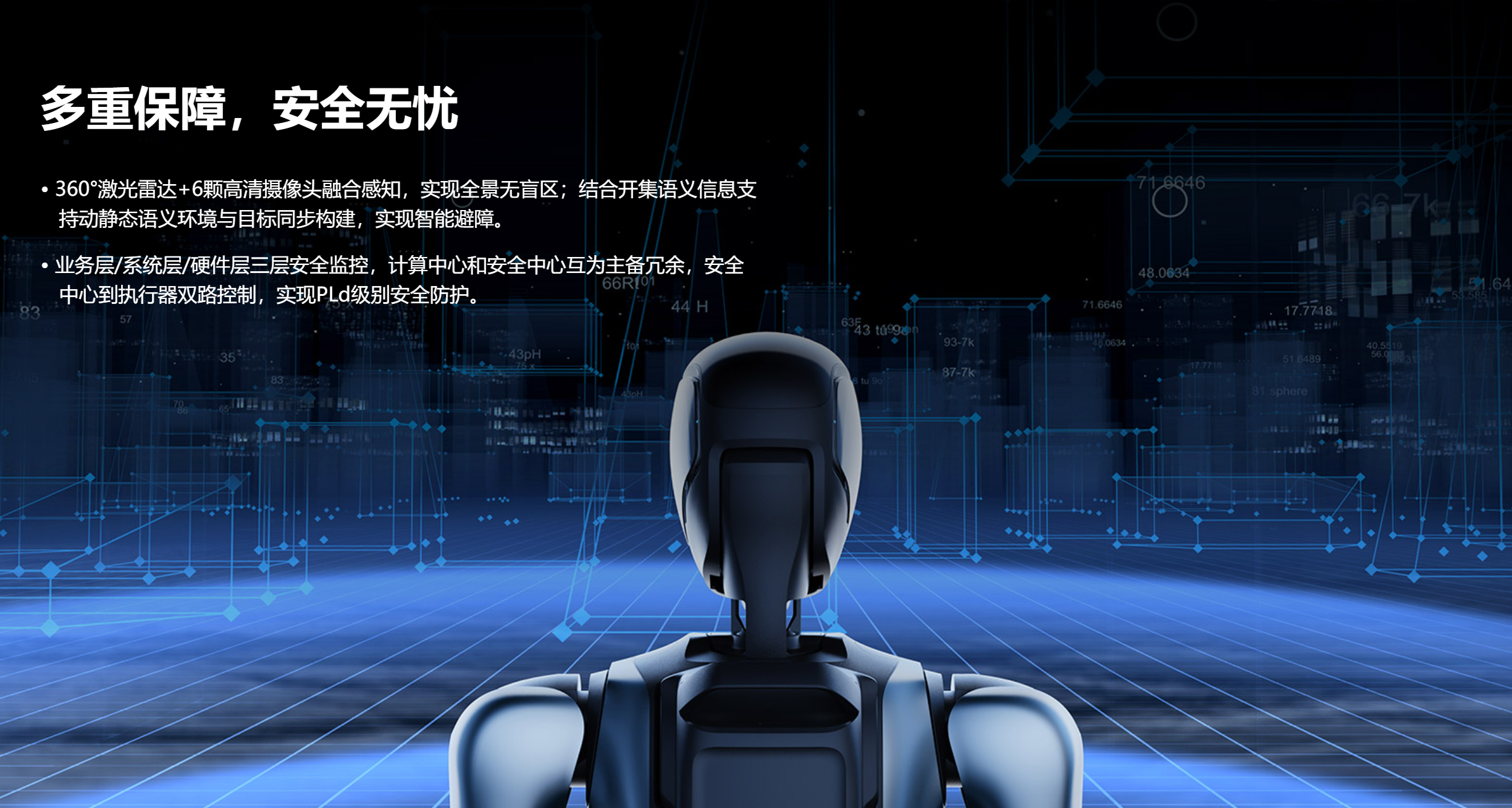
The South China Morning Post quoted the 31-year-old as saying that major breakthroughs in the past year have positioned AOT at the forefront of the industry. According to Chinese state media, Zhihui believes his company can produce and sell robots at a lower cost than Tesla’s Optimus.
The A2 humanoid robot, standing 5’6″ and weighing about 150 lbs, has 40 degrees of freedom and is equipped with sensors like cameras, lidar, and microphones to interact with dynamic environments. It’s designed for tasks requiring extreme precision, such as threading a needle, and is ideal for roles in customer service and business consulting. The robot can carry light objects and walks at about 2 mph, with a battery that lasts for approximately 2 hours.
Agibot plans to deliver 300 AI robots by the end of the year, with plans to commercialize them next year, targeting the manufacturing sector.
Zhihui also announced:
- Expedition A2-W: a robot designed for flexible manufacturing tasks. It can carry up to 5 kg in each arm with 7 degrees of freedom and is wheeled for swift movement in industrial settings.
- Expedition A2 Max: A heavier-duty version of the humanoid robot that carries heavy objects and boasts 67 degrees of fully-body freedom. Its legs can exert 8,800 Newtons of thrust, enough to lift a small car, and its 450 Newton-meters of torque can tighten large bolts or turn cranks.
Astribot S1 Launched
Stardust Intelligence recently launched the Astribot S1, an advanced AI robot assistant that uses imitation learning to perform tasks with precision and autonomy.
Announced at the 2024 World Robot Conference, the Astribot is designed for tasks such as folding clothes, cooking, and cleaning. It can even participate in activities like practicing martial arts and shooting basketballs. The robot’s AI adapts and improves over time, enhancing its efficiency.
FinalSpark Biocomputing
Swiss startup FinalSpark is offering biocomputers made from human brain cells, or organoids, for rent at $500 a month.
These biocomputers are up to 100,000 times more efficient than traditional silicon-based hardware and could accelerate AI development by mimicking human brain learning processes.
Universities can rent access to four organoids, with some projects receiving free access. FinalSpark also offers dedicated organoids for industrial applications.
Tesla’s Robot Training Jobs
Tesla is assembling a team to train its humanoid robot, Optimus, to act more human.
The company is seeking applicants willing to wear motion capture suits and perform various tasks at its Palo Alto office. These suits record the workers’ movements, which Tesla uses to train the robot’s AI.
Candidates must also wear a VR headset for extended periods, which may cause discomfort or motion sickness. Tesla plans to produce the Tesla Bot in limited quantities for internal use at its factory in 2025, with external sales beginning in 2026.
Subscribe to my YouTube channel to get first updates in humanoid robotics!