
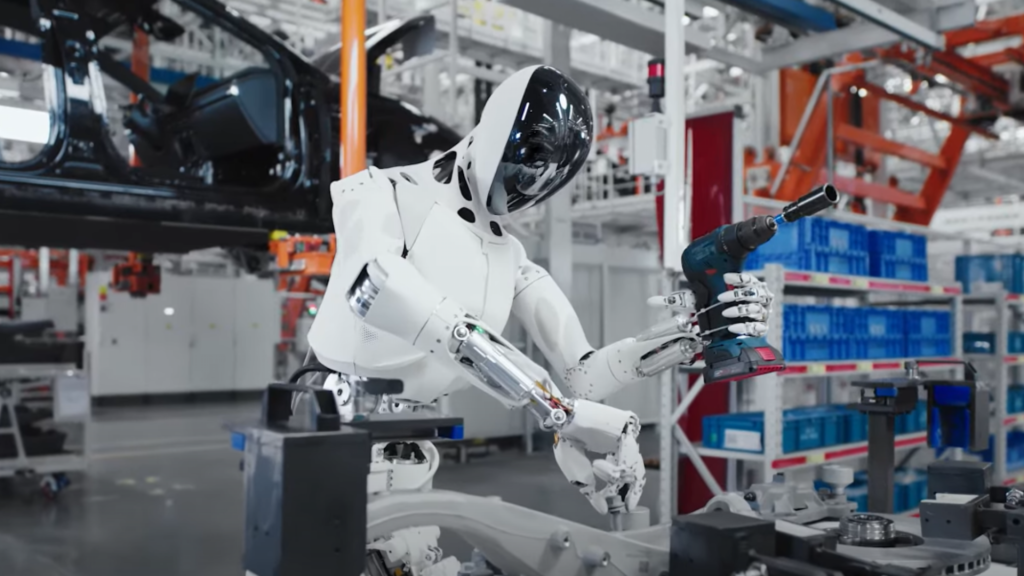
Xpeng just unveiled its new humanoid robot, Iron, powered by the EV automaker’s new Turing AI chip. Xpeng says the chip gives the AI robot the ability to think and reason on its own.
They’re positioning Iron as a leading competitor to the Tesla Optimus humanoid robot. Is it a formidable opponent? Let’s take a look. Standing 178 centimeters or about 5 foot 10, Iron has 60 joints that mimic human-like motions. The reported 60 degrees of freedom (DoF) exceeds recent claims by other Chinese robotics firms.
Fourier’s GR-2 has a reported 53 DoF, while Kepler’s Forerunner K2 industrial humanoid has 52. That’s in the same range as NASA’s Robonaut R2, which performed precise complex tasks in space.
According to Xpeng, Iron has 15 DoF in its hands. This puts it on the leading edge of industrial humanoid robots.
The Generation 2 Tesla Bot has 11 DoF, but Elon Musk says the next major revision has 22 DoF. Also, buzzy startup Clone Robotics has a robotic hand prototype with 27 DoF, which matches the dexterity of humans.
XPeng’s Turing chip is a 40-core processor designed for advanced AI applications. It’s the same tech that powers AI tasks for XPeng’s other cars and flying vehicles. It supports complex decision-making, handling large AI models with up to 30 billion data points. It has two neural network processing units for high-speed data processing, AI-specific tasks.
Xpeng says two independent image signal processors deliver clear visual processing, even in low-light and challenging conditions like rain and nighttime.
Xpeng says Iron is training at its factories before it’s deployed in stores, offices, and households.
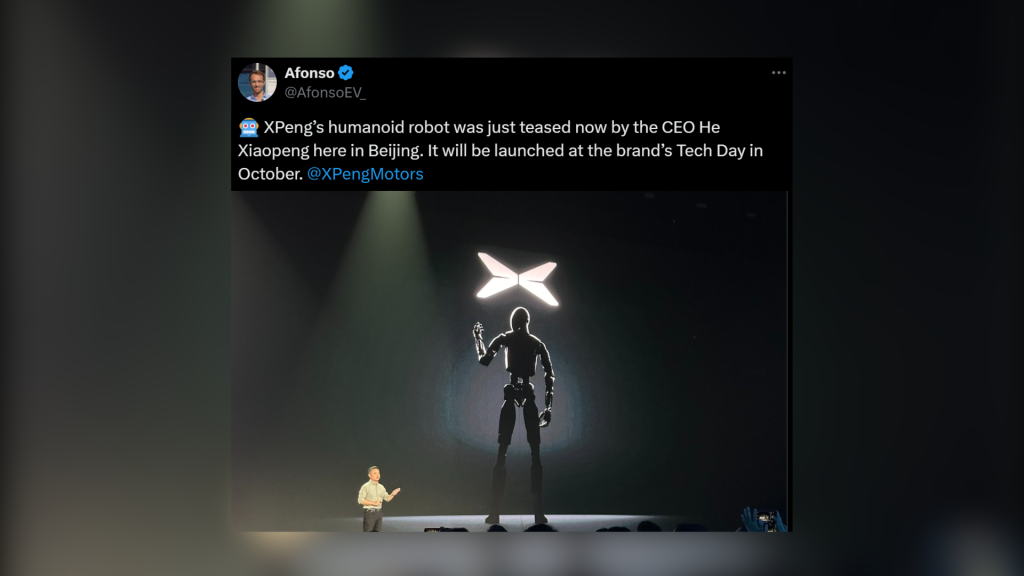
XPeng introduced its first humanoid robot prototype, the PX5, back in 2023. The company teased a second-generation version earlier this year. CEO He Xiaopeng unveiled the robot at Xpeng AI Day just over two years after Tesla introduced Optimus at its own event, also called AI Day.
Xpeng and Tesla have a history.
Founded in 2014, Xpeng has faced allegations of copying Tesla’s technology and designs almost since its inception. Early Xpeng designs and strategies drew comparisons to Tesla, as both companies focused on high-tech, software-centric electric vehicles.
In 2019, Tesla filed a lawsuit accusing a former Tesla engineer of downloading Autopilot source code. Xpeng maintains it did not receive or use any of Tesla’s code when the engineer joined the company. The federal suit, filed in the Northern District of California, was settled out of court in 2021.
While Xpeng is fast-growing, Tesla remains much larger and more influential on a global scale, with far greater production, market reach, and financial resources.
On the X social media platform, FigureAI founder Brett Adcock suggested that Iron’s design lifted elements from the OpenAI-backed startup’s first-generation robot.
“They copied our entire spine/hips on Figure 01,” he wrote. “Bonus question tho: Why did we ditch this architecture on Figure 02?”
lol, they copied our entire spine/hips on Figure 01
— Brett Adcock (@adcock_brett) November 6, 2024
Bonus question tho: Why did we ditch this architecture on Figure 02? 😂 https://t.co/AqMKIwsalf pic.twitter.com/jRVCZdBjpe