

Two of the leading US humanoid robot companies are stalling in plain sight: Elon Must just nudged Tesla’s Optimus production back yet again, while Figure AI founder Brett Adcock got roasted for dropping a hype hockey-stick chart without a Y-axis.
Both companies are led by billionaire founders with a habit of making bold predictions that reality keeps failing to match. They won’t say so publicly but they’re facing significant challenges moving their general-purpose humanoid robots to mass production. They’re competing with hundreds of Chinese firms, who have the upstream advantage with access to a robust robotics supply chain, as well as well-funded Western competitors like 1X Technologies, Boston Dynamics, and Sunday Robotics.
When (or if) they do go to market, they’re both aiming for pricing around $20,000 after production scales.
Optimus V3 Reveal Delayed
During Tesla’s Q1 2026 earnings call, Musk said the Optimus team is “almost ready to demonstrate” the functionality of its highly anticipated Gen 3 Tesla Bot. He talked up the next-gen iteration’s capabilities but said it needs finishing touches. He said he’s hesitant to reveal what they’re working on because of the intense competition.
“The V3 Optimus design is almost ready to demonstrate,” Musk said. “I think we want to just make sure it’s, like, polished. Like it works functionality, but there’s some aesthetic elements that need to be finalized.”
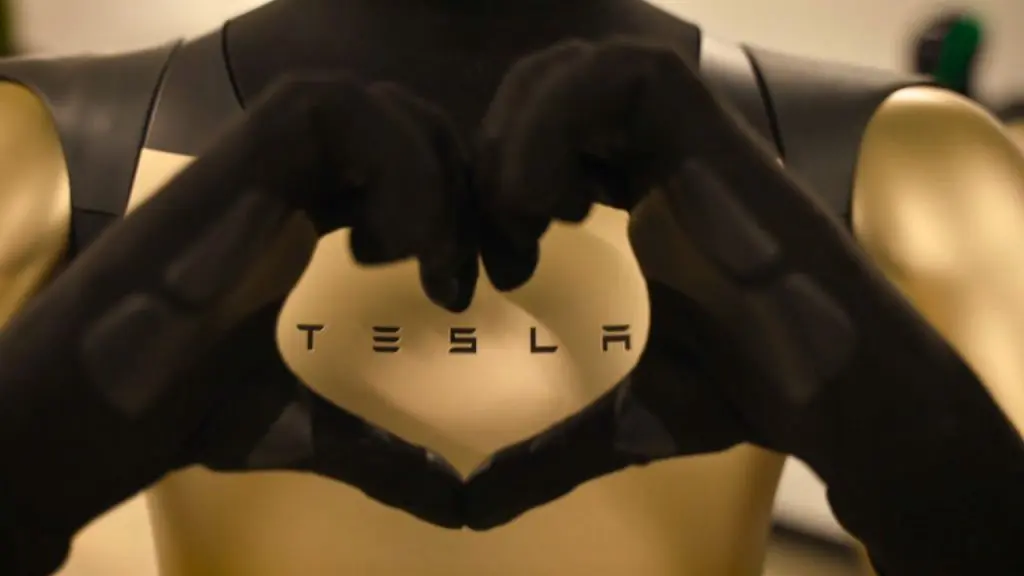
Musk has steadily moved the program’s goalposts since first announcing the Optimus program in 2021. He initially predicted that Optimus humanoids would be doing meaningful work at Tesla factories by late 2024, followed by up to 10,000 units manufactured in 2025.
Musk said Tesla is preparing its Fremont factory for Optimus production to begin in July or August 2026. Tesla is discontinuing its Model S/X lines to make way for the production capacity. As for volume, Musk gave himself plenty of wiggle room. He said the ramp up will follow a typical “S-curve” for new tech, which makes it “literally impossible to predict” exact numbers this year. Production is expected to start in summer 2027 at a second Optimus Factory at Giga Texas.
Tesla reported mixed but mostly positive Q1 2026 financial results, so Musk didn’t need to lean into future optimism as much as the previous quarter. The company generated $22.4 billion in revenue, up 10 percent year-over-year but slightly missing Wall Street expectations of around $22.6 billion. Adjusted earnings per share came in at $0.41 which beat consensus estimates. Net income rose to $477 million but vehicle deliveries came in below analyst forecasts at 358,023.
Figure’s Mystery Chart
Meanwhile, the founder and CEO of Figure AI shared a dramatic chart showing the explosive monthly production ramp of its flagship humanoids.
The chart showed a sharp upward curve but had no numbers or scale on the Y-axis. Replies on X (Twitter), LinkedIn, and Threads almost unanimously called out the details that were obviously omitted for a reason. They called it misleading because it’s impossible to tell if the jump was from 1 to 5 robots or from 500 to 5,000.

“Impressive, now let’s see the Y-axis,” X user @g3noff posted, a reference to the 2000 cult classic American Psycho.
The absolute numbers are still relatively modest, likely under 200 robots for April. It’d normally be meaningful progress for a 3-year-old robotics startup but Figure is not a normal company. It has an insanely high valuation of $39 billion (more than Ford Motor Company) and raised more than $1 billion last year.
Adcock has been less specific about his projections lately. Just over a year ago, in early 2025, he said Figure had a clear path to shipping 100,000 humanoid robots by 2029. He said Figure’s BotQ facility in San Jose has an initial production capacity of 12,000 per year, with plans to expand toward 50,000 units once fully ramped.
Boston Dynamics Does It Too
Boston Dynamics is playing the same game through polished corporate language.
The Massachusetts robotics leader company unveiled its “production-intent” electric Atlas humanoid at CES 2026, proudly announcing that all 2026 deployments are “fully committed” to Hyundai and Google DeepMind. It gave the impression that Atlas robots are marching into factories today when meaningful factory work remains years away.

Real integration into its parent company Hyundai’s Georgia Metaplant for parts sequencing is scheduled for 2028, with more complex assembly tasks targeted for 2030. CEO Robert Playter and Hyundai executives have framed it as a careful, phased validation process. It’s classic corporate-speak to kick the can while keeping hype alive with promises of 30,000 units per year eventually.
Boston Dynamics has also announced a commitment to deploy Atlas robots for Kia, which is part of the Hyundai Motor Group. Like the Hyundai announcement, it can easily be memory holed, especially since it’s not planned until 2029.