
Chinese robotics leader Unitree is heading into what looks like a blockbuster summer, but it comes with growing risks that could stall its momentum.
The world leader in humanoid and quadruped deliveries is preparing for an historic public listing as its robots invade mainstream pop culture. It’s amplifying focus on recent viral incidents like this that make many question the safety of the increasingly autonomous machines.
Meanwhile in Washington, Unitree’s meteoric rise is facing growing bipartisan push back. It’s putting the robotics firm in quite the predicament. The faster Unitree succeeds, the more it appears that Chinese robots are headed for a ban in the USA.
Unitree G1 Robots Stun AGT
China’s humanoid robots just had their biggest mainstream moment yet in the US on the Season 21 premier of America’s Got Talent.

Wu Yufei, a 26-year-old robotics engineer and amateur dancer from Sichuan, took the stage with eight agile humanoids about the size of M3GAN. The troop delivered a flawless synchronized dance routine to Lady Gaga’s “Abracadabra,” complete with flips and Kung Fu moves. They earned a standing ovation and a unanimous Yes vote from all judges.
The Unitree G1 robots are the same model that wowed audiences earlier this year during China’s 2026 Spring Festival Gala. Dozens of the robots dominated the world’s most-watched television event with a fully autonomous Kung Fu routine. The spectacle was seen by more than a billion people internationally.
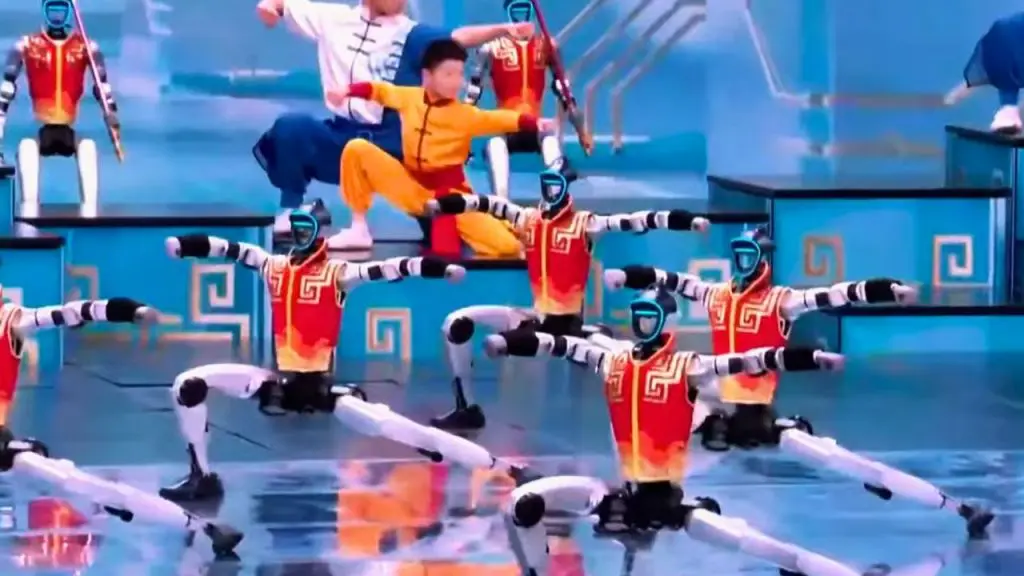
Launched in 2016 by hardware engineer Wang Xingxing, Hangzhou-based Unitree reported shipping more than 5,500 bipedal humanoids in 2025 and is aiming for around 20,000 in 2026. The company also leads the world in quadruped robot delivers, with more than 18,000 robodogs shipped in 2025 alone.
While the Gala delivered massive scale in China and in tech media, the AGT showing brought the robots into everyday American pop culture.
Unitree Clears Major IPO Hurdle
The show aired a day after Unitree cleared a major regulatory hurdle for an initial public offering (IPO) with a targeted valuation of more than $6 billion.
The Shanghai Stock Exchange’s listing committee approved its application to join the tech-heavy STAR Market. Analysts expect shares to start trading within the next few months. Unitree will likely become the first humanoid robot maker listed on the NASDAQ-style board, but not the last.

The fellow Hangzhou-based company DEEP Robotics has also filed for a listing with a post-money valuation around $3.5 billion. Founded in 2017, the robotics firm pioneered four-legged robots for industrial inspections. Like Unitree, the company initially focused on robotic dogs before targeting industrial applications.
While DEEP Robotics mostly targets industrial applications, Unitree is approaching household name status globally.
NVIDIA’s Cosign
On the same day of the STAR Market approval, NVIDIA announced a major partnership with Unitree.
NVIDIA Founder/CEO Jensen Huang unveiled the tech giant’s reference humanoid platform during his keynote at GTC 2026 Taipei. Unitree developed the body based off its full-sized H2 humanoid, while the Singaporean startup Sharpa Robotics supplied its highly dexterous five-fingered hands.
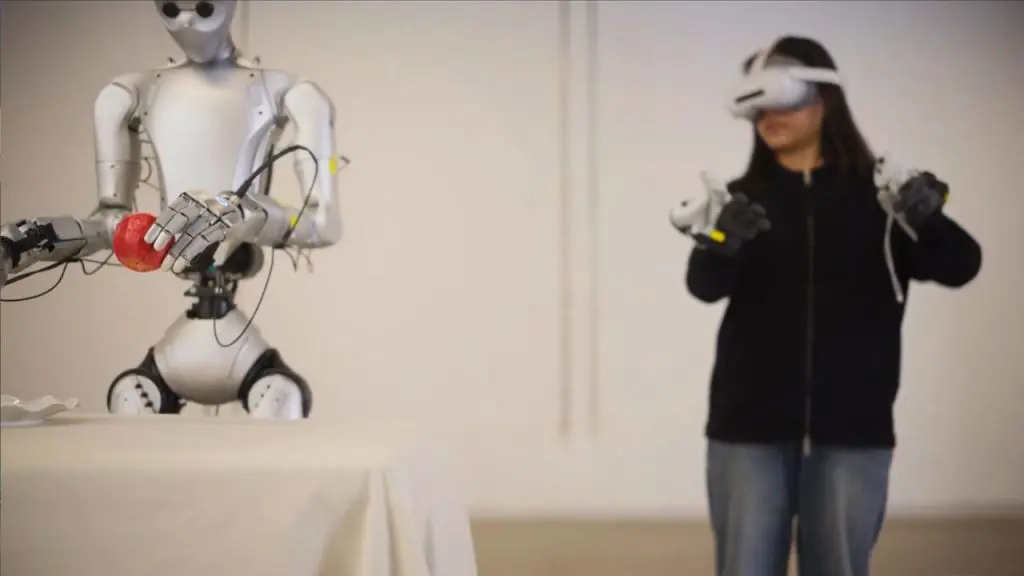
The Unitree H2 Plus humanoid stands 182 cm (6 feet), weighs 70 kg (154 lbs), and boasts 31 degrees of freedom (DoF) across its body. Its SharpaWave hands are among the most advanced dexterous end effectors on the market today. Each has 22 active DoF and tactile sensing in the fingertips for interacting with real world objects.
During his presentation, Huang said humanoids are part of a bigger shift toward agentic artificial intelligence. He called AI agents “digital robots” because they can understand, reason, plan, act, and use tools designed for humans.

“In the last 6 months, everything’s changed,” he said. “Everything’s changed because agents were realized and it converged with the latest frontier models and it made possible for the AI to now do useful work. The technology that we’ve created also applies to humanoids.”
Still, he said more breakthroughs are needed to unlock general-purpose robotics.
“The one thing missing is, we need a reference platform for robotic systems,” he said. “These robotic systems are so complicated, with so many motors, so many sensors, so fragile. We need to have a way to deliver these reference systems just like we do with PCs, DGXs, and clouds and self-driving cars.”
Unitree’s H2 Plus robot’s onboard AI is powered by an NVIDIA Jetson Thor computer, which uses a Blackwell GPU and a 14-core ARM CPU. According to Unitree, the H2 Plus robot perceives its surroundings with binocular vision, optional cameras, and array microphones. Its 15Ah battery is rated for 3 hours of active use per charge.
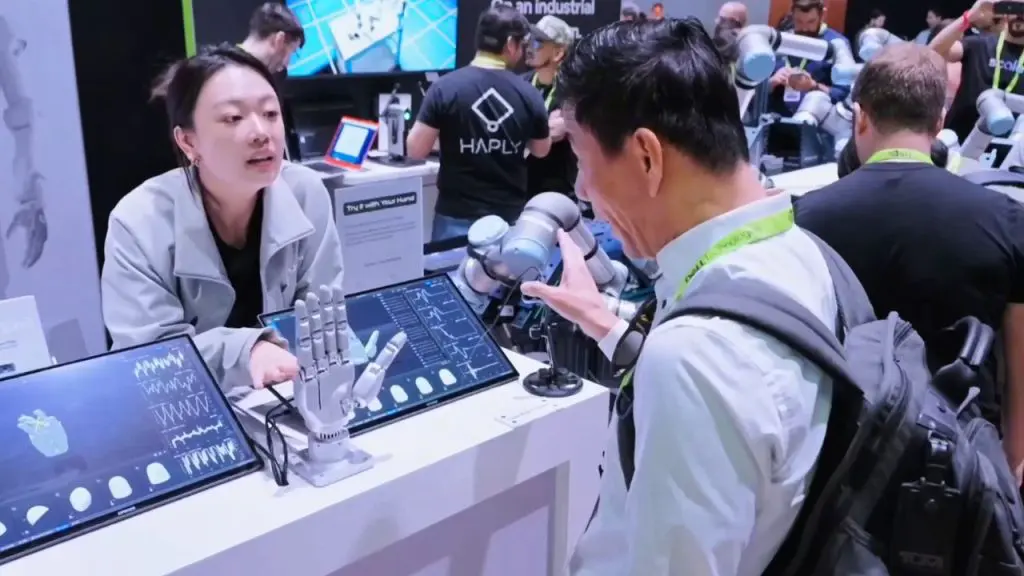
NVIDIA says the system includes tools for teleoperation, simulation training, and its GR00T foundational model for humanoids. It’s expected to become available for academic research in late 2026. Pricing is unknown.
Until recently, research-grade humanoids have cost well into the six figures. That changed largely thanks to China’s aggressive push to lead the humanoid sector by 2027. Chinese robots like the Unitree G1 and Agibot’s X2 have surged in popularity among researchers, developers, and increasingly content creators thanks to their relatively low entry prices.
Safety Concerns
The endorsement from NVIDIA is a massive credibility boost for Unitree. But the partnership also amplified concerns in the West about it strengthening Unitree’s dominant position in research humanoids as national security worries intensify.
During Unitree’s whirlwind week, footage of its compact G1 humanoid accidentally kicking a young boy in the stomach during a Children’s Day performance at Urumqi Botanical Garden in Xinjiang, China went viral across social media.

The robot, dressed in a blue clown wig and remotely operated by venue staff, was demonstrating martial arts moves when a high roundhouse kick struck the child who was standing too close. The boy doubled over in pain and fell but his mother told Chinese state media that he was not seriously injured. She reportedly filed a police report mainly to complain about the venue staff’s slow response and lack of an immediate apology.
Growing Bipartisan Support for US Ban
Critics are already using the incident show the real-world safety risks posed by humanoid robots in public. In the US, bipartisan support is growing for regulations that would effectively ban or severely restrict the use of Chinese robots like the G1.
The US House Select Committee on the Chinese Communist Party, led by Republican Rep. John Moolenaar of Michigan, just introduced the GUARD Act. The name is short for Guarding the US Against Adversarial Robotics Dominance.
The bipartisan bill directs national security agencies to review robotic systems from countries of concern, primarily China. Robots tagged as threats would be added to the FCC’s Covered List, effectively banning their importation and use in sensitive US infrastructure.
“Fueled by generous state subsidies, Unitree and other Chinese robotics companies are cheating against American robot makers, flooding the market with artificially cheap products, possibly bankrupting our companies, and leaving us dependent on China,” Moolenaar said in a press release. “These firms are also closely aligned with the Chinese military, and they use their revenue to develop weaponized robots. We must act today to ban malign foreign-made robots to protect the safety of Americans.”
A separate bill filed earlier this year in the US Senate by Democratic Sen. Chuck Schumer of New York and Republican Sen. Tom Cotton of Arkansas would block federal agencies from buying or using robots manufactured by foreign adversaries like China.
Both proposals would put Chinese robots in the same regulatory category as Huawei telecommunications equipment and DJI drones.

Because they’re bipartisan, they have a decent shot at moving forward, especially if they’re attached to must-pass legislation like the annual defense bill. Whether President Trump signs off on the legislation probably depends on his relationship with President Xi, which remains unpredictable and chaotic.
US Robotics Firms Respond
Leading US robotics companies have expressed support for the restrictions.
Agility CEO Peggy Johnson issued a statement endorsing the GUARD Act, saying it “sends an important market signal as US robotics companies continue investing in resilient supply chains, domestic manufacturing capabilities, and trusted technologies.” In a recent interview with futurist Peter Diamandis, she said the Oregon-based robotics firm has been working with the Trump Administration.

“We have an administration that’s very focused on the humanoid robots not going the way drones did,” she said. “We used to actually have a drone industry in the US and it’s largely gone offshore. They’re trying to prevent that same thing from happening to humanoids.”
Earlier this year, Boston Dynamics sent its VP of software, Matthew Malcano, to Washington to testify before Congress about its biggest overseas rival.
Boston Dynamics to Congress: DO SOMETHING about Unitree Robotics https://t.co/u5XLKfTRmy pic.twitter.com/4VXf2GOj63
— Mike Kalil (@mikekalilmfg) March 21, 2026
“Unitree is rapidly capturing market share in the US university, research, and law enforcement markets,” he said. “Researchers have reported crucial Unitree cybersecurity vulnerabilities. Unitree’s robots have also been seen in PLA military exercises and its ties to Chinese military have been noted by the House Select Committee on China as well as the Department of War.”

Back in 2021, Unitree joined Boston Dynamics, Agility, ANYbotics and others in signing a pledge to not weaponize its autonomous machines. The company insists that its robots, including its new $650,000 rideable Mecha, are for civilian use only.
Could Ban Backfire?
Opponents of a Chinese robot ban argue it could ultimately slow down America’s progress in robotics by limiting access to low-cost hardware for companies, universities, and researchers to test next-gen applications. Instead of a sweeping ban, the say the US should focus on building its own supply chain and using smarter security rules.
The Future of Chinese Robotics
Unitree is just one of a truly staggering number of Chinese companies scaling production of autonomous humanoids. Another leader in the field just started mass producing its T800 humanoids that are named after the iconic synthetic human from The Terminator series.