
A newly formed Shenzhen startup has captured global attention with its viral video showing a humanoid robot powered by its AI autonomously performing household chores.
MindOn Tech (灵启万物), launched by former Tencent X researchers Zhu Qingxu and Zhou Qinqin in May 2025, just emerged with a demo of a modified Unitree G1 humanoid robot with grippers watering plants, taking out the trash, delivering packages, tidying clutter, and interacting with children. The startup said the robot in the demo was acting completely autonomous, with no teleoperation.
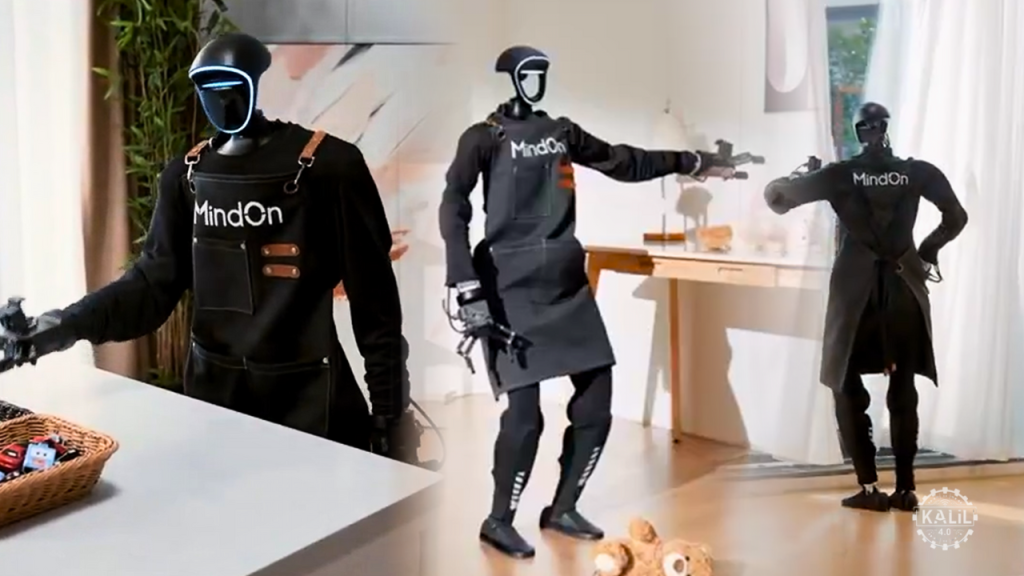
The demo quickly went viral on Reddit and X, where users were cautiously optimistic about the potential step forward for home robotics. A large portion of commentors questioned how much of the demo was scripted, pre-arranged, or selectively edited. They noted the robot’s at times cautious and awkward movements.
Mind On Everything ! pic.twitter.com/UA9WQX3vhW
— MindOn (@MindOn_Tech) November 14, 2025
MindOn trains its robots in simulation using a mix of reinforcement learning and imitation learning. That means the robot practices actions millions of times in a virtual world, learning to walk, pick things up, and handle objects through trial and error. They also feed the system motion data from human demonstrations to give the robot an idea what a movement should look like before refining it through practice. The learned behaviors are them transferred to the physical robot through a process called Sim2Real, short for Simulation to Reality.
Pretty much every company pushing humanoid robots into the real-world today uses a similar learning-based system, with each adding its own tweaks to the training pipeline. The real challenge is what’s known as the sim-to-real gap, which is the difference between how cleanly things work in simulation and how messy, unpredictable, and unstable they are in the physical realm. Closing the gap is the key challenge for the entire industry, and it’s the main reason humanoids today move slowly or awkwardly outside controlled conditions.

Though it’s not intended for commercialization yet, there’s clearly a fast-growing market for artificial intelligence that runs on existing robot hardware. In the West, well-funded firms like Skild AI, Physical Intelligence, and Google DeepMind are racing to create a universal AI robot brain. Their goal is to handle perception, manipulation, planning, and continuous learning everywhere from warehouses to households.
MindOn, or a system like it, could become a serious threat to companies like Figure AI, 1X Technologies, and Tesla if true general-purpose capabilities can be achieved on hardware that’s already being mass produced. If advanced autonomy is possible on relatively affordable platforms like Unitree’s, it would undercut the hardware-integrated strategy that US firms are betting on. In that case, the bottleneck shifts from manufacturing humanoids to supplying the brains that power them. It could tilt the market toward the open, flexible, software-running-on-any-hardware model, like what could have played out if Android had launched before the first iPhone.
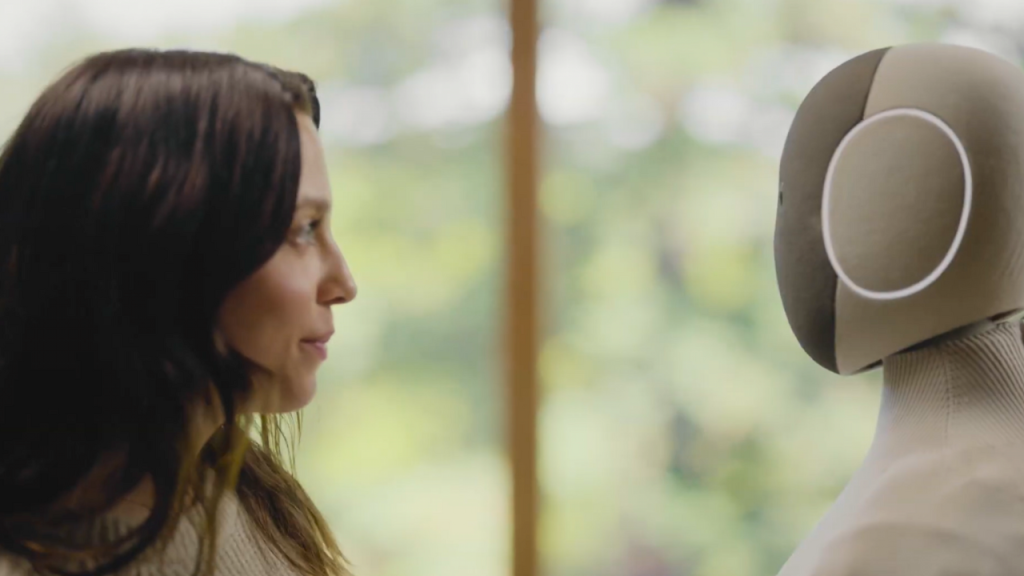
China has been notably hardware-first. While Hangzhou-based Unitree Robotics provides basic locomotion and control software for its popular humanoid and quadruped robots, most research labs and startups use its robots to run their own AI stacks. Chinese humanoids like Unitree’s G1 and Booster Robotics’ T1 are effectively the only accessible options in the US outside of bespoke research platforms starting in the six figures.
Leading US humanoid firms that are building hardware are developing their own AI systems rather than relying on third-party intelligence. Palo Alto-based 1X is relying on remote teleoperation as a stand-in for full autonomy for early adopters of its $20,000 NEO humanoids for home, while fellow Silicon Valley unicorn Figure is aggressively collecting human motion data to feed its self-developed Helix AI model. Tesla is leaning heavily into human demonstration videos combined with the same AI system that drives its self-driving tech.
MindOn has reportedly raised an initial angel round from well-known investors including Yuanhe Origin Ventures, Inno Angel Fund, Yuan Sheng Venture, and MSA Capital. Though financial details were not disclosed, Chinese tech outlets reported that the early-stage raise will support hiring and R&D acceleration.