
JAKA Robotics just debuted its new humanoid robot, the K-1, intended for high-precision tasks ranging from electronics assembly to surgical assistance.
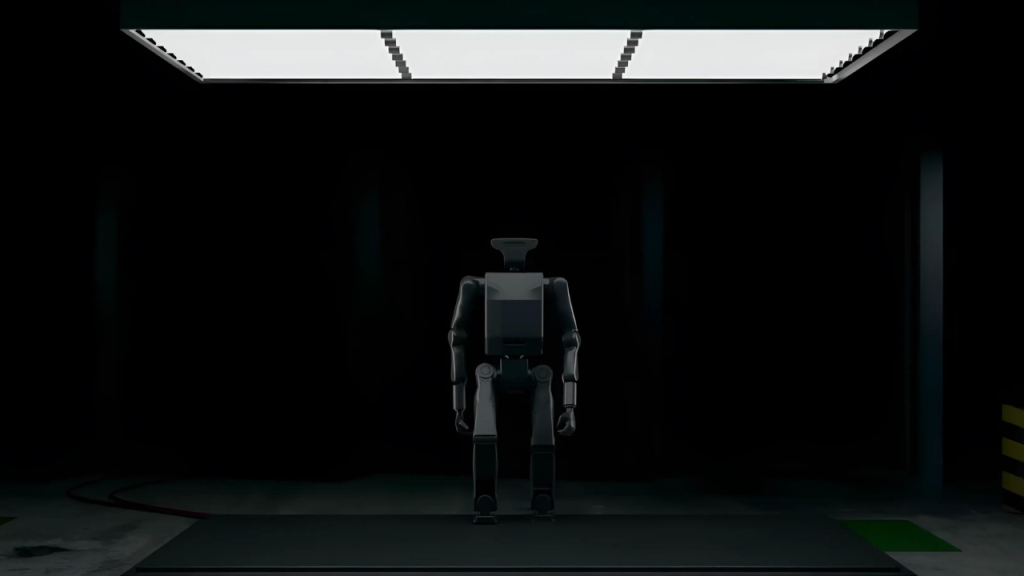
The China-based JAKA Robotics showcased a nonfunctional prototype of the AI robot at the 2024 China International Industry Fair (CIIF) in Shanghai.
JAKA Robotics unveiled their full humanoid robot K-1 during the China International Industry Fair in Shanghai last week.
— The Humanoid Hub (@TheHumanoidHub) October 4, 2024
They brought a non-functioning prototype on stage and showed some simulation actions on screen. pic.twitter.com/kBUullLS2U
Standing 1.8 meters, the K-1 has 29 movable joints and 14 degrees of freedom in each arm for an unusually high range of flexibility and control. Unlike other industrial robots, the K-1 was built for delicate and complex tasks where precision is absolutely critical.
JAKA says the robot’s six-dimensional force control system enables it to feel pressure from multiple directions, including forward, up, down, and rotationally. The K-1 reacts to external forces in real-time to avoid applying too much pressure and to safely maneuver around sensitive or hazardous materials. The robot’s suite of high-tech sensors includes depth cameras and touch sensors.
The K-1 learns over time with its advanced A1, adapting to new tasks and making real-time decisions. This functionality is key for dynamic environments like hospitals or fast-paced assembly lines.
Founded in 2014, JAKA Robotics is known for its line of cobots for industrial use cases, including the JAKA Zu Series, Jaka Pro Series, and
- JAKA Zu Series: For a range of industrial loads from light electronics to heavier automotive parts. Models include the Zu3, Zu5, Zu7, and Zu18.
- JAKA Pro Series: Designed for harsh industrial environments with its dust and water protection. The collaborative robots run for years nonstop, making it ideal for heavy-duty areas like metalworking.
- JAKA All-in-One: User-friendly cobots that can be programmed with drag-and-drop tools on tablets or smartphones, offering wireless connectivity and simple assembly.
The release comes amid nonstop humanoid robotic product announcements from a growing array of Chinese firms.
China’s government is prioritizing the mass production and deployment of humanoid robots. The country aims to mass produce the AI robots by 2025 and conquer the market by 2027.