
Hyundai Motor Group says it’s scaling manufacturing capacity to build up to 30,000 humanoid robots per year by 2028.
The South Korean automotive giant laid out its plans at CES 2026 with its subsidiary robotics firm Boston Dynamics it acquired from SoftBank in 2020. The Massachusetts robotics leader unveiled the latest iteration of its flagship humanoid, Atlas, which is central to its parent company’s physical AI ambitions.
According to Boston Dynamics, the production-intent humanoid is the first iteration meant for commercial deployments rather than research use. The fully electric Atlas has a reported 56 degrees of freedom (DoF), largely rotational joints, and three-fingered end effectors with tactile sensing for handling complex objects. It’s rated to lift 50 kg (110 lbs) and can function in harsh conditions, including washdowns and temperatures from -20°C to 40°C (-4°F to 104°F). It also monitors its power and swaps out its batteries as needed.
Standing 188 cm (6 feet 2 inches), the new Atlas towers over most humanoids, including EngineAI’s T800 and Unitree’s H2. Its reported weight is 90 kg (198 lbs).

Engineers are training Atlas using a blend of teleoperation, motion capture, and synthetic data. The robotics firm says Atlas is meant to integrate into existing factory layouts for jobs like parts sequencing, material handling, and eventually component assembly. Facilities that already use BD’s Spot quadrupeds for tasks like industrial inspections are especially primed for humanoid deployments. During CES, Hyundai played up partnerships with NVIDIA for AI infrastructure and simulation and Google DeepMind to accelerate development.
Hyundai said it plans to establish a dedicated robot manufacturing and foundry facility but stopped short of providing target locations or timelines. Though it’s aiming for capacity to build 30,000 units annually, it’s unlikely that many robots will be shipped within the next few years. When they are available commercially, Hyundai says its humanoids will be offered through a Robotics-as-a-Service (RaaS) model with subscription pricing, over-the-air updates, and lifecycle support.

A marketing video produced for CES hinted at larger ambitions for Atlas, with CGI renderings showing the humanoid doing last-mile delivery and interacting with a child. However, a segment that just aired on 60 Minutes painted a more restrained picture of Atlas’s current state. The broadcast showed the humanoid autonomously sorting roof racks inside the Georgia plant, but engineers said it remains far from a general-purpose worker.
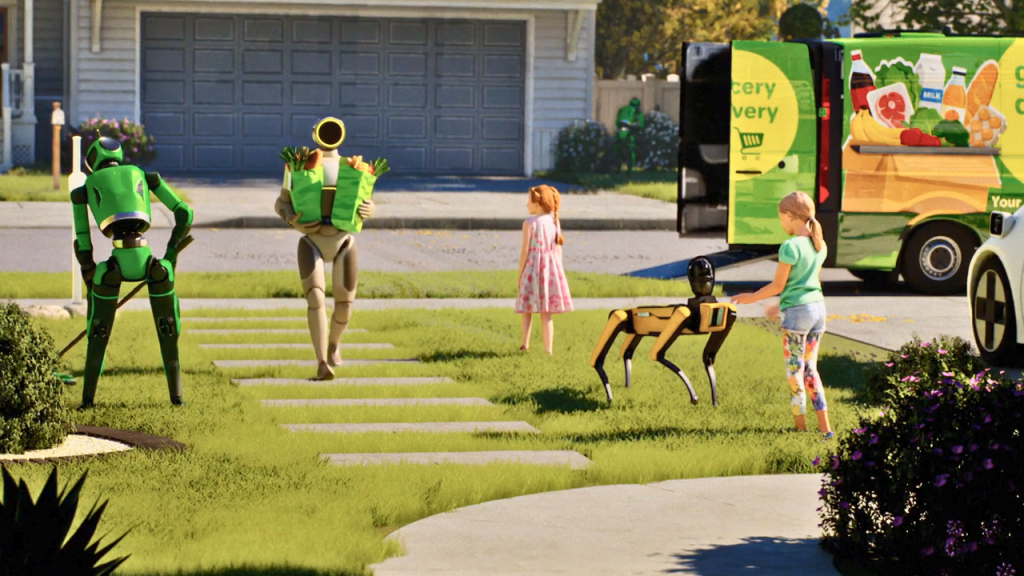
“I would say that most things that a person does in daily lives, Atlas or other humanoids can’t really do that,” Scott Kuindersma, BD’s VP of Robotics Research, said. “Just putting on clothes in the morning or pouring a cup of coffee and walking around the house with it. That’s too difficult for Atlas. I think there are no humanoids that do that nearly as well as a person would do that.”
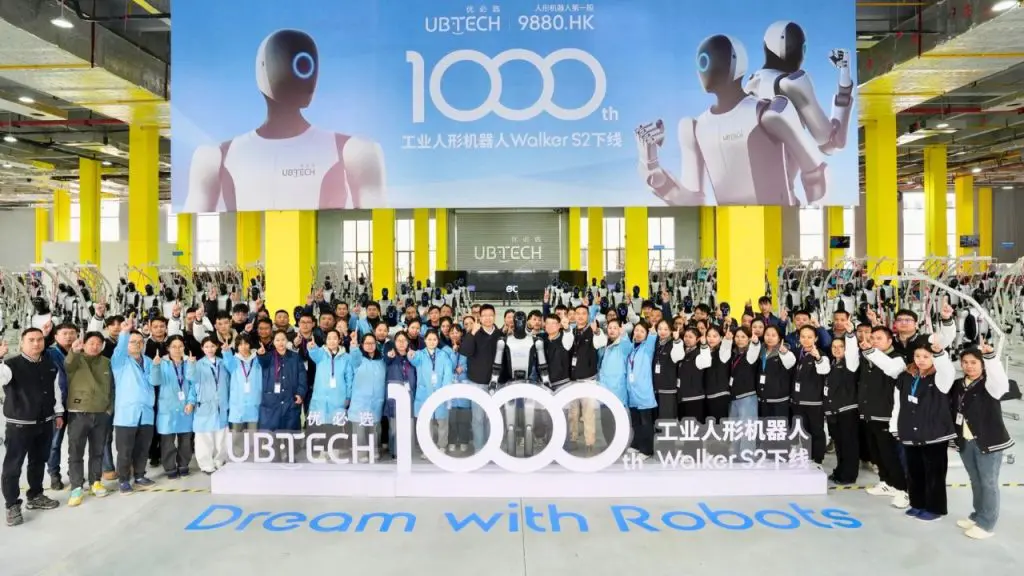
Boston Dynamics is in a fierce race with well-funded Western competitors like Tesla, Figure AI, 1X Technologies, Agility Robotics, Apptronik, NEURA Robotics and others. The Trump administration is reportedly planning executive action to accelerate progress to compete with China, whose government has set a national goal to own the emerging market by 2027. Chinese firms like Unitree Robotics, AgiBot, UBTECH Robotics, Kepler, and NOETIX Robotics helped the republic pass its 2025 goal of manufacturing at least 10,000 units.
Atlas began as a DARPA project in 2013 as a disaster-response robot in the aftermath of Japan’s 2011 Fukushima disaster. It evolved into one of the world’s most advanced humanoids, reaching celebrity status with its parkour, running, jumping, vaulting, and highly coordinated motion. BD retired the humanoid’s hydraulic design in April 2024 and replaced it with a completely overhauled, fully electric architecture.