
The much-hyped Figure 02 is headed to work for real. We also have brand-new details about when this advanced AI robot will be available for homes and how much it will cost.
Figure Robots to Return to BMW
The Figure 02 is returning to work for BMW on a permanent basis. Several of these advanced humanoid robots will start working at the luxury automaker’s Spartanburg, South Carolina plant in January, after a successful pilot. The OpenAI-backed startup revealed the news when TechCrunch visited its Sunnyvale headquarters.
The initial fleet will have more than five robots. During its recent trial, the Figure 02 successfully inserted sheet metal parts, which requires considerable dexterity that could not previously be achieved with robots.
Figure founder Brett Adcock told TechCrunch that the robots worked nearly 24 hours, 7 days a week during the trial run. The company has much bigger plans for the Figure 02 beyond automotive assembly. Figure plans to expand to a nearby facility as it scales production of the robots.
Figure at Home
During a recent podcast, Adcock told futurist Peter Diamandis, domesticated robots are up next.
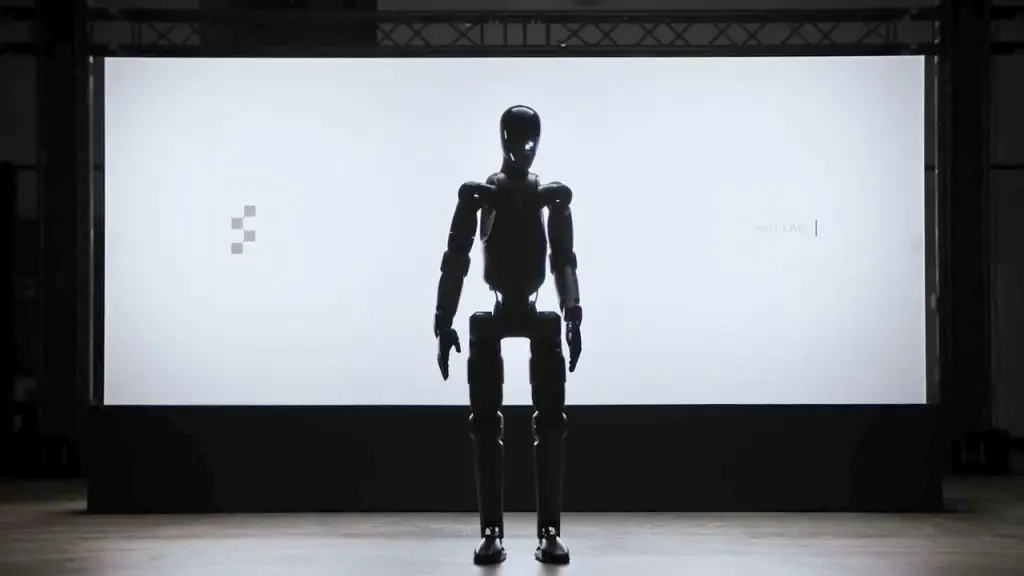
“I would within the next three years, we’ll definitely have robots piloting at homes,” Adcock said during the podcast. “We’ll probably start with some mock homes here in our facilities and start, you know, getting the bugs worked out, understanding how the system architectures all work.”
Figure calls the Figure 02 the most advanced and first commercially viable autonomous humanoid robot on the planet. Adcock believes the robot could eventually cost about $20,000, which is the same price point Tesla and 1X Technologies are targeting with the Optimus and NEO.
The Figure 02 has triple the computing power of its predecessor, the Figure 01. Standing about 1.7 meters tall, the second iteration has six cameras to see and understand its surroundings. It communicates with people using built-in microphones and speakers. Its human-like hands can carry up to 50 pounds. Its foot design is more human-like, suitable for a sneaker fitting, and its battery runs for five hours—a 50% improvement,.
Figure AI accelerated the robot’s development using Isaac Sim, a reference application built on NVIDIA’s Omniverse platform. The synthetic data was used to design, train, and test the robot. Nvidia said a second RTX GPU onboard makes the robot three times better at performing AI tasks on its own compared to the original.
1X NEO Home Deployment
When the much-anticipated 1X NEO humanoid robot enters homes, it will rely on human operators to start. The OpenAI-backed startup says the logistics of training robots for autonomous tasks in homes is one of the biggest challenges going to market.
1X shared its plans with S3. The company plans to use human teleoperation as a stand-in for autonomy at first. So the NEO can still perform chores in a household but it’ll be fulfilled by a human operator who’s remotely controlling it.
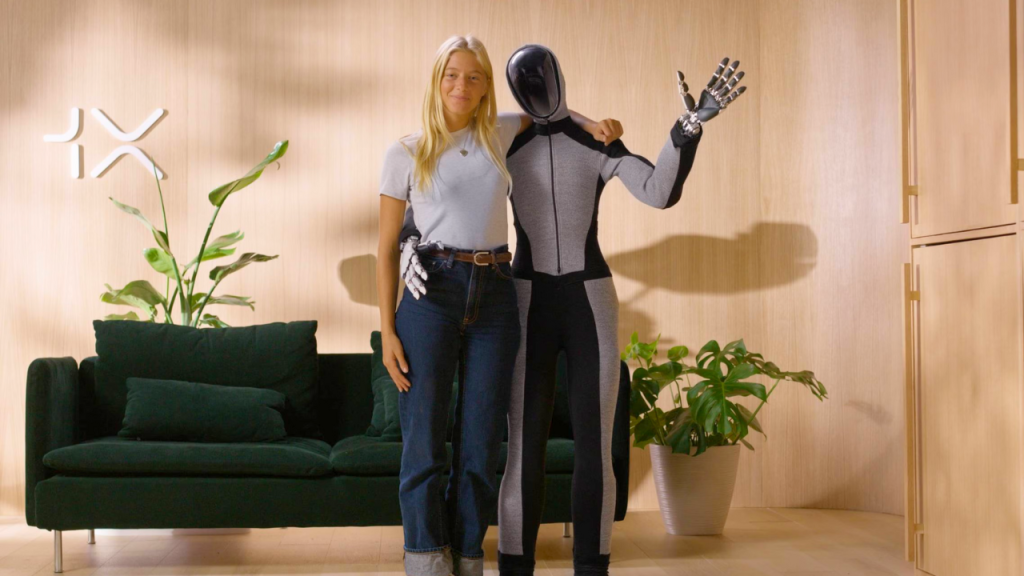
1X Technologies gave S3 an exclusive look inside its facility, where it’s developing its next-generation humanoid robot for home use. X1’s first robot, Eve, reached a peak production of 10 to 20 units per month.
For its new robot, founder and co-founder Bernt Øivind Børnich wants to scale up to five to ten times that amount in a new factory currently under construction.
Standing 5’4″, the robot weighs just 66 pounds, which 1X says makes it safe for use in households. It can run 7.5 mph. At that speed, the robot would finish a 5K race in just under 25 minutes, which is well above average for human runners. It walks at a pace of 2.5 mph. The NEO can carry up to 44 pounds, about what a medium-sized microwave oven weighs.
Isaac Robot for Home
This humanoid robot is designed to make life more like “The Jetsons.”

That’s according to Weave Robotics, a California startup that’s taking pre-orders for its Isaac robot. Isaac can fold laundry, feed pets, and automatically clean rooms. It’s controlled by an app and responds to voice and text commands. It has a camera that hides away when not needed for privacy.
The cost is $59,000 or $1,385 monthly. Reservations are $1,000. The first deliveries are set for fall 2025 for 30 customers in the U.S.
4NE-1 Cognitive Robot
The 4NE-1 humanoid robot has cognitive abilities and is coming to a neighborhood near you soon.
That’s according to Neura Robotics, the German company that developed the For Anyone AI robot. In new footage, the humanoid robot, standing 180 cm or about 5’11”, is shown ironing, doing laundry, watering a plant, and serving a cocktail. Neura Robotics says the For Anyone robot can see, hear, and touch with its advanced sensors and AI.

It has a touchless human detection sensor for safe interaction with people in different environments. The robot’s forearms can be exchanged to suit different tasks, making it versatile for different applications.
Dung Beetles Inspire AI Sensor
Do dung beetles hold the key to big technological breakthroughs? Predating humans by about 128 million years, they navigate at night using advanced capabilities scientists only discovered a decade ago. Instead of the Moon, they use the Milky Way’s band of stars to help them move in a straight line at night.
Researchers from the University of South Australia have developed an AI sensor that recreates the beetle’s navigation. They programmed cameras to detect the Milky Way to help drones navigate like dung beetles do.
Reachy 2 Humanoid
French startup Pollen Robotics plans to release the AI-ready Reachy-2 robot in October. It’s intended for exploring robotics and AI.

It will be available as a full robot with a mobile base and stationary with one arm. It is mainly for use in research, education, and customer service. Its arms have seven joints, allowing for flexible movements. The robot can be controlled using virtual reality for more precise actions.
Lab-Grown Robot Brains
Researchers from Tianjin University and the Southern University of Science and Technology say their tiny lab-grown brain or brain organoid could learn tasks faster than current AI models. They say it uses much less energy than AI, which needs a lot of power and data to learn. These brain cells also show more intuition and creativity than AI, learning with fewer examples. The researchers believe this technology could combine human-like and machine intelligence.

Latest in Humanoid Robotics
For more of the latest in humanoid robotics, subscribe to my YouTube channel.