
There’s a new breed of intelligent machines emerging from the same elite Boston ecosystem that gave us some of the most influential robots in modern history.
The creator of the Roomba is starting his second act with a cuddly companion built to connect with humans like a living pet, while Boston Dynamics fights to get its groove back in the humanoid race amid reports of turmoil. Meanwhile, much younger firms are generating major buzz with innovations that some believe could unlock the ChatGPT moment for physical AI.
The commonwealth has long been considered a global leader in robotics, with elite institutions like MIT and Harvard laying down decades of foundational work. However, while Massachusetts has historically led in research and early-stage innovation, it has been less dominant in scaling and commercial deployments during the current wave of physical automation
iRobot Founder’s Redux
Among the new startups aiming to change the narrative about the Bay State is Familiar Machines & Magic, which just emerged from stealth with a next-generation robotic pet for the consumer market.
Its founder is Colin Angle, the creator of the Roomba. Angel co-founded iRobot in 1990 to build machines for military and government use. He led the MIT spinout as it pivoted to consumer robotics in the 2000s and stepped down in 2024. Since his departure, iRobot has declared bankruptcy and is now Chinese owned.

Angle’s new Boston area startup says it’s bringing a new class of consumer robotics to market.
Its first product is a dog-sized companion known as a Familiar. It’s designed to look approachable and cuddly, but underneath its soft exterior is serious hardware. The four-legged robot has 23 moving joints, which is about 2x the degrees of freedom (DoF) that fellow quadrupeds from Boston Dynamics and Unitree Robotics have. They give the robot the ability to move in subtle lifelike ways to build an emotional with the people it interacts with.

An NVIDIA Jetson Orin computer powers its onboard artificial intelligence, processing vision, audio, and behavior patterns in real time. It perceives its surroundings with its cameras, microphones, and other embedded sensors.
The robot is expected to become available around 2027, with pricing similar to owning a pet.
“iRobot proved that robots could deliver value,” Angle said in a press release. “But they were still task machines. My goal has always been to create systems that understand context, remember interactions, and behave with consistency over time. That’s what we’re doing at Familiar Machines & Magic.”
Crowding and Difficult Market
Familiar Machines joins a crowding field of startups trying to crack the social robotics market, a category that has struggled to take off for decades. Investors are betting that rapid tech advancements will make the next-gen companions stickier than past failures like Jibo and Moxie.
Another Boston firm, Spiritify AI, has released a tabletop robot named Joy for companionship. The startup is led by Sunny Sun, a former VP at the global financial services firm State Street.
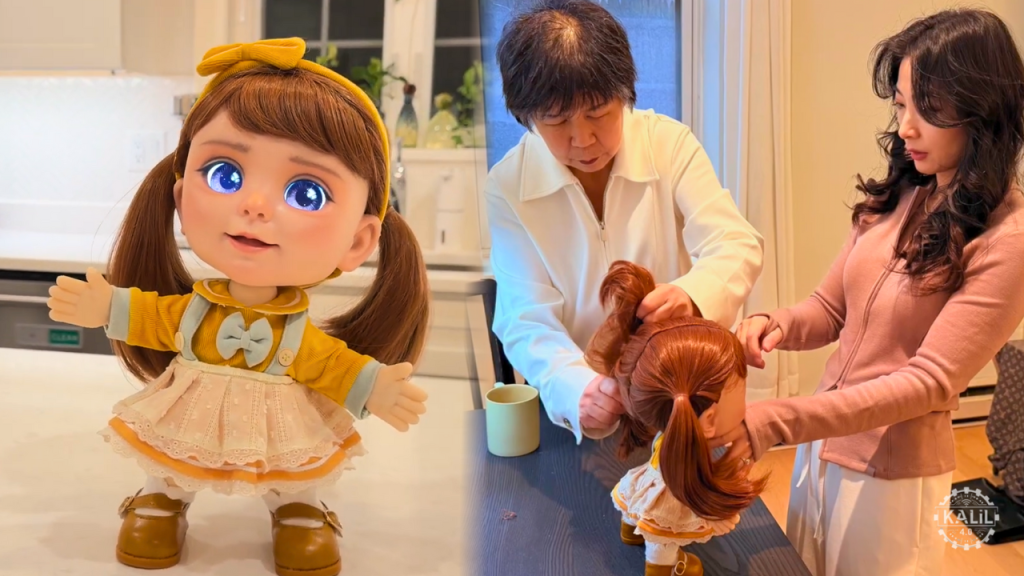
Standing 33 cm (13 inches), Joy has a toy-like appearance with oversized blue eyes, a smooth childlike face, and brown hair in pigtails. According to Spiritify, Joy can hold conversations in 140 languages, provide medication and routine reminders, track emotional well-being, and record personal moments with a built-in life journaling feature. Its speech, vision, emotional recognition, and agentic decision-making are powered by the startup’s self-developed AI brain.
Joy is priced starting at $699 for home users and $1,700 for care facilities.
Analysts expect the market for AI companion and social robots to grow from a few billion dollars today to tens of billions by 2030. Despite the optimism, the recent implosion of the Nevada startup Cartwheel Robotics shows getting to market is still an uphill battle. Scott LaValley, an OG BattleBots veteran who’s worked for Disney Imagineering and Boston Dynamics, shut down Cartwheel earlier in 2026 after failing to get enough funding to scale production of its cartoon-like humanoid robot named Yogi.

Angle is perhaps more set up for success than his contemporaries with his vast industry connections and his proven ability to ship millions of robots.
But that only goes so far. One of iRobot’s other co-founders, Rodney Brooks, learned that the hard way. Brooks left the Roomba maker in 2008 to launch Rethink Robotics, a defunct Boston firm that’s often cited as a cautionary parallel to today’s humanoid frenzy.

Rethink introduced Baxter in 2012, pitching it as a safe and affordable industrial collaborative robot that’s easy to train for factory work. While it did find niche users, Baxter never became the versatile industrial companion that Rethink positioned it as. The company shut down in 2018.
Boston Dynamics Stages Comeback
Another legendary firm that emerged from the Massachusetts Institute of Technology is trying to avoid the same fate as iRobot during a transitional phase in the robotic sector.
Marc Raibert launched Boston Dynamics in 1992 after pioneering research into legged robots at the MIT Leg Laboratory. Like iRobot, the company initially explored military and defense applications throughDARPA-funded programs. Its research for the Pentagon evolved into two of the world’s most iconic robots: Spot, the agile quadruped now used for industrial inspections and hazardous environments worldwide; and Atlas, the research-grade biped platform that became a pop culture icon and global stand bearer for advanced humanoid robotics.
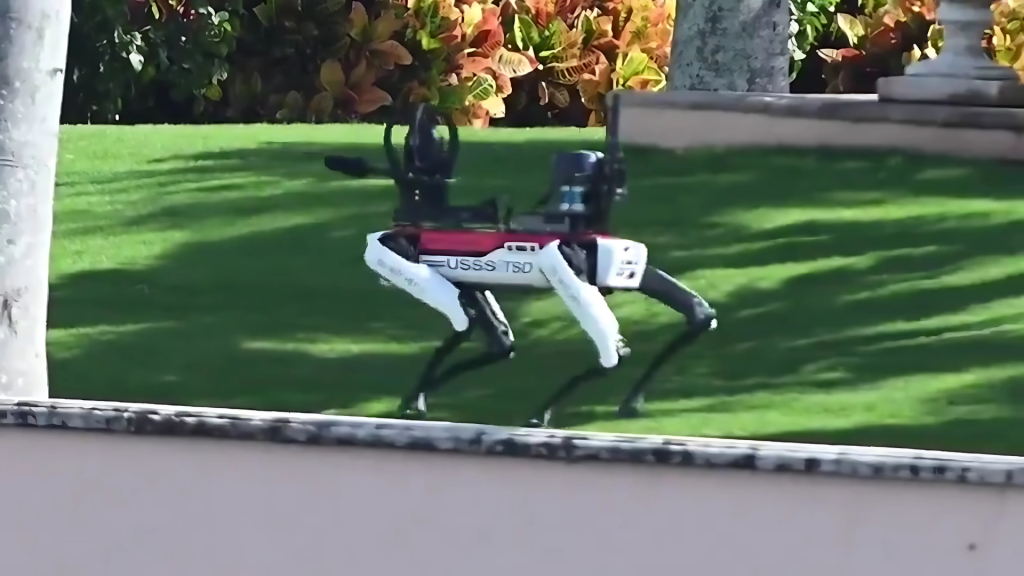

Despite its massive cultural impact, Boston Dynamics has historically sold only a relatively small number of robots. They’ve likely shipped several thousand units, primarily Spot, which starts around $75,000, and its logistics system named Stretch.
As Boston Dynamics commercialized Spot in 2019, the Chinese company Unitree Robotics was aggressively moving toward mass production. Launched in 2016 by hardware engineer Wang Xingxing (who has called Raibert his idol), Unitree has shipped well over 30,000 quadruped robots. The Hangznou-based firm, which is heading toward an IPO on Shanghai’s tech-heavy STAR Market, reported delivering more than 18,000 robodogs and 5,500 humanoids in 2025 alone.

As it enters its mid-30s, Boston Dynamics is under intense pressure to prove it can move quick enough to compete with a myriad of Chinese firms and Western rivals like Figure AI, 1X Technologies, and Tesla.
A new report from Semafor Technology suggests there’s turmoil as its parent company, Hyundai, presses the robotics firm to accelerate production of its Atlas humanoids. Citing former employees, Semafor reported that the company’s board of directors has been pushing out executives as it’s grown critical of its narrowing lead in the humanoid race.
Hyundai reportedly wants tens of thousands of Atlas robots ASAP to deploy at the South Korean automaker’s factories. BD also has committed to delivering humanoids to the Hyundai subsidiary Kia as well as its ex-parent company Google through its partnership with DeepMind. According to Semafor, BD has been building about four of its Atlas humanoids per month as it prepares to open a new robot factory in the coming months.

The robotics firm appeared to respond quickly to the growing doubts raised by Semafor’s reporting through a new demo featuring the production-ready iteration of Atlas. BD first introduced the new and improved humanoid at CES 2026 in Las Vegas as a stationary display. In its first public-facing demo, the new and improved Atlas performed a series of highly dynamic gymnastic and balance-focused movements.

On social media, Boston Dynamics said: “Balancing commercial goals and robotics can be tricky, but with Atlas we’re making it work.”
Early ChatGPT Moment?
Meanwhile, a much younger startup from MIT’s ecosystem is generating buzz with its new kind of AI model for helping robots handle objects like humans.
Eka Robotics says its so-called Vision-Force-Action (VFA) model combines input from cameras and real-time force feedback to make adjustments based on how objects physically respond. The early-stage startup says it’s ushering in the “Era of Superhuman Robotics.”
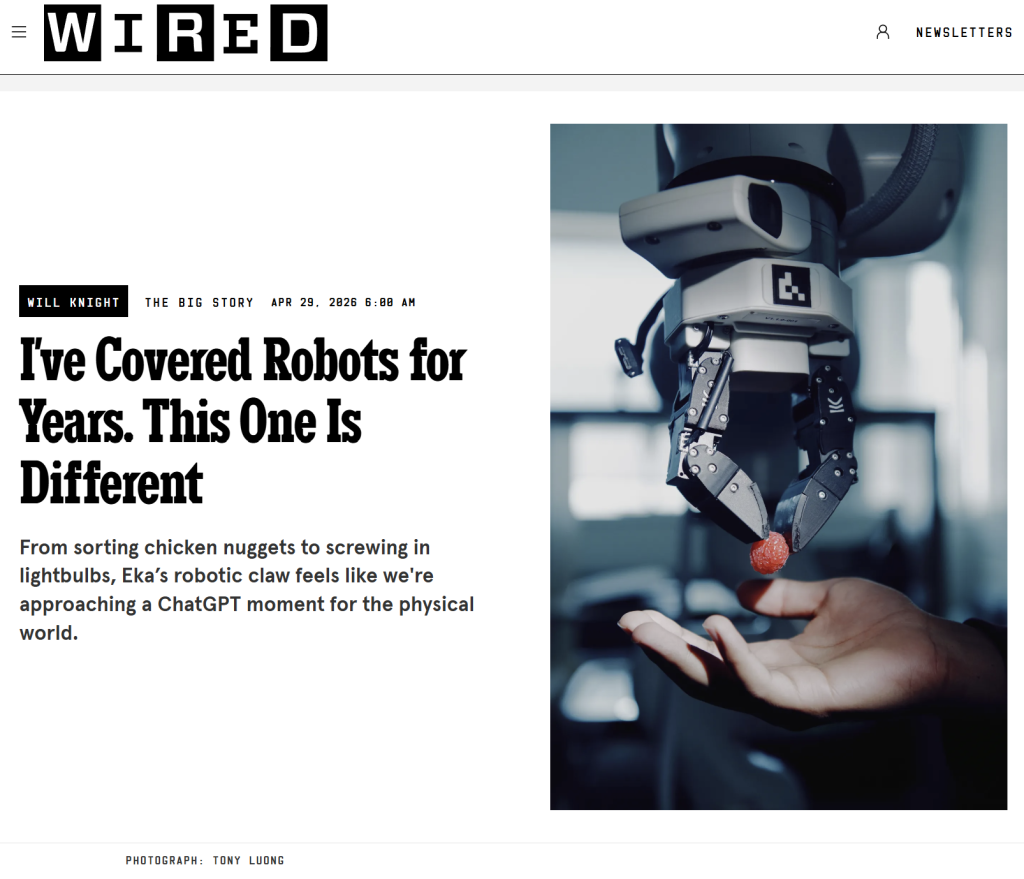
WIRED Magazine reporter Will Knight described the technology as an early potential ChatGPT moment for physical AI after visiting Eka’s lab in Cambridge’s Kendall Square. He said he’s never seen a robot move so naturally and was particularly impressed with how it adjusted itself on-the-fly in reaction to physical changes. According to Eka, the foundational model is trained primarily through self-practice in a high-fidelity simulation that models real-world physics.
Robot Data Factory 1
Yet another startup launched by MIT researchers is taking a different approach, prioritizing real-world data collection using fleets of robots that learn through repetition and human-guided correction.
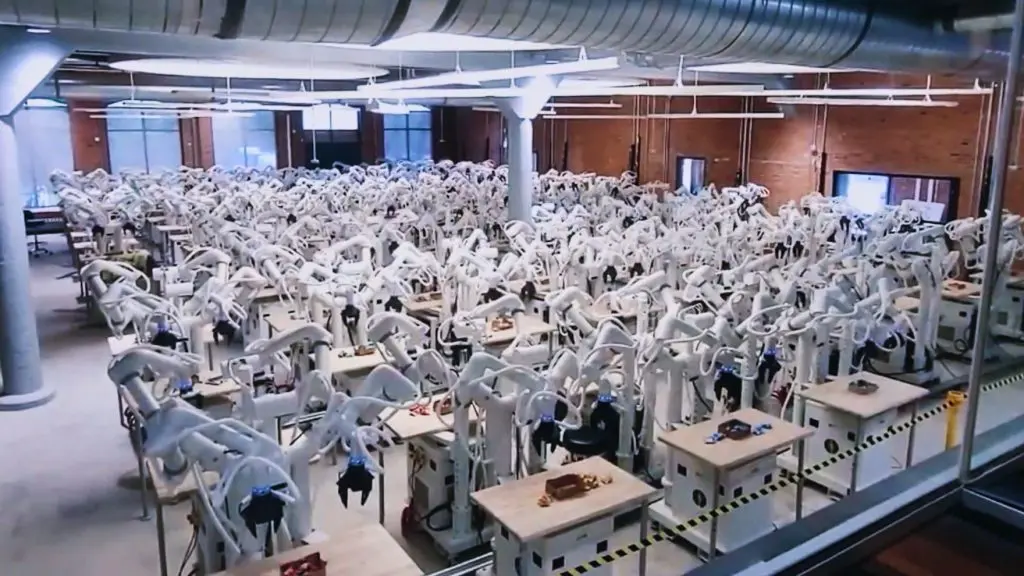
Based in the Boston suburb of Watertown, Tutor Intelligence is developing next-gen robot workers with $42 million in funding. Tutor recently opened what it calls the largest robot data factory in the US. The facility, called Data Factory 1, spans about 3,300 square meters (35,00 square feet) and houses 100 semi-humanoid robots that produce up to 10,000 hours of robot training data per week. They continuously practice basic human tasks like picking, packing, and folding items under the supervision of human tutors who remotely step in to correct mistakes.
Tutor says its Vision-Language-Action (VLA) model, called T0, is already being trained and tested on real-world tasks inside factory and warehouse environments.
Beware of Labububot
Looking to the future, MIT researchers continue to advance next-gen technologies that the public at times finds unsettling.
The MIT Media Lab just teased a spherical robot, Labububot, calling it “one of the rarest monsters” on Earth. A team led by graduate student Miranda Li built the robot from 12 interconnected Labubu toy heads to explore how people emotionally react to machines that are simultaneously cute, disturbing, familiar, and alien.
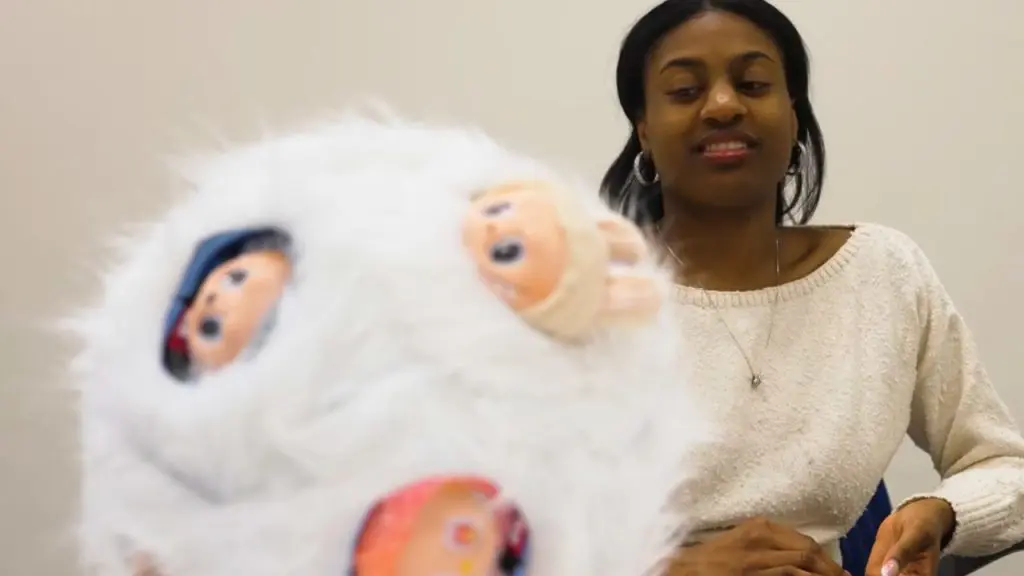
Each head has its own small electronics that help control the whole system’s movements. By shifting and coordinating the different parts, the robot moves like a strange living ball or a swarm creature.
Labububot will make its public debut at the 2026 International Conference on Social Robotics (ICSR) in London this summer.
Another project from the MIT Media Lab gaining attention seeks to replicate the behavior of living human muscles. About the thickness of a thread, the so-called electrofluidic muscles reportedly produce force similar to the real thing. Read all about them here.